ENTERTAINMENT
Tobey Maguire’s Ride With the Devil Was Buried on Purpose
USA Films opened Ang Lee’s Ride with the Devil in 11 theaters. Jeffrey Wright says the studio feared his bushwhacker, and Maguire’s Civil War role vanished.
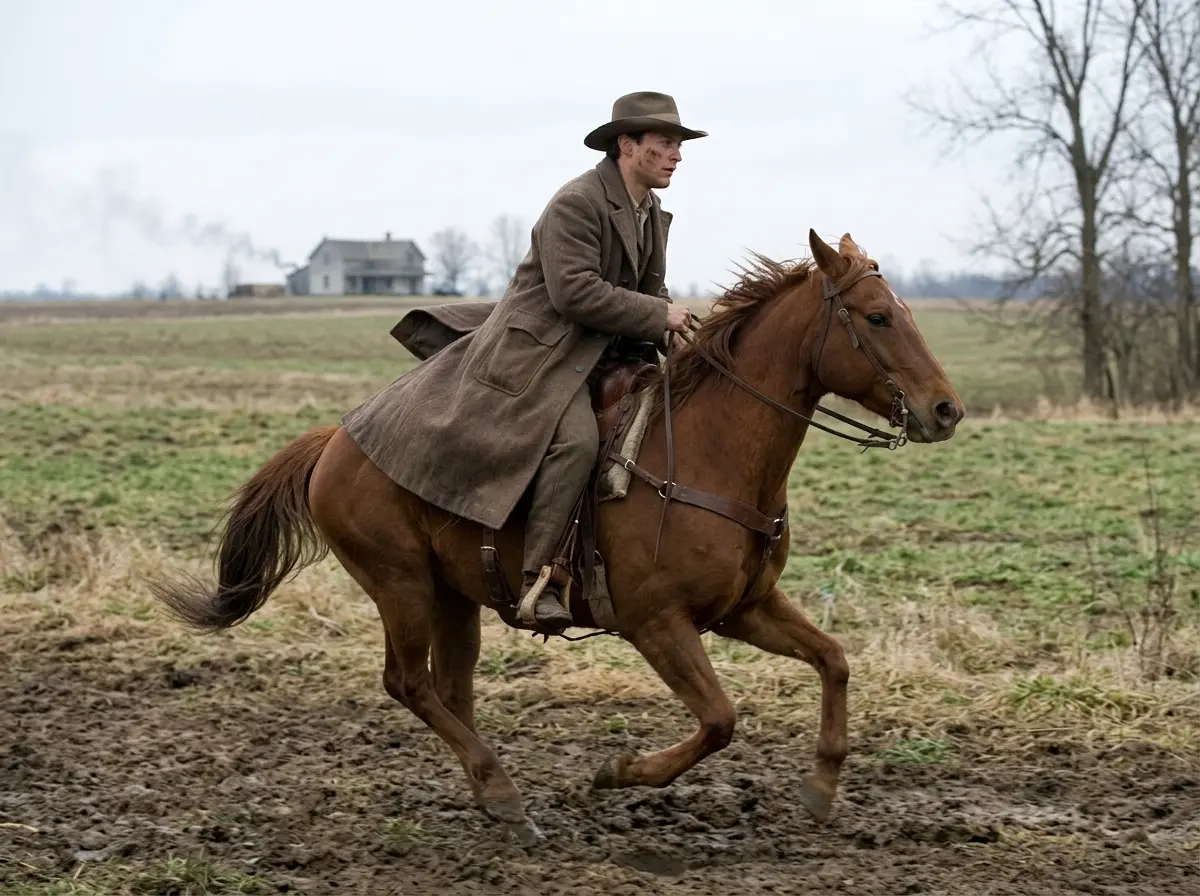
Ride with the Devil took in $635,096 against a $38 million budget after USA Films opened it in 11 theaters. Ang Lee’s 1999 Civil War western starred Tobey Maguire as Jake Roedel, a German immigrant’s son in Missouri who joins Confederate guerrillas after Jayhawkers burn a friend’s plantation and kill the father.
Jeffrey Wright, who rides beside him as a freedman named Daniel Holt, told Den of Geek in August 2025 that the movie “kind of wasn’t released.” He still calls it the neglected stepchild of his career. The same qualities that scare a marketing meeting are the ones that hold the film together.
The Film That Opened in 11 Theaters
Good Machine made the picture with Universal, the successor to PolyGram Filmed Entertainment, and USA Films, then a division of USA Networks, put it in American theaters on November 26, 1999. James Schamus wrote the script from Daniel Woodrell’s 1987 novel Woe to Live On and produced with Ted Hope and Robert F. Colesberry. Principal photography had started on March 25, 1998, in Missouri and Kansas.
THE 11-THEATER OPENING
- First weekend: The film took $64,159 and ranked 50th.
- The footprint: It opened in 11 theaters and later played in as many as 60.
- The ceiling: Its best chart placing was 37th, the weekend of December 17 to 19, 1999.
- The total: $635,096, with no public international tally beside the domestic figure.
That Thanksgiving run came after a festival path that looked, on paper, like a prestige launch. The film world-premiered at the Deauville American Film Festival on September 9, 1999, played Toronto the next day, and opened the London Film Festival on November 3. Then it arrived in the United States in a handful of rooms and stayed there.
Westerns were already a hard sell. Two years later Roger Ebert, writing after the much dumber American Outlaws, would talk as if the genre had died. Lee’s film is the counter-example that almost nobody was shown. Universal issued a DVD on July 18, 2000, and the theatrical life was over.
New Gatekeepers Did Not Understand Holt
Wright’s account of the burial is more specific than a dead-genre shrug. “There was a changing of the guard at the studio from the time that we shot the film until the time it was finished,” he told Den of Geek. “And the new gatekeepers didn’t quite understand the film. I think they were scared.”
What scared them, he said, was a Black man fighting on the Confederate side of a border war, “history be damned.” The movie is slippery on purpose. It starts with Maguire’s Jake, who is too poor to own a slave and too young to have a politics beyond his friends, and it slowly becomes a story about Holt’s own freedom, which does not arrive as a gift from a Northern savior.
Lee had already used Maguire in 1997’s The Ice Storm, after Sense and Sensibility had made the Taiwan-born director a Hollywood name. Ride with the Devil was his first western and the first time American critics cooled on him. Rotten Tomatoes later logged a 65% score from 68 reviews, with an average of 6.3 out of 10. Metacritic’s weighted score was 69 from 29 reviews. There were no Oscar nominations. A year later Lee would make Crouching Tiger, Hidden Dragon, the hit the new regime had not seen coming from the Missouri shoot.
Why Jeffrey Wright Still Calls It Neglected
Holt is the character the one-sheet could not carry. He is a formerly enslaved man whose childhood friend, Simon Baker’s George Clyde, bought his freedom, and he rides with the First Missouri Irregulars out of that bond, not out of a speech about states’ rights. Wright has said the work was one of the best experiences of his career, six months on horses, and that the performance is one he remains proud of.
I love that movie. It’s like the neglected stepchild of my career in some ways, because I think it’s such a beautiful film and just grossly underappreciated. That had to do with the way it was released in that it kind of wasn’t released.
Jeffrey Wright, interview with Den of Geek, August 2025
He also named the ending as almost unique. “It’s one of the only films I think you’ll see in the entire canon in which a Black character rides off into the sunset at the end of a Civil War film.” Holt leaves Jake on equal footing and turns toward Texas to learn what became of his family. Wright later appeared at a BAM screening of the film that treated Holt, not the Maguire coming-of-age plot, as the reason to look again.
For Wright, the excitement of the part was not the shock of a Black Confederate. “He was fighting for his own freedom and he was fighting to emancipate himself, as opposed to being emancipated by the Great White Northern Savior, which is what we very often see in cinema,” he said. That is a hard sentence to put on a 1999 poster next to a 24-year-old Maguire in a slouch hat.
Maguire’s Other Winter of 1999
Maguire did not need this movie to become famous, and that is part of why it could be hidden. The same awards season, he starred as Homer Wells in The Cider House Rules, which won Oscars for Michael Caine and for John Irving’s script. Jake Roedel talks in period diction, kills, and winters in a dugout with a man the rest of the unit barely sees. Homer Wells is the orphan the industry knew how to love.
Before the red suit, Maguire’s screen persona was still being built out of boyishness: Pleasantville, The Ice Storm, Lasse Hallström’s Maine orphanage. Lee asked him to play a bushwhacker who spares a neighbor and then learns that the spared man has killed his father. Frederick Elmes shot him in mud and winter light, not in a comic-book key. By the time Spider-Man sold tickets, almost no one in those crowds had watched Jake Roedel cut his hair at 19 and start for California with his dead friend’s widow.
Skeet Ulrich is Jack Bull Chiles, the planter’s son whose father’s murder starts the revenge. Jewel, in her first film role, plays Sue Lee Shelley, the widow Jack loves and Jake later marries. Jonathan Rhys Meyers plays Pitt Mackeson as a sadist who hates Jake for being able to read. Jim Caviezel’s Black John Ambrose commands the irregulars. Mark Ruffalo turns up, briefly, as the Unionist neighbor Jake fails to finish. It is a stacked cast for a movie that never got a proper house.
They Ate Breakfast While Lawrence Burned
Halfway through, the irregulars fall in with William Quantrill and ride into Lawrence, Kansas, on August 21, 1863. The historical raid is among the ugliest mornings of the war. An encyclopedia of the border conflict records that Quantrill’s raid on Lawrence killed between 160 and 190 men and boys and burned much of the town, which had a reputation as an abolitionist center and a base for Jayhawkers.
WHAT LEE PUTS ON SCREEN
- The raid: Pro-South guerrillas overrun a small garrison, loot shops and homes, and kill Union men and Black freedmen.
- The breakfast: Jake and Holt sit down in a nearby restaurant and eat while the town is sacked, then run Mackeson out at gunpoint when he tries to drag them into the killing.
- The charge: Ambrose accuses Jake of abandoning the Southern cause for refusing to shoot civilians, then cannot finish the argument because Union troops are already in the woods.
- The cost: Holt is hit, Clyde dies in his arms after a bullet through the throat, and the surviving pair peel off from a war that has already turned them into outlaws.
That breakfast is the film in miniature. Lee does not punch up the romance or the gunplay to make the raid play like a cavalry picture. Roger Ebert, in a two-star Chicago Sun-Times review, wrote that the movie “does not have conventional rewards or payoffs, does not simplify a complex situation, doesn’t punch up the action or the romance simply to entertain,” and then called it “a long slog unless you’re fascinated by the undercurrents.” James Berardinelli, at ReelViews, praised the choice to leave the big eastern battles and go “to a place where things are less cleanly defined.” Andrew O’Hehir at Salon called it one of the most interesting and least dogmatic Civil War movies ever made. Ebert wanted a ride. Lee wanted the undercurrents.
Western specialists who still push the title tend to argue from dirt and dialect, not from Maguire’s later fame. Put next to Walter Hill’s The Long Riders, this is the film that stays with the guerrillas after the raid, through gangrene, chicory coffee, and a forced marriage. The 11-theater run reads, from here, like a filing error.
The Cut Lee Got Back 11 Years Later
The version USA Films put in those rooms ran 138 minutes. In 2010, Lee went back into the footage with Elmes and issued a restored 148-minute director’s cut through the Criterion Collection, supervised and approved by both men, with a DTS-HD Master Audio track. Ten minutes is not a reconstruction of a lost epic, but it is the original shape Lee said he wanted, and it is the cut people who hunt the disc now mean when they talk about the movie.
| Version | Runtime | Year | Where it played |
|---|---|---|---|
| USA Films theatrical cut | 138 minutes | 1999 | 11 theaters, then as many as 60 |
| Ang Lee director’s cut | 148 minutes | 2010 | Criterion DVD and Blu-ray |
Criterion sold it as a rumination on identity and loyalty, “a provocative challenge to preconceptions about America’s bloodiest conflict,” and billed Maguire and Wright together in the copy. Godfrey Cheshire’s essay for the release follows the Bushwhackers into the Lawrence sequence and treats the film as a Civil War picture told from an unorthodox chair. That is the opposite of a dump. It is also eleven years late.
The official trailer for that restoration still does the job the 1999 campaign would not do, selling Lee’s border-war film as an intimate epic rather than a Maguire vehicle that failed to open.
Jake cuts the hair he had sworn to wear until the war ended, marries Sue Lee, and starts west with her baby. Holt shakes his hand and rides toward Texas, looking for his mother. Wright loves that last ride. USA Films had already booked 11 rooms and moved on.
Frequently Asked Questions
What Novel Is Ride With the Devil Based On?
James Schamus adapted Daniel Woodrell’s 1987 novel Woe to Live On, and Pocket Books issued a movie tie-in edition under the film’s title on November 1, 1999. Woodrell’s book stays inside Jake’s literacy and his talent for cold-blooded choices, and readers who come to it after the movie often find the prose even tighter than Lee’s already talky script.
Where Was Ride With the Devil Filmed?
The company shot mainly in Sibley, Missouri, Kansas City, Kansas, Kansas City, Missouri, and Pattonsburg, Missouri, after a three-week boot camp for the leads. Production designer Mark Friedberg’s crew pulled telephone poles and laid dirt over asphalt, brought in more than 200 Civil War re-enactors, and used about 140 extras as Lawrence residents for the raid.
Did Jewel Sing in Ride With the Devil?
Jewel plays Sue Lee Shelley in her feature debut, and she also sings “What’s Simple Is True,” from her 1998 album Spirit, on the Atlantic Records soundtrack released November 23, 1999. Mychael Danna and Nicholas Dodd scored the rest of the album, which runs just over 53 minutes and tracks the dugout winter and the Lawrence sack as separate cues.
Was Daniel Holt Based on a Real Person?
Holt is a fictional character from Woodrell, but Wright pointed to John Noland, a Black scout who rode with Quantrill, when he explained the history the new studio regime could not accept. Noland is not Holt, and the film never pretends the irregulars are a home for racial justice; it only refuses to pretend that the border war was a clean story about two uniforms.
What Extras Are on the Criterion Edition?
Spine number 514, released on DVD and Blu-ray on April 27, 2010, includes two commentaries, one with Lee and Schamus and one with Elmes, sound designer Drew Kunin, and Friedberg, plus a video interview with Wright. The booklet adds essays by Cheshire and by Edward E. Leslie, who wrote The Devil Knows How to Ride about Quantrill and his raiders.


Tobey Maguire’s Ride With the Devil Was Buried on Purpose

Lanterns Uses Sinestro’s Cell Visit to Size Up John Stewart

Spain Scraps Its Octopus Farm as Wild Catch Tightens

The Wondermind Suit Names Gomez, but Investors Target the Operators

LUN8 Sells Out a 620-Capacity London Club on Tour

The Mahape Apple Scam Raid Left the Owners Free
LUN8 Sells Out a 620-Capacity London Club on Tour
The Wondermind Suit Names Gomez, but Investors Target the Operators
Spain Scraps Its Octopus Farm as Wild Catch Tightens