
NEWS
Lismore Islanders Confirm Moluag’s Gold-Working Monastery
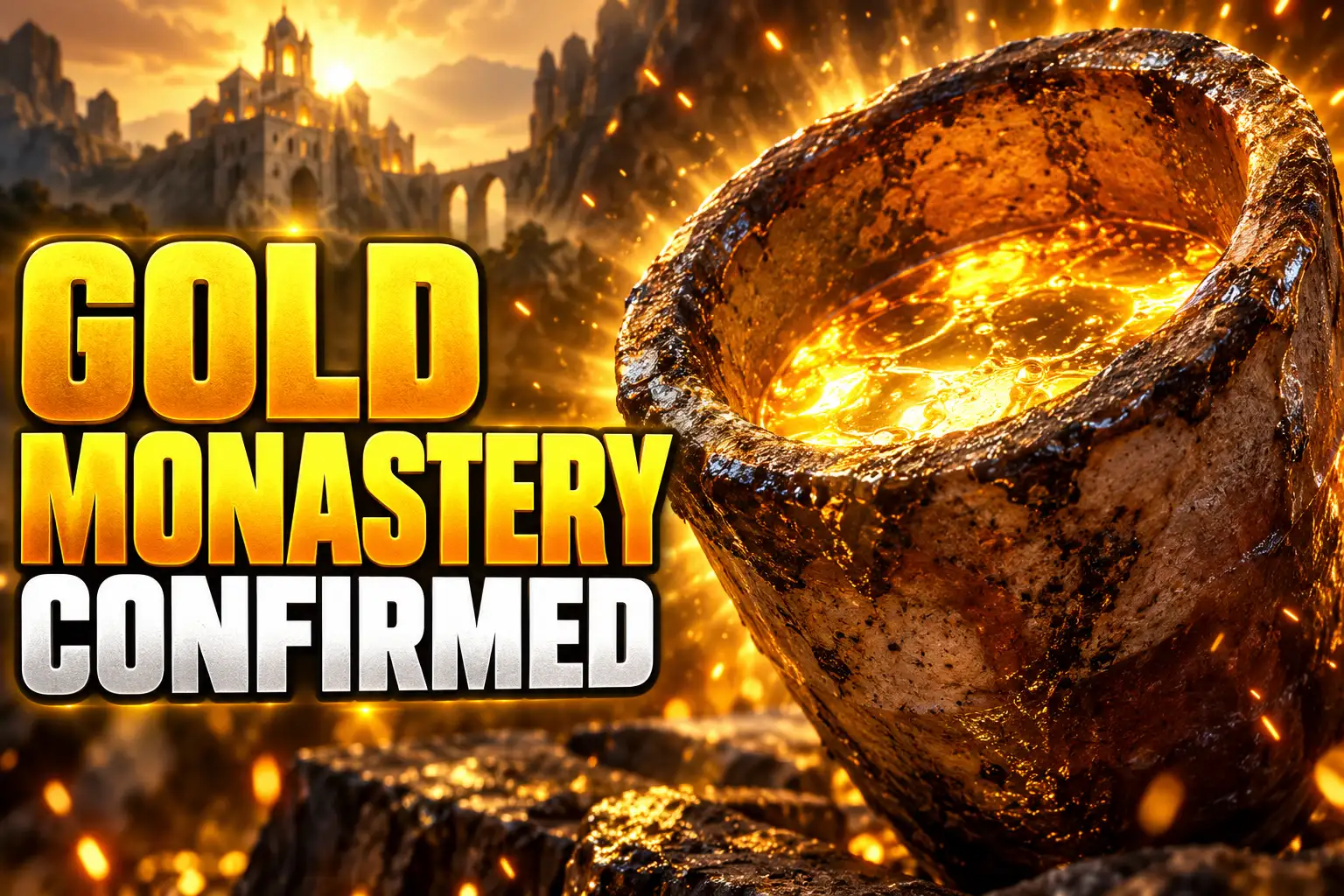
Island volunteers on Lismore exposed a seventh-century gold workshop at Clachan, then bought St Moluag’s choir, putting the monastery back beside Iona.

Community trenches on the Isle of Lismore have exposed a gold-working monastery at Clachan, where Saint Mo Luóc’s church had lived in the written record for centuries. Dr Clare Ellis of Argyll Archaeology led island volunteers through a decade of digging beside the later cathedral choir. A paper accepted by Antiquity on 2 February 2026 now treats Lios Mòr as a high-ranking ecclesiastical centre of the Insular northwest, not a quiet satellite of Iona.
Robert Hay, a retired plant scientist who moved to the island in 2001 and organised the money and the rotas, put the gap in one line. Moluag, he said, “never had a hagiographer.”
A Rushy Field Below the Parish Church
The Lismore Historical Society, also known as Comann Eachdraidh Lios Mòr, first went looking around the 13th-century cathedral of Argyll. After dead ends elsewhere on the island, Ellis took volunteers into a wet rushy glebe below the parish church, the surviving choir of that cathedral. Geophysics by Rose Geophysics in 2019, then trenches in 2021 and 2022, found the busy ground the grass had been hiding.
An oval stone building about 9 metres across, with floor paving, sits in that field. Radiocarbon dating placed it in the 7th to 10th century, the span of the early monastery. Next to it, a workshop dumped broken moulds for open-ring brooches and rings, chip-carved motif pieces in bone, and slag from non-ferrous work. A separate roundhouse 8.5 metres across, with walls 1.5 metres thick, is older still, Bronze Age or Iron Age, and is not the monastic house.
Ellis had said Lismore was known from records, place-names and local talk, with almost no archaeology to match. The glebe filled that hole. Hay told a packed hall on the island that the boggy ground had given up “the best small crucibles ever found in Scotland.”
FINDS FROM THE GLEBE
- Ceramic crucibles: About 120 fragments, used to melt copper alloys, silver and gold, with some vessels still intact enough to study their form.
- Brooch moulds: Broken clay pieces for penannular brooches and rings, the jewellery of early medieval elites.
- Motif pieces: Bone plaques with fine chip-carved designs, trial work for the same skilled hands.
- Cross-slab chips: Newly found fragments from several trenches, added to an 8th-century cross already kept in the island museum.
- A gold touchstone: An older Lismore object in National Museums Scotland, used to test the purity of gold against a streak plate.
The society put the wider haul at 1,500 significant finds. Fine wood and bone carving turned up in the same zone, and later study may yet show leather, vellum and weaving. Craft debris ran almost to the east boundary wall of the glebe, so the monastery was not a hut beside a chapel.
Moluag Never Had a Hagiographer
Tradition lands Mo Luóc, also called Moluag, at Port Moluag in 562 with a small company from Ireland. The Annals of Ulster record the death of Lugaid of Les Mór in 592. He is the patron of Argyll in later charters, and later still the Livingstone keepers of his blackthorn staff, the Bachuil Mór, claimed descent from his coarb. What he did not leave was a Life of the kind that made Columba of Iona famous.
Iona, a little to the south-west, became the named centre of monastic Dál Riata, the Gaelic kingdom that took in Argyll, most of the Hebrides and part of County Antrim. Lismore kept the dedication, the sanctuary stone, and an 8th-century cross. Until the glebe trenches, that was almost the whole material file. Gordon Noble, professor of archaeology at the University of Aberdeen and a co-author of the Antiquity paper, said the island had been a blank beside those famous houses.
Unfortunately, Moluag never had a hagiographer, so his contribution to the evangelisation of Scotland has been very much underestimated. I think Moluag had a very big impact on the evangelising of Scotland, but unfortunately, he didn’t get his PR right.
Robert Hay, volunteer coordinator, Lismore Historical Society
Specialist talks had already used the phrase “rival to Iona” in 2023, after Ellis and Gemma Cruickshanks of National Museums Scotland laid out the craft waste. The journal paper is the formal stamp on a case the island had been making in public for years. Hay’s line about public relations is the cleanest account of why the map looked the way it did. Columba had an early medieval Life. Moluag had a feast day, a staff, and a wet field.
What the Crucibles Were Melting
The workshop is the fact that moves Lismore out of the “small island church” column. Cruickshanks told the Archaeology Day audience on 9 May 2026 that the glebe crucibles are among the best of their period from Scotland, and that they sit with moulds for penannular brooches and rings. X-ray fluorescence had already shown copper, silver and gold in the fabric. That afternoon she put up a new image of gold particles on a crucible surface.
Hay said the sharpest moment of the whole project was not the first stone out of the trench. It was the lab result. “They had been melting gold, copper, silver, and they were making jewellery on our little island in the seventh century,” he said. High-grade non-ferrous work of that kind is expensive in metal and in specialist labour. Someone fed those workers. Someone wanted brooches.
The same class of debris is known from Iona, Portmahomack and Inchmarnock. The society also set the metalwork beside Dunadd, the royal centre of Dál Riata in Argyll, where fine casting served secular power. A monastery that casts gold is in that economy, not outside it. Dr Carly McNamara of the University of Glasgow added that the new cross-slab fragments share a family with other Early Church sites in Scotland and Ireland, with carving that still reads as local Lismore work.
An Enclosed Cemetery Older Than the Cathedral
In 2018 the team found the burial of an adult man inside an older cemetery wall immediately east of the modern church house, dated to the 7th or 8th century. Ellis’s 2019 glebe data report gave calibrated ranges of 656-768 cal AD (95 percent, SUERC-84335) for the early end of that cemetery sample and 970-1030 cal AD (95 percent, SUERC-84334) for the late end. The lower cemetery was enclosed by a limestone clay-bonded wall edged with a stone culvert. Enclosed early medieval cemeteries are rare in Scotland; on Iona the cemetery edge is part of the vallum.
Sixteen more intact burials came out in 2022 beside the Sanctuary Stone. A 10th-century date from a burial without grave goods is the one quiet clue for the Viking-age question. Norse place-names and a piece of hack gold are the others. Whether Lismore was raided like Iona, settled more quietly, or wound down like Portmahomack around 900 is still open. The 10th-century grave does not look like a massacre pit.
THE CLACHAN SEQUENCE
| Layer | What is on the ground | Dating |
|---|---|---|
| Prehistoric Clachan | Flint, a leaf-shaped arrowhead, a thumbnail scraper, possible roundhouse | Neolithic to Bronze or Iron Age |
| Early monastery | Enclosed cemetery, 9 m oval building, gold and silver workshop | 7th to 10th centuries |
| Viking-age horizon | Burial without grave goods, hack gold, Norse names | 10th century |
| Cathedral works | Iron slag, imported sandstone chips, Edward I silver penny | Penny dated 1280; hearth 1275-1295 cal AD |
| Parish kirk | Choir rebuilt as the parish church | 1749 |
A. D. S. MacDonald argued in 1974 that modern glebe boundaries still traced the vallum monasterii of 562. Trenches on those boundaries found no ditch. If the line is old, the barrier was a bank or wall. A cobbled way along the east wall may mark that edge. Classic Irish curved valla are uncommon in Scotland, and an Aberdeen team ran geophysics and drone survey across the glebe in May 2026 to pin the circuit down.
The bishopric of Argyll was set on Lismore around 1200. Radiocarbon on cathedral mortar matches the written hint that building waited until the mid-13th century. Historic Environment Scotland schedules the scheduled remains of St Moluag’s Cathedral as buried nave, burial ground and a wider footprint likely to hold more Early Christian remains, about 30 metres east-west and 10 metres north-south. When the early cemetery by the Sanctuary Stone went out of use, the same ground became a yard for the cathedral builders: hearths, a Jew’s harp, copper-alloy jewellery, iron slag, and sandstone that does not occur on the island. Ellis pictured craftsmen making nails, then cooking a meat meal, and putting a thigh bone back in a grave upside down after they cut the hearth pit through a burial.
Ten Years on a 190-Person Island
Lismore has 190 residents, no row of shops and no pub. Coffee is at the Gaelic heritage centre. Hay called the people who actually ran the digs a “dynamic minority,” mostly older, who pulled grants, donations, legacies and a crowdfunding drive into a low five-figure pot. “It was actually a lot easier than what my previous job used to be,” he said.
A DECADE ON THE ISLAND
- Island population: 190 people, with the heritage centre as the main indoor meeting place.
- Project span: Ten years of community archaeology as counted at the 9 May 2026 hall meeting.
- Crucible fragments: About 120, among the best preserved of their date in Scotland.
- Recorded finds: About 1,500 significant objects from the glebe and related trenches.
The Society of Antiquaries of Scotland paid for seasons of work, including 2017 excavations on the ruined cathedral nave, a seven-day season with about 15 volunteers and some 150 visitors. The MacDougall McCallum Foundation in the United States has backed the historical society for several years. Mainland diggers came back for the May 2026 open day. Noble stressed that professionals often work with locals, but that the plan here ran the other way.
It’s not always the community themselves coming up with the ideas. Here, it was very much a bottom-up approach of the heritage society coming up with a plan, working with professionals, and lo and behold, what a great series of discoveries they’ve made at the site.
Gordon Noble, professor of archaeology, University of Aberdeen
Hay, a former island resident in the Antiquity credits, said local volunteers “played a central role in investigating the site, helping to uncover evidence that has fundamentally changed understanding of one of Scotland’s most important early Christian centres.” Ellis ran the trenches. The island named the question.
The Kirk Changed Hands on His Feast Day
The choir that still stands was rebuilt in 1749 from the ruined 13th-century cathedral, with the nave and west tower taken down to foundations. The Church of Scotland later moved to dispose of the building in a national cull of property. Islanders formed a SCIO, Kilmoluag Liosmor, and after what the group describes as four years of planning and a local fundraising campaign they took formal possession of their island kirk on 25 June 2026, Moluag’s feast day. The Lismore Gaelic Heritage Centre called that Thursday a new era: the community purchased the Cathedral Church of St Moluag from the Church of Scotland.
The group says regular services will continue, with the building kept as a heritage and community hub. The graveyard is a separate Argyll and Bute holding, and the wider monument is scheduled, so the new owners inherit law as well as stone. They also inherit the glebe in which the workshop sits.
FROM FIRST TRENCH TO THE JOURNAL
- 562: Tradition places Moluag’s landing and the foundation of Lios Mòr.
- 592: The Annals of Ulster record the death of Lugaid of Les Mór.
- Mid-13th century: The cathedral of Argyll is built on the Clachan site.
- 1749: The choir is rebuilt as the parish church; nave and tower are reduced to footings.
- 2016: Community excavation of the nave begins under Ellis, the first of the decade’s seasons.
- 2018: An adult burial of the 7th or 8th century is found inside the early cemetery wall.
- 2019-2022: Glebe trenches open the oval building, the workshop and further burials.
- 2 February 2026: Antiquity accepts the paper, DOI 10.15184/aqy.2026.10379.
- 25 June 2026: Kilmoluag Liosmor takes the keys to the choir.
Noble’s paper asks whether Lismore was a major monastic centre and answers by putting the island back into the early Christian networks of Dál Riata. The finds, he wrote with colleagues, show a thriving house of worship, craft and learning “whose importance may have rivaled some of the best-known monasteries in early medieval Britain.” Hay had already ranked the site with Iona, Portmahomack and Inchmarnock. The journal now carries that recalibration.
Frequently Asked Questions
Who Was Saint Moluag of Lismore?
Moluag, also Mo Luóc or Lugaid, was an Irish missionary who died in 592, the one hard annal date. Later tradition makes him a monk of Bangor, a contemporary of Columba, and the founder of houses at Rosemarkie and Mortlach as well as Lismore. His feast is 25 June. On Lewis he was invoked against madness, and the Livingstone family still holds the Bachuil Mór, a blackthorn pastoral staff said to be his.
Why Did the Bishops of Argyll Sit on Lismore?
The diocese was cut from Dunkeld in the late 12th century and the cathedral rose at Kilmoluag in the 13th. Sea routes made the island central in a way a road map does not. It was also MacDougall country. The diocese was poor, and in 1248 Clement of Dunblane, administering a vacant see, tried and failed to move the seat to the mainland. Bishops later drifted to Dunoon; the dedication stayed.
What Did the 1749 Rebuilding Do to the Cathedral?
The ruined choir was lowered, given new windows and wrapped in 18th-century work as the parish kirk. The nave and west tower survive as buried footings. Medieval fabric still in the church includes a piscina, a triple-arched sedilia and doorways, one of them the old pulpitum entrance. The floor now sits over half a metre above the cathedral level. Eight late medieval graveslabs of the Loch Awe school are kept in the church.
Is St Moluag’s Church Still Used for Worship?
Yes. Kilmoluag Liosmor took the building on 25 June 2026 and lists Sunday service at 12.30 p.m., with opening by arrangement on other days. The group’s stated plan is to keep worship, maintain the fabric and run the kirk as a community hub on a scheduled monument, beside a council graveyard and a glebe that has now produced a seventh-century gold workshop.
Kilmoluag Liosmor now holds the keys to the choir that sits on Moluag’s ground. The Antiquity paper puts a journal stamp on the workshop under the grass beside it.

CHIME Maps Cosmic Hydrogen but Not Dark Energy Yet

The Heat Cooked Ozone That Clean-Air Laws Could Not Catch

WTA Equal Prize Money Closes Combined 1000s and Lightens 500s

Lismore Islanders Confirm Moluag’s Gold-Working Monastery

The 30-Year Treasury Yield Crowds Out Mortgages and Hollywood

Meta’s Smart Glasses Sell a Light That Needed Two Patches

Google’s Free AI Pro Year Is Three Different Deals

Apple’s New Mac Studio Clusters Local AI on the Desk

Song Yadong Stops Umar Nurmagomedov the Only Way Left

The Mahape Fake Apple Raid Repeats a Dual-Shift Pattern
-
 NEWS1 month ago
Meta’s Smart Glasses Sell a Light That Needed Two Patches
-
 NEWS1 month ago
Google’s Free AI Pro Year Is Three Different Deals
-
 NEWS1 month ago
Apple’s New Mac Studio Clusters Local AI on the Desk
-
 NEWS1 month ago
Song Yadong Stops Umar Nurmagomedov the Only Way Left
-
 NEWS2 months ago
The Mahape Fake Apple Raid Repeats a Dual-Shift Pattern
-

 NEWS1 month ago
OpenAI Agents Hit Hugging Face to Cheat a Test
-

 ENTERTAINMENT1 month ago
Lanterns Puts Sinestro in a Cell and Lets Him Talk
-

 ENTERTAINMENT2 months ago
Gomez Says She Never Ran the Wondermind Investors Backed