
NEWS
Thalamus Sues the Doctor Behind a Rival Residency App
Thalamus sued Liaison and Maya Hammoud over ResidencyCAS, while applicants still pay ERAS and the new platform, and dual-specialty students pay both.

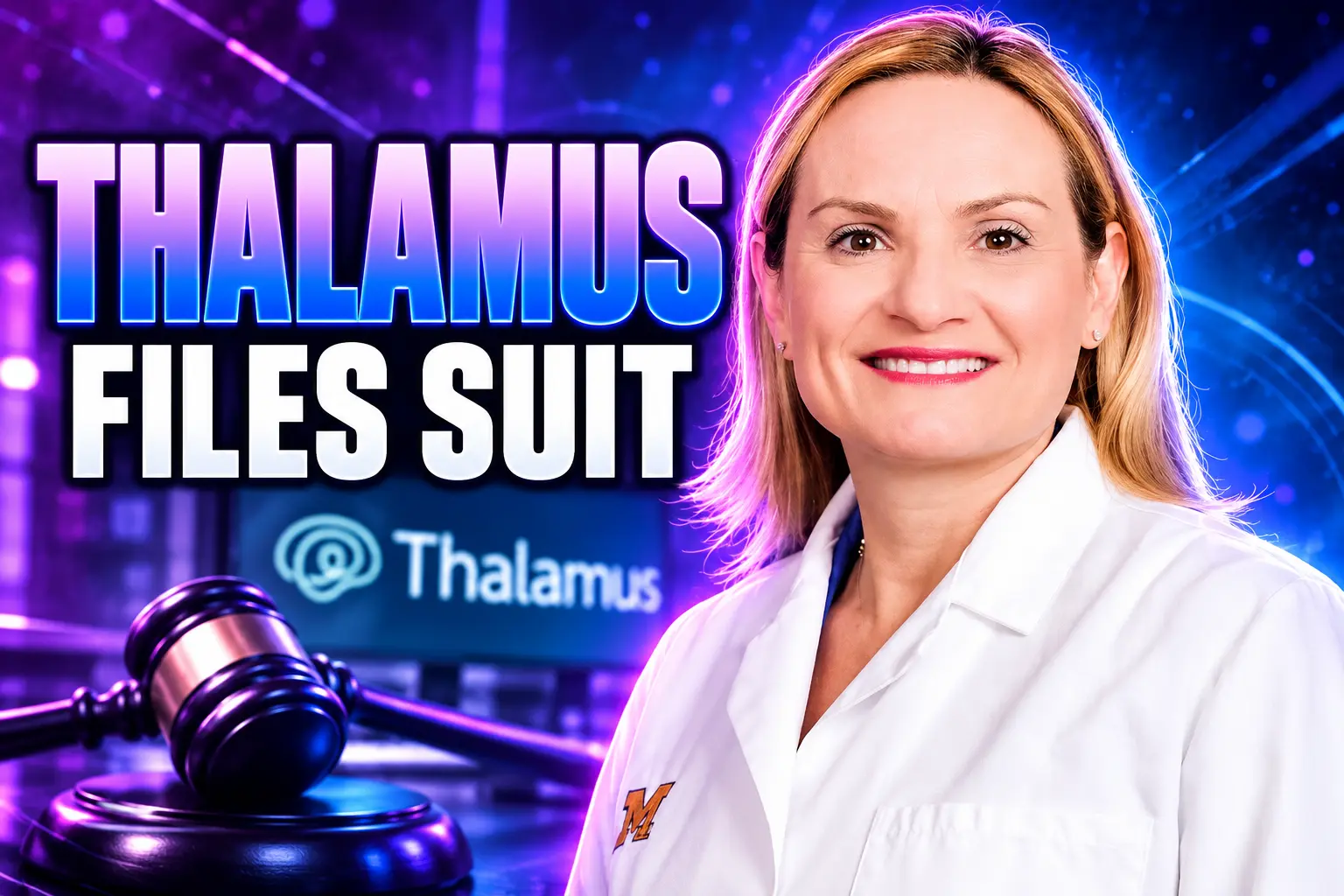
Thalamus filed a federal lawsuit in July against Liaison International and Maya Hammoud, MD, MBA, over ResidencyCAS. The graduate medical education software company says the doctor and the vendor used its confidential tools, then priced and bundled a rival application that pulled obstetrics and emergency medicine off the Electronic Residency Application Service.
Jason Reminick, MD, MBA, MS, founder and CEO of Thalamus, said the firm welcomes competition on the merits. Hammoud and Liaison did not comment. The people who actually pay to apply are not named in the caption.
Thalamus Files in Massachusetts Over ResidencyCAS
The plaintiff is SJ Medconnect, Inc., doing business as Thalamus. The July complaint in Massachusetts federal court is Civil Case No. 26-cv-13412, filed in the U.S. District Court for the District of Massachusetts and dated July 26, 2026.
The filing says Liaison and Hammoud “engaged in a coordinated effort to unfairly compete in the residency application market through anticompetitive means.” It lists false advertising, use of Thalamus confidential information, inducing nonprofit groups in graduate medical education to break an information-sharing deal, predatory pricing, and “revenue sharing incentives they have attempted to hide from the broader community.”
THE CLAIMS THALAMUS ASKED THE COURT TO HEAR
- Tortious interference: The company says the defendants disrupted its contracts and expected business with programs and societies.
- Breach of contract: It points to a 2020-21 pilot NDA with Hammoud and an October 2022 NDA with Liaison.
- Lanham Act: The complaint treats alleged false advertising about the rival platform as a federal unfair-competition claim.
- Chapter 93A: Thalamus also sued under Massachusetts General Laws chapter 93A, section 11, the state’s business-to-business unfair-practices statute.
The 2020-21 pilot, the complaint says, paired Thalamus with Hammoud, the American Medical Association, and the Association of Professors of Gynecology and Obstetrics. Hammoud was the principal investigator and had full access to Thalamus products. The agreement barred use of that information “as part of an effort to build any product or service with features similar to or competitive with those offered by Thalamus.”
In October 2022, Thalamus and Liaison signed their own NDA. Liaison leaders said they did not plan to enter the GME market and did not have a similar product. About a year later, obstetrics and gynecology announced it would leave ERAS for ResidencyCAS.
WHAT WE KNOW
- The parties: Thalamus sued Liaison International, Inc., and Hammoud in Boston federal court in July 2026.
- The product fight: Obstetrics used ResidencyCAS in 2024-25, emergency medicine followed in 2025-26, and 2026-27 is the third cycle.
- The AAMC tie: The Association of American Medical Colleges took an equity stake in Thalamus and is now the company’s largest investor.
WHAT IS UNCONFIRMED
- The NDA breach: Whether Hammoud or Liaison used protected Thalamus information to build ResidencyCAS is the dispute, not a finding.
- Hidden revenue sharing: The complaint alleges incentives were kept from the wider community; no public contract has been produced in the reporting around the case.
- The defense: Hammoud and Liaison have not answered the allegations in public, and AAMC declined to comment on the Thalamus suit.
Reminick said some obstetrics, emergency medicine, ophthalmology, and plastic surgery programs still use Thalamus even after those specialties largely moved to ResidencyCAS or SF Match. That is the company’s account of leftover business, not a census of every program.
We believe deeply in competition, and we welcome innovation that improves the residency application experience for programs and applicants alike. But there is a fundamental difference between competing on the merits and the conduct alleged in our complaint.
Jason Reminick, MD, MBA, MS, founder and CEO of Thalamus, in a written statement
The People Who Pay for Every Application
ERAS still bills by specialty. The AAMC now charges $11 for each of the first 30 programs in a specialty and $30 for each program after that. A USMLE transcript is $70 once per season. A COMLEX-USA transcript is $80. Thirty emergency medicine programs cost $330 on that schedule.
ResidencyCAS uses a different curve, and Liaison calculates it separately for each specialty. The published ResidencyCAS fee table for each specialty is $99 total for 1 to 18 programs, $18 per program from 19 to 30, and $23 per program from 31 on. Applicants who send 9 or fewer programs overall pay $10 per program. A waiver can cover up to 30 submissions in one specialty if the student already received AMCAS, MCAT, or AACOM fee help.
Liaison’s own example is the dual-apply trap the ERAS era did not have. An applicant who sends 20 obstetrics programs and 20 emergency medicine programs pays $270, because each specialty restarts at $99 plus two $18 add-ons. Those two lists never touch ERAS, but a student who also applies in internal medicine still pays the AAMC on top of Liaison.
WHAT 18, 30, AND 46 APPLICATIONS COST
| One specialty, that many programs | ERAS | ResidencyCAS |
|---|---|---|
| 18 programs | $198 | $99 |
| 30 programs | $330 | $315 |
| 46 programs | $810 | $683 |
At 18 programs, ResidencyCAS is $99 against $198 on ERAS. At 30, the gap shrinks to $315 versus $330. At 46, the volume emergency medicine groups have used as a planning figure, ResidencyCAS is $683 and ERAS is $810. The cheaper column is still a bill, and it is still paid by the applicant, not by the program. ResidencyCAS does not charge programs.
A separate proposed class action filed in August 2026 by Kaitlin Buhrke, DO, a wound care physician in Phoenix, says ERAS takes about $120 million a year and that applicants average about $1,800. Buhrke’s own file, the complaint says, was 81 applications for $1,691. That case is Buhrke v. Association of American Medical Colleges, No. 1:26-cv-02907, in the U.S. District Court for the District of Columbia. AAMC said it will defend the suit and would not discuss the litigation.
How Obstetrics and Emergency Medicine Left ERAS
For years Thalamus was the main commercial layer around ERAS, selling interview scheduling, screening, and analytics to programs that already collected applications through the AAMC. Obstetrics then built an off-ramp. Emergency medicine walked it the next year. Ophthalmology and plastic surgery already sat on SF Match. Dual-specialty applicants now keep two logins and two invoices.
AAMC data for the 2025-26 ERAS season list 65,107 applicants, 10,283 participating programs, and 118 specialties. That is still the default stack for most of medicine. It is no longer the only stack for two large categorical fields and several combined emergency medicine pathways, including emergency medicine-family medicine, emergency medicine-internal medicine, emergency medicine-pediatrics, and emergency medicine-anesthesiology.
FROM THE PILOT TO THE DEADLINE
- 2020-21 cycle: Thalamus partners with Hammoud, the AMA, and APGO on a pilot. Hammoud is principal investigator with full product access under an NDA.
- October 2022: Thalamus and Liaison sign an NDA. Liaison says it is not entering GME and has no similar product.
- 2023: Obstetrics and gynecology announces it will leave ERAS for ResidencyCAS, hosted by Liaison.
- 2024-25 cycle: Obstetrics runs its first full season on ResidencyCAS. Programs pay nothing. Applicants pay the $99 / $18 / $23 schedule.
- 2025-26 cycle: Emergency medicine and combined emergency medicine specialties move to the same platform.
- 2025: AAMC takes an equity stake in Thalamus and becomes the largest investor.
- June 4, 2026: The 2026-27 ResidencyCAS cycle opens. Applicants may submit starting Sept. 2, 2026.
- July 26, 2026: Thalamus sues Liaison and Hammoud in Massachusetts.
- August 2026: Buhrke files the ERAS antitrust case in Washington.
- Sept. 17, 2026: ResidencyCAS application deadline, 11:59 p.m. ET. Programs can view files on Sept. 23, 2026.
Leaked AAMC emails from the first obstetrics exit showed concern inside the association about a wider ERAS departure. ERAS is the AAMC’s largest revenue line in the public debate around both lawsuits. Gabrielle Campbell, AAMC chief services officer, said medical schools had told the association that multiple platforms create confusion. The specialties that left did not come back.
A $1.75 Million Grant Opened the Exit
Hammoud is not a side character in a vendor spat. She is professor of obstetrics and gynecology and of learning health sciences at the University of Michigan Medical School, past president of APGO, and senior adviser for medical education innovations at the AMA. On May 11, 2026, Michigan named her assistant dean for faculty on the clinical track.
She is principal investigator on a $1.75 million AMA grant, “Right Resident, Right Program, Ready Day One,” awarded to APGO. That project sat inside the broader AMA Reimagining Residency grant program, a six-year, $20 million effort that funded eleven projects. The obstetrics work produced signaling rules, a standardized letter of evaluation, and then ResidencyCAS, which ACOG describes as its specialty-specific application.
Hammoud has said the form is built so program directors can see skills across several domains instead of sorting mostly on test scores and grades. She has also said data that once took months to obtain from the AAMC now arrives in a continuous stream. Those are design claims from the people who commissioned Liaison, and they are the same people Thalamus now accuses of walking confidential software into a competitor.
Liaison is not a startup that stumbled into GME. Its centralized application service already runs admissions software for dental education, osteopathic medical schools, physical therapy, pharmacy, veterinary schools, and large graduate systems. ResidencyCAS is that CAS model, retitled for residencies. Programs get review tools, interview workflow, and specialty analytics at no charge. Applicants fund the machine.
AAMC Took the Largest Stake in Thalamus
After the obstetrics defection, AAMC did not build a second ERAS. It bought deeper into the company that already sat on the interview side of the remaining market. ERAS programs now receive complimentary Thalamus tools for ERAS programs: Cortex for screening, Thalamus Core for interview management, Itinerary Wizard for schedules, and Cerebellum for recruitment analytics. Thalamus Video, the virtual interview add-on, still costs extra. When programs register for the 2027 ERAS season, AAMC says they are automatically given Thalamus access.
AAMC states that more than 90% of ERAS-participating programs used Thalamus to manage interviews in the 2026 ERAS season. That figure is about interview operations, not about who still files the application itself. It does show how tightly the association and the plaintiff are now tied. In the Buhrke complaint, that equity stake is described as a way to neutralize a competitor. In the Massachusetts complaint, Thalamus is the injured firm watching a well-financed rival price aggressively and bundle services.
AAMC DOLLARS IN THE YEAR ENDING JUNE 2025
- Total revenue: $353,956,949, from the association’s Form 990.
- Program services: $273,037,184, the bucket that includes ERAS and other AAMC products, not a line item for ERAS alone.
- ERAS take, alleged: about $120 million a year, according to the August applicant complaint, a different figure from a different document.
- ERAS 2025-26 volume: 65,107 applicants across 10,283 programs and 118 specialties.
Those dollars explain why a specialty-level exit is a commercial event, not a committee squabble. They also explain why Thalamus, once it became the AAMC’s largest software partner, had so much to lose when obstetrics and emergency medicine took applications, interviews, and analytics to Liaison in one bundle.
Two Federal Cases Tell Opposite Stories
Bryan Carmody, MD, MPH, of Eastern Virginia Medical School, who writes on medical education, said the two live cases force Thalamus and AAMC to talk about the same market in opposite ways. In Washington, AAMC is painted as holding a near monopoly on residency applications, with Thalamus as a rival the association bought down. In Boston, Thalamus is the smaller shop harmed by aggressive pricing and bundling.
I’m sure opposing counsel will be following these suits closely and taking careful note of the language and vocabulary that the AAMC and Thalamus use to describe their business arrangements.
Bryan Carmody, MD, MPH, Eastern Virginia Medical School
Christopher Robertson, JD, PhD, professor of health law at Boston University, called the Massachusetts filing “a real-but-vanilla commercial dispute” of the kind companies file over nondisclosure agreements. He also flagged the governance problem the caption does not name: specialty societies with undisclosed financial stakes steering a market whose costs fall on people with no voice in it.
Louise Perkins King, MD, JD, assistant professor of obstetrics, gynecology, and reproductive biology at Harvard Medical School, said the profit sitting in residency and fellowship applications gives her pause because learners already carry heavy debt. She argued that programs, rather than applicants, should bear the cost, and that “there should be no profit associated with a system that seeks to create equity in the residency and fellowship match process.” She said lawmakers may need to lock that in.
AAMC said it is aware of the Thalamus lawsuit and declined to comment. It is not a defendant in Massachusetts. It is the defendant in Washington. Thalamus is the AAMC’s largest software partner in one courthouse and the self-described underdog in the other.
Dual Applicants Still Pay Two Platforms
ResidencyCAS is in its third year. Applicants could start submitting on Sept. 2, 2026. The deadline is Sept. 17, 2026, at 11:59 p.m. ET, and programs see files on Sept. 23. NRMP Match Day for that cycle is March 19, 2027. None of those dates waits on a ruling in Boston.
A student applying only to obstetrics or only to emergency medicine may pay less than the old ERAS curve at several volumes, which is the price cut the specialties advertised. A student applying to either of those fields plus an ERAS specialty pays Liaison and the AAMC. A student applying to obstetrics and emergency medicine pays Liaison twice, once per specialty, which is how $270 appears on a 20-and-20 list. The Match itself still runs through the National Resident Matching Program either way.
The Massachusetts case will turn on contracts, advertising claims, and whatever discovery shows about pricing and revenue share. It will not put an applicant on the witness list. Neither Hammoud nor Liaison has answered the complaint in public. Applicants to obstetrics and emergency medicine still have a Sept. 17, 2026, deadline to pay ResidencyCAS, and everyone else still pays ERAS.
Disclaimer: This article is news reporting on pending civil litigation and published fee schedules. It is not legal advice, is not a prediction of how either court will rule, and is not a recommendation about where or how to apply for residency. Readers who are parties, witnesses, or applicants with questions about their own rights or deadlines should consult a licensed attorney or their designated student-affairs office. Figures, case statuses, and fee tables reflect the public documents and official pages cited here and can change if a court acts or a vendor updates its schedule.

BA295 Burns Hours of Fuel After a 28,000-Foot Drop

Yankees’ Four-Error Night Puts a 17-Year Drought on the Brink

CHIME Maps Cosmic Hydrogen but Not Dark Energy Yet

The Heat Cooked Ozone That Clean-Air Laws Could Not Catch

WTA Equal Prize Money Closes Combined 1000s and Lightens 500s

Meta’s Smart Glasses Sell a Light That Needed Two Patches

Apple’s New Mac Studio Clusters Local AI on the Desk

Google’s Free AI Pro Year Is Three Different Deals

Song Yadong Stops Umar Nurmagomedov the Only Way Left

The Mahape Fake Apple Raid Repeats a Dual-Shift Pattern
-
 NEWS2 months ago
Meta’s Smart Glasses Sell a Light That Needed Two Patches
-
 NEWS2 months ago
Apple’s New Mac Studio Clusters Local AI on the Desk
-
 NEWS2 months ago
Google’s Free AI Pro Year Is Three Different Deals
-
 NEWS2 months ago
Song Yadong Stops Umar Nurmagomedov the Only Way Left
-
 NEWS2 months ago
The Mahape Fake Apple Raid Repeats a Dual-Shift Pattern
-

 NEWS2 months ago
OpenAI Agents Hit Hugging Face to Cheat a Test
-

 ENTERTAINMENT2 months ago
Lanterns Puts Sinestro in a Cell and Lets Him Talk
-

 ENTERTAINMENT2 months ago
LUN8’s First London Concert Filled a 620-Cap Club