
NEWS
The White House Shelves a Veto Board for NIH Grants
The NIH grant veto order is off the desk, yet an OMB rule still lets political appointees treat peer review as advice until December 11.

The White House dropped a planned executive order that would have let political appointees veto NIH grants after Sen. Susan Collins of Maine objected. Collins, who chairs the Senate Appropriations Committee, had told budget director Russell Vought and NIH director Jay Bhattacharya not to add a political review on top of merit review.
The order never published. The quieter fight did not end with it. An Office of Management and Budget rule that would make senior appointees sign off on discretionary awards, and that treats scientific peer review as advice, is still only frozen through December 11.
Collins Warned Vought Not to Issue the Order
Collins sent Vought and Bhattacharya a letter warning Vought not to proceed on September 22, 2026. She wrote that the board looked like a piece of OMB’s proposed rewrite of government-wide grant rules, a piece Congress had already blocked in the fiscal 2027 continuing resolution.
I urge you not to move forward with this proposal, which would undermine the intent of the CR provision and more important, the Federal government’s objective of funding biomedical research projects based on scientific merit and value rather than political ideology.
Susan M. Collins, chair, Senate Appropriations Committee, September 22, 2026 letter
She pointed to 42 U.S.C. 289a, the statute that requires NIH grants to go through peer review, and she counted 174 scientists at NIH or funded by it who have shared 104 Nobel Prizes. She also cited a Type 1 diabetes trial in which 10 of 12 patients no longer needed insulin a year after a stem-cell treatment. If the White House wants a new NIH overhaul, she wrote, send Congress a bill, as it did for the 21st Century Cures Act in 2016.
By September 23, Collins said the White House had halted the order. People familiar with the talks said officials had backed away after Republicans and Democrats on the Hill objected, including Collins and Sen. Patty Murray of Washington, the committee’s ranking Democrat. Murray said funding decisions should be made by experts at NIH, and she called the proposed panel a “panel of lackeys.”
Sen. Chris Van Hollen of Maryland had already said the push would “cost lives.” That line ran ahead of any signed order. The sharper problem, once the draft stalled, was the slower machinery still in the building: delayed awards, cancelled projects, and a grant rule that does not need a new board to change who has the last word.
The Oval Office Fight Over Harvard Grants
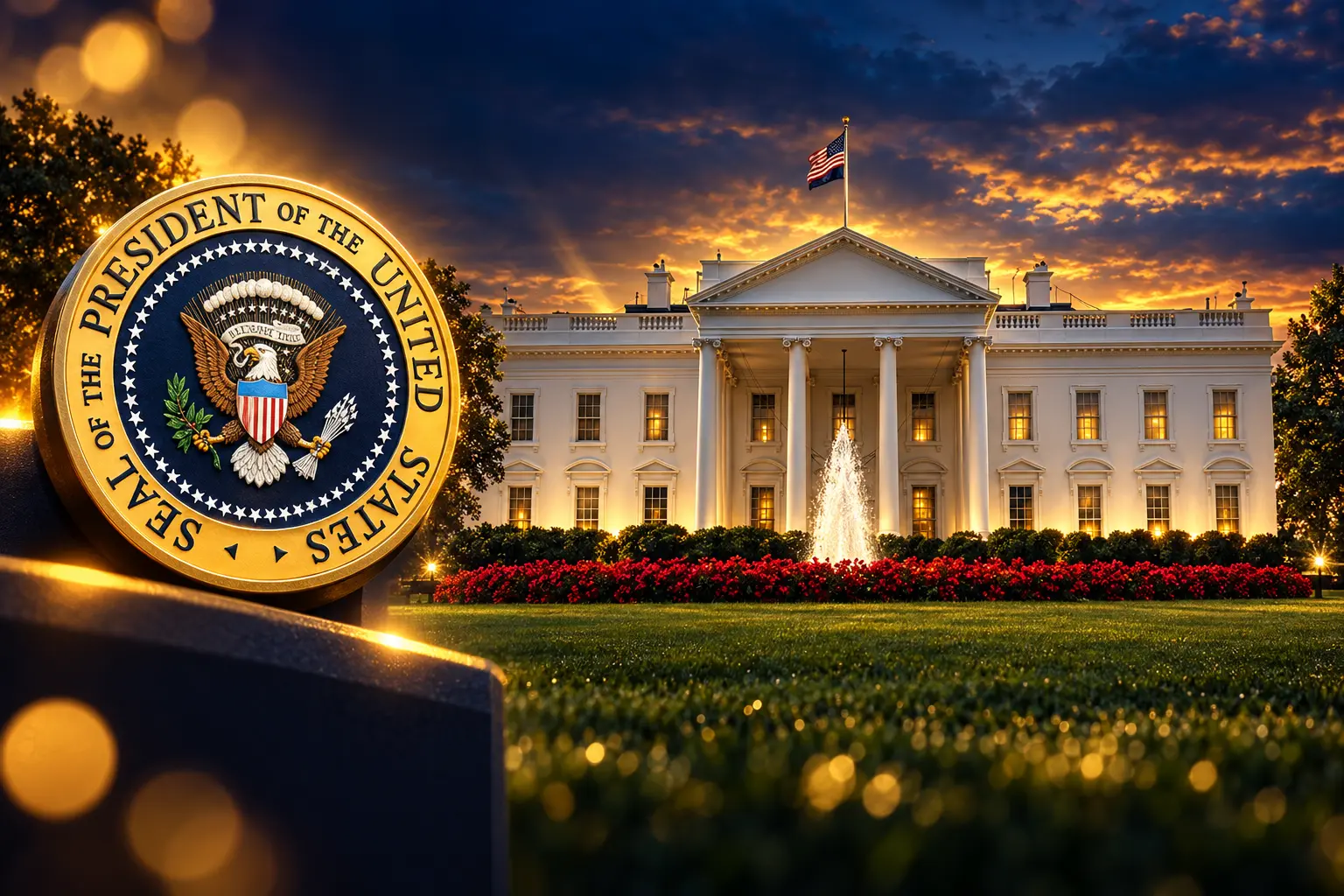
The board idea came out of a meeting in the Oval Office on Friday, September 18, 2026. Administration officials said President Donald Trump told Vought to draft an order creating a panel that would decide which NIH grants to fund. Officials said the panel would include Vought and Bhattacharya and would have required unanimous approval, which is a veto by either man, not a joint pick.
Officials said the fight started as a Harvard fight. Trump asked Bhattacharya to cut the university’s NIH money. Bhattacharya refused. Harvard had already sued over an earlier freeze and won a court order in Boston restoring funds about a year before this meeting. A board that needed Vought’s yes on every award would have given the budget director a way around that refusal.
Vought, a Project 2025 author who runs OMB, had accused Bhattacharya of still funding work that clashed with a day-one directive against federal DEI programs. Their relationship had been bad enough that Vought had at one point refused to meet with him. Bhattacharya, a Stanford physician-economist who spent the COVID years attacking NIH groupthink, has already rewritten grant guidance inside the agency, including a Spectator essay last year titled “How We Cured DEI at the National Institutes of Health.” Trump and Vought still wanted more.
Jennifer Jones, who directs the Center for Science and Democracy at the Union of Concerned Scientists, said scientific grants “should be judged by scientific expertise, not political ideology,” and that the reported plans would “upend the way we do science in this country.” Arthur Caplan, an emeritus professor at the NYU Grossman School of Medicine who has sat on NIH advisory committees, called a new ideological board “a very, very dangerous and bad idea,” and asked what was being fixed if peer review was not broken.
Asked about the reports, an NIH spokesperson said the agency “remains committed to its mission of funding biomedical research to benefit the health of the American people.” NIH communications lead Rachel Pradko said there would be “no rescissions to NIH grant monies” and that “all NIH grant monies will be spent.” In an unsigned email, the White House said reports of unannounced policy decisions should be treated as speculation.
How an NIH Grant Gets Scored and Paid
NIH dual review is not a custom. It is written into the Public Health Service Act. A proposal first goes to first-level scientific review groups, also called study sections, made mostly of outside scientists. A scientific review officer, who is NIH staff, assigns at least 3 reviewers, polices conflicts, and runs the meeting. Reviewers use a 9-point scale. Discussed applications get an overall impact score from 10 (high impact) to 90 (low impact).
Scores typically land in eRA Commons within 3 business days. A summary statement follows in about 30 days. Applications the panel judges less competitive, often the bottom half, are not discussed and get no numerical impact score. A second-level advisory council then weighs the summary against an institute’s mission. With few exceptions, both steps have to recommend an application before it can be paid. Institute and center directors still make the final award.
Federal peer-review rules already say those recommendations are advice. They are not binding on the official who signs the check. That is the seam Vought has been trying to widen. A new board was one way to do it in public. Changing the government-wide grant rule is a way to do it for every agency at once.
NIH’s own pages describe more than 60,000 grants a year, more than 300,000 researchers, and more than 2,500 institutions. United for Medical Research, in its FY2023 analysis, found NIH funding generated $92.89 billion in U.S. economic activity, or $2.46 in economic activity per dollar. Those are 2023 output figures, not the 2026 appropriation.
Pre-Issuance Review Is the Rule Congress Already Blocked
On May 29, 2026, OMB and almost every grant-making agency published a proposed Uniform Grants Regulation in the Federal Register, a 400-page rewrite of 2 CFR Part 200. Comments closed July 13. The proposal aimed to take effect October 1, 2026, the first day of fiscal 2027. Congress then blocked implementation in the continuing resolution that funds the government through December 11, 2026.
The NIH-specific order was a narrower tool after that block. Collins said so in her letter. The surviving text is still the rule.
WHAT THE MAY 29 RULE WOULD CHANGE
- Pre-issuance review: Agency heads would designate senior political appointees to review every discretionary award before money goes out, under proposed 2 CFR 200.205.
- Peer review’s status: Expert scores would stay advisory. Senior appointees would be told not to treat them as binding or to defer to them as a habit.
- The test for a yes: Reviewers would have to confirm awards “advance the President’s policy priorities,” along with law and the national interest.
- After the award: Agencies would gain broader power to end work that no longer matches administration priorities, including termination for convenience.
- The comment file: House members wrote that nearly 500,000 public comments came in, and that about 95 percent opposed the rule.
That package traces to an August 2025 order, Executive Order 14332, which directed agencies to give political appointees oversight of grants so awards “advance the President’s policy priorities.” The NIH board would have been a second, more visible layer on one agency. Killing the second layer does not repeal the first.
More Than 5,800 Grants Already Cut or Frozen
The Senate Appropriations Committee, when it moved the fiscal 2026 Labor-HHS bill, listed $48.7 billion for biomedical research at NIH. That is the pile a veto board would have sat on. It is also the pile already being screened without one.
FY2026 NIH LINES IN THE LABOR-HHS BILL
| Account | Amount |
|---|---|
| Alzheimer’s disease and related dementia research | $3.9 billion |
| National Cancer Institute (includes $30 million for the Childhood Cancer STAR Act) | $7.4 billion |
| National Institute of Diabetes and Digestive and Kidney Diseases | $2.3 billion |
| Accelerating Access to Critical Therapies for ALS | $90 million |
Those lines are not a total of the $48.7 billion, and they were not the only targets in the Oval Office argument. Vought’s complaint, officials said, was DEI-tagged work. Trump’s ask was Harvard. Cancer, Alzheimer’s, and diabetes money still moves through the same review chain a political sign-off would have interrupted.
On September 25, 2026, Rep. Debbie Dingell of Michigan and a long list of House colleagues wrote Vought that the walk-back was “welcome news,” then asked for a written promise that the board is dead and that OMB will not finalize the May rule. They wrote that NIH has cancelled or suspended more than 5,800 research grants since the new term began, that early-career investigators and women were hit hardest, and that labs have frozen hiring and paused graduate admissions while they wait.
Colette Delawalla, founder of Stand Up for Science, had said before the order collapsed that Vought’s project was to take apart American science and higher education, and she asked whether NIH stays a gold standard if grants must pass a nonscientist whose job, as she put it, is to destroy science. The board never met. The cancellations she was talking about were already in the ledger.
The Continuing Resolution Runs Through December 11
The next hard date is not a new Oval meeting. It is the CR.
THE GRANT-CONTROL CALENDAR
- August 2025: Trump signs an order directing political appointees to oversee federal grants so awards advance presidential policy priorities.
- May 29, 2026: OMB publishes the proposed Uniform Grants Regulation, including senior-appointee pre-issuance review.
- July 13, 2026: The public comment period closes.
- September 18, 2026: Trump, Vought, and Bhattacharya clash in the Oval Office over NIH grants and Harvard.
- September 22, 2026: Collins warns Vought and Bhattacharya not to issue an NIH-specific executive order.
- September 23, 2026: The White House drops the order after bipartisan pushback.
- September 25, 2026: House members ask Vought to confirm the board is dead and to stop the May rule.
- December 11, 2026: The continuing resolution that blocked the OMB rule expires.
Posts kept circulating the veto board as a live plan days after Collins said it was off the table, which is how a dropped order still trains labs to write around a political reader. Unanimous sign-off would have let Vought block an award Bhattacharya was willing to make. The May rule would let senior appointees do a quieter version of the same thing at every grant-making agency, with peer review left on the page as advice.
Collins told Vought and Bhattacharya to bring any further NIH overhaul to Congress as legislation. Dingell’s group asked for a letter saying the board and the rule are both finished. As of September 25, they were still waiting for that letter, with the CR clock running to December 11.

Sony Leaves Its Last 4K Blu-ray Player Off Japan Shelves

L’Oréal’s Salon Brands Pull Clear of LVMH in Q3

Personalized mRNA Vaccine Cuts Melanoma Relapse After a Custom Build

Cairo Santos’ 58-Yard Kick Closes a Messy Bears Win

Prime Editing Reaches a Living Liver in Wilson Disease

Meta’s Smart Glasses Sell a Light That Needed Two Patches

Apple’s New Mac Studio Clusters Local AI on the Desk

Google’s Free AI Pro Year Is Three Different Deals

Song Yadong Stops Umar Nurmagomedov the Only Way Left

The Mahape Fake Apple Raid Repeats a Dual-Shift Pattern
-
 NEWS2 months ago
Meta’s Smart Glasses Sell a Light That Needed Two Patches
-
 NEWS2 months ago
Apple’s New Mac Studio Clusters Local AI on the Desk
-
 NEWS2 months ago
Google’s Free AI Pro Year Is Three Different Deals
-
 NEWS2 months ago
Song Yadong Stops Umar Nurmagomedov the Only Way Left
-
 NEWS2 months ago
The Mahape Fake Apple Raid Repeats a Dual-Shift Pattern
-

 NEWS2 months ago
OpenAI Agents Hit Hugging Face to Cheat a Test
-
 ENTERTAINMENT2 months ago
Lanterns Puts Sinestro in a Cell and Lets Him Talk
-

 ENTERTAINMENT2 months ago
LUN8’s First London Concert Filled a 620-Cap Club