
NEWS
Tyler Ulrich Dies After a Year Without Traumatic Football Deaths
Tyler Ulrich died Oct. 15 after a Division II head injury, the first traumatic football death since a 2025 survey year that recorded none.

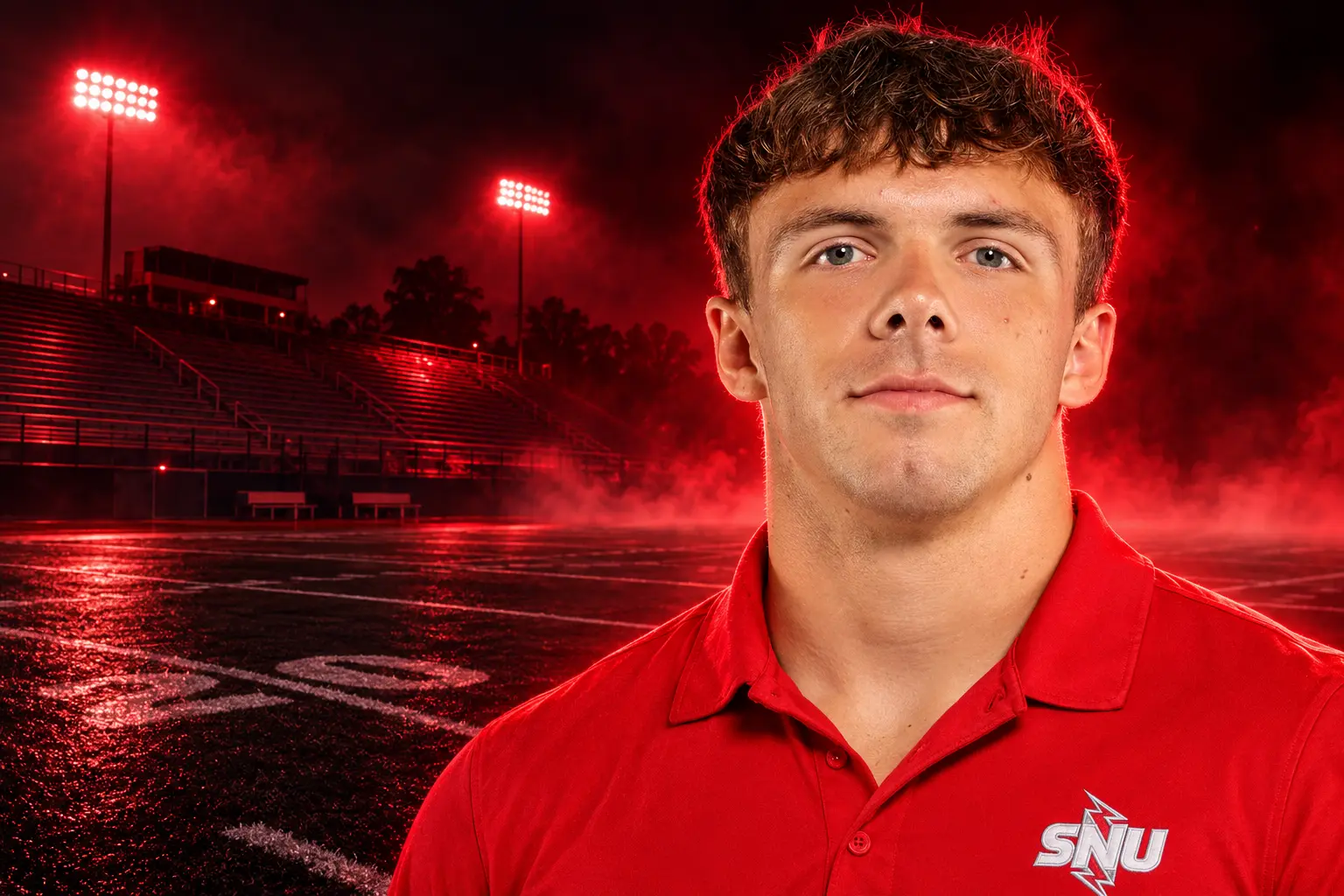
Tyler Ulrich, a 21-year-old Southern Nazarene safety, died on Oct. 15, five days after a traumatic brain injury in a Division II game. He was hurt on Oct. 10 at Ouachita Baptist in Arkadelphia, Arkansas, and the game stopped for nearly an hour while he was treated on the field.
The last full football fatality survey in the United States logged no traumatic deaths at any level in 2025. Ulrich’s death, at a private Christian school in Bethany, Oklahoma, is the first of that kind to break the silence, and it followed a script the sport has used for decades: a delayed Saturday, a hospital week, chapel, then a canceled kickoff while the rest of college football played on.
A Road Game in Arkadelphia Stopped for Nearly an Hour
Southern Nazarene went to Ouachita Baptist on Oct. 10 and lost 49-14. Ulrich, a starting safety in his third season, was injured during that Great American Conference game and taken from the field after on-field care that held the contest for nearly an hour.
The university first called it a traumatic injury and said he was in critical condition. It later described a traumatic brain injury. No public autopsy, hospital name, or play-by-play of the hit has been released, and nothing in the school’s statements names the tackle, the block, or the special-teams play that put him down.
That gap is typical at this level. A Division II road game in Arkadelphia does not generate the broadcast replay that a Power 5 collapse does, so the medical facts travel slower than the condolence posts. By Thursday morning the facts that mattered were a time of death and a family statement.
THE WEEK IN ARKADELPHIA AND BETHANY
- Oct. 10, 2026: Ulrich is hurt in Southern Nazarene’s 49-14 loss at Ouachita Baptist. The game is delayed for nearly an hour for on-field care, then he is taken to a hospital in critical condition.
- Oct. 13, 2026: Southern Nazarene holds a campuswide prayer chapel for him while he remains hospitalized.
- Oct. 15, 2026: Mark Ulrich, his father, writes that “the Lord called Tyler this morning at 11:13am.” The university confirms the death the same day.
- Oct. 17, 2026: Southern Nazarene’s game at Southwestern Oklahoma State, already on the calendar, is canceled.
Ouachita Baptist said its campus was grieving with Southern Nazarene and asked for prayer for Ulrich’s family, teammates, and coaches. The host school did not describe the play either.
College Football Recorded 3 Traumatic Deaths in a Decade
Kristen L. Kucera, director of the National Center for Catastrophic Sport Injury Research at the University of North Carolina at Chapel Hill, publishes the annual football fatality survey that the NCAA, high school federations, and trainers still use to judge whether the sport is getting safer. The March 2026 report, covering calendar 2025, found zero traumatic football deaths in 2025 at youth, high school, college, or pro levels.
Traumatic, or direct, deaths are the ones that come from the skills of the game, a fractured spine or a fatal brain injury, not from heat, a heart arrhythmia, or sickle cell collapse in conditioning. Indirect deaths still happen. Direct ones have become scarce enough that a single college case is a year-defining line in the ledger.
TRAUMATIC FOOTBALL DEATHS IN THE NCCSIR SURVEY
| Period | Deaths | Level |
|---|---|---|
| 2025 | 0 | All levels |
| 2024 | 4 | All levels |
| 2023 | 3 | All levels |
| 2022 | 3 | All levels |
| 2021 | 4 | All levels |
| 2021-2025 | 14 | All levels |
| 2016-2025 | 27 | All levels |
| 2006-2015 | 49 | All levels |
| 2016-2025 | 3 | College only |
| 2006-2015 | 4 | College only |
The 27 traumatic deaths from 2016 through 2025 are 45 percent fewer than the 49 in the ten years before that. College football’s own slice is thinner still: 3 direct traumatic deaths in 2016-2025, against 4 in 2006-2015, a 25 percent drop. The survey warns that rates built on fewer than 5 cases should be read with caution. Ulrich would be a 2026 case, not yet in that book.
The 2025 report still counted 11 deaths of football players at all levels, including 4 in college, 6 in high school, and 1 in youth football. None of those 11 was a traumatic injury from the game itself. Six were exertional or medical events. The other deaths sat outside play and exertion, the category the center began tracking in 2014 so that cardiac cases in sleep or in another sport would not vanish from the file.
A DII death still lands as a shock because last year’s published count had no traumatic football deaths at all. Some readers are already grouping 2026 college deaths by feel, mixing workouts, medical collapses, and this head injury into one pile. The survey does not. It splits mechanism on purpose, which is why a year can look quiet in the traumatic column and still have college players die.
The Safety From Azle Who Started 16 Games
Ulrich was a 5-foot-10 sophomore safety from Azle, Texas, listed at 200 pounds, wearing No. 30. He was a finance major who listed church, lifting, and water sports on his bio. The roster shows three seasons in Bethany: freshman in 2024 at 185 pounds, redshirt freshman in 2025, sophomore in 2026.
He had 16 starts in 20 career games, including 6 starts this season, and 39 tackles in 6 games. Southern Nazarene was 1-5 when he was hurt. The box score is ordinary until it is the last one.
BEFORE THE ROAD TRIP TO ARKANSAS
- High school: He played varsity at Azle High School, made All-District Second Team, made Academic All-State Second Team, and competed as a state powerlifter.
- College role: Safety, third season, 16 starts in 20 games, 6 starts and 39 tackles in 2026.
- Campus life: Finance major at a Nazarene university of a few thousand students in the Oklahoma City suburbs, in NCAA Division II’s Great American Conference.
Jason Vines, who coached him at Azle High School, called him an unbelievable young man known and loved by the school and the town. “His smile, his demeanor, the way he carried himself, his work ethic were all very impressive, especially for such a young high school kid at the time,” Vines said. He also said that if a coach could create the perfect teammate, it would be Tyler, and that he had come back to Hornet Stadium over the summer to help younger players.
Mark Ulrich wrote that the family was grateful for the love and prayers, then gave the time of death and the sentence the town is repeating.
Our family is truly blessed to receive all the love and prayers for our young Tyler, and we are ever grateful. But as much support and love that was given, it is with a heavy heart I am writing to say the Lord called Tyler this morning at 11:13am. Tyler will join many of our loved ones that have passed. Tyler led a life full of faith passion and being a BEAST on the football field!!! He will be remembered always.
Mark Ulrich, father, Facebook post, Oct. 15, 2026
A community fundraiser for the family had passed $11,400 by Oct. 15. Service details had not been announced.
Southern Nazarene Called Off the Oct. 17 Game
Dr. Keith Newman, president of Southern Nazarene, said Ulrich had been “continually surrounded by the love, prayers, and presence of his family, teammates, and dear friends” after he was hospitalized. “Please keep Tyler’s family, teammates, coaches, and friends in your continued prayers during this unimaginably difficult time,” Newman said. He closed with, “May God’s peace and comfort be with us all.”
The athletic department posted the campus notice on Oct. 15. Dustin Hada, the head coach, wrote his own line the same day: “Man of God, ultimate example of quiet strength, loyal, worker, joyous. That’s who Tyler was!!”
It is with heavy hearts that we share the loss of our SNU football player, Tyler Ulrich.
This loss is deeply felt across our campus. Our hearts are with his family, friends, teammates, and everyone who knew him. We ask that you join us in lifting them up in prayer. pic.twitter.com/aS5ddnItA3
— SNU Athletics (@SNUAthletics) October 15, 2026
The university told students, faculty, and staff that the Renew Counseling Center and campus pastors were available. Southwestern Oklahoma State canceled the Oct. 17 meeting and said it was holding the Southern Nazarene football program and campus in its thoughts. Henderson State, another Great American Conference member, sent its own condolences. The rest of the Division II Saturday went ahead without them.
That is the part of the pattern that never makes a rules committee agenda. A death at this level erases one game, fills a chapel, and leaves every other kickoff on the board. Parents in Azle and teammates in Bethany get the full weight of it. The national broadcast window does not.
Head Contact Became Illegal in 1976
The fatality survey exists because the American Football Coaches Association started counting deaths in 1931, and because the numbers later forced rule changes. The 1976 ban on making first contact with the head and face while blocking and tackling is the line Kucera’s report still cites as the turning point. Spearing, face tackling, and targeting rules were stacked on top of it. Helmet standards moved. Return-to-play language after a suspected concussion was written into high school and college books.
In 1990, the survey recorded its first year with no direct fatality at any level of football. Direct deaths did not stay at zero, but they never returned to the old volume. The 2025 catastrophic-injury companion report notes that the NCAA again tightened targeting in 2026, with harsher penalties for a second and third citation, the same season Ulrich died. The sport is still arguing about helmet contact in the games people watch on television.
The deaths that remain are often not the ones those TV debates are about. Indirect fatalities, heat, heart, sickle cell, still outnumber traumatic ones. When a traumatic death does occur, it is frequently in competition rather than practice, which matches the old finding that most fatal brain injuries happen on game day, when speed and collision energy are highest and the next play is the one that counts.
Derek Sheely, a 22-year-old Frostburg State fullback, died in 2011 six days after a practice head injury, another small-college traumatic brain death that followed a hospital clock instead of a final whistle. His case later became a lawsuit. Nothing in the public file on Ulrich resembles that claim, and no one has alleged a missed concussion test or a coach’s order. The resemblance is only the clock: a young player, a head injury, several days, then a campus statement.
What the Fatality Survey Still Leaves Out
NCCSIR gets its cases from coaches, trainers, state associations, news reports, and a public portal. In 2015 the NCAA required schools in all three divisions to report catastrophic sports injuries each year. Those school-filed reports are not in the public football fatality survey. Kucera’s team says some deaths never reach Chapel Hill in time, and some never reach it at all.
A Division II sideline is not a Power 5 traveling circus. Athletic trainers still write and drill a written emergency action plan for games, and they still run the first assessment when a player is down. An ambulance on site is a best practice, not a uniform mandate across every campus and every state. The Arkadelphia delay of nearly an hour tells you the emergency was treated as catastrophic in real time. It does not tell you whether a neurosurgeon was in the building, how far the trauma center was, or what the helmet-removal plan looked like on that field.
WHAT WE KNOW
- The death: Tyler Ulrich, 21, died at 11:13 a.m. on Oct. 15, 2026, five days after he was hurt.
- The setting: NCAA Division II game at Ouachita Baptist on Oct. 10, delayed nearly an hour, final score 49-14.
- The injury class: The university described a traumatic brain injury after first calling it a traumatic injury.
- The weekend: The Oct. 17 game at Southwestern Oklahoma State was canceled.
WHAT IS UNCONFIRMED
- The play: No public account names the down, the formation, or the opponent involved.
- The medicine: No hospital, no imaging summary, and no autopsy have been released.
- The services: Funeral plans had not been announced by Oct. 17.
About 4,200,000 people play organized football in the United States in a given year, most of them in youth and high school. College is a thin slice of that, and Division II is a thin slice of college. The traumatic death rate at that level is now so low that a single Saturday in Arkadelphia can reopen a ledger that had a zero on the last published line.
Ulrich will be a 2026 case in the next survey, one more direct death after a year that had none. Southern Nazarene will bury a safety who started 16 games. Azle will bury a powerlifter who came home in the summer to work with kids. The Great American Conference will play the rest of its schedule without him, which is how this sport has closed every one of these files.

Sony Leaves Its Last 4K Blu-ray Player Off Japan Shelves

L’Oréal’s Salon Brands Pull Clear of LVMH in Q3

Personalized mRNA Vaccine Cuts Melanoma Relapse After a Custom Build

Cairo Santos’ 58-Yard Kick Closes a Messy Bears Win

Prime Editing Reaches a Living Liver in Wilson Disease

Meta’s Smart Glasses Sell a Light That Needed Two Patches

Apple’s New Mac Studio Clusters Local AI on the Desk

Google’s Free AI Pro Year Is Three Different Deals

Song Yadong Stops Umar Nurmagomedov the Only Way Left

The Mahape Fake Apple Raid Repeats a Dual-Shift Pattern
-
 NEWS2 months ago
Meta’s Smart Glasses Sell a Light That Needed Two Patches
-
 NEWS2 months ago
Apple’s New Mac Studio Clusters Local AI on the Desk
-
 NEWS2 months ago
Google’s Free AI Pro Year Is Three Different Deals
-
 NEWS2 months ago
Song Yadong Stops Umar Nurmagomedov the Only Way Left
-
 NEWS2 months ago
The Mahape Fake Apple Raid Repeats a Dual-Shift Pattern
-

 NEWS2 months ago
OpenAI Agents Hit Hugging Face to Cheat a Test
-

 ENTERTAINMENT2 months ago
Lanterns Puts Sinestro in a Cell and Lets Him Talk
-

 ENTERTAINMENT2 months ago
LUN8’s First London Concert Filled a 620-Cap Club