
BUSINESS
L’Oréal’s Salon Brands Pull Clear of LVMH in Q3
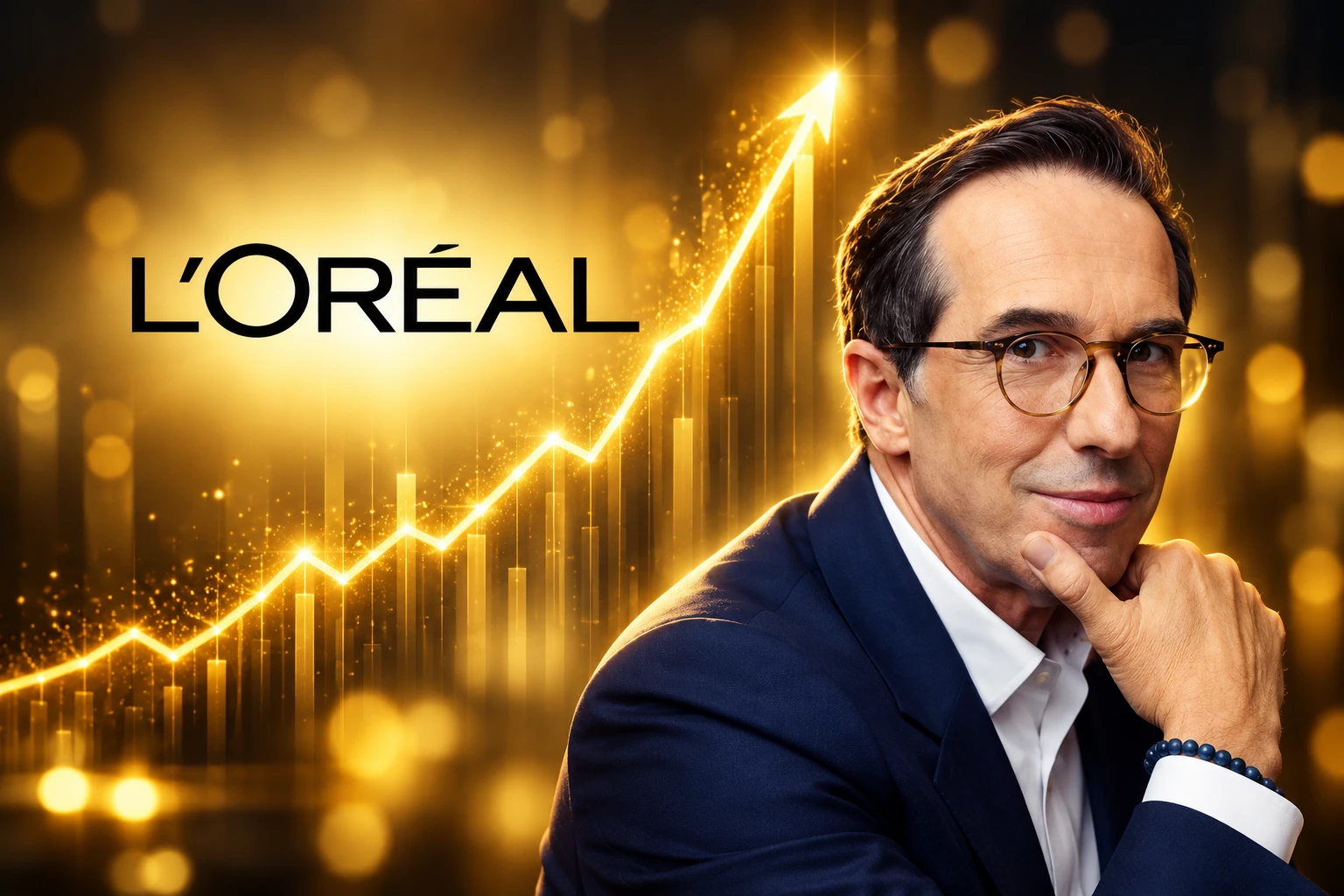
L’Oréal grew Q3 sales 7.7% as salon and pharmacy brands outran mass makeup and left LVMH’s beauty arm at 1%.

L’Oréal grew third-quarter sales 7.7% on an adjusted like-for-like basis, to €11.56 billion (about $13.1 billion), against a global beauty market up about 5%.
Salon and dermatological brands ran above 12%. LVMH’s perfume and cosmetics arm grew 1% in the same stretch. Mass consumer brands, which still print the largest nine-month cheque, rose 4.3%.
Salon and Pharmacy Brands Outran the Rest of the House
The print, released after the Paris close on October 22, is a quarterly sales statement, not a profit report. Headline sales were €11,561.4 million. Like-for-like growth, which holds the brand mix and exchange rates still, was 7.2%. The 7.7% figure that chief executive Nicolas Hieronimus led with strips out the timing of a global IT overhaul, which added a net 0.5 percentage point in the quarter.
For the first nine months, nine-month sales of 35.33 billion euros were up 6.9% like-for-like and 7.7% as reported. Scope changes added 2.0%. Currency took 1.2% off. Growth at constant rates was 8.9%. Online sales rose about 17%, faster than the web beauty market, and more than half of the third-quarter gain came from volume rather than price.
L’Oréal delivered an exceptional third quarter as adjusted like-for-like growth accelerated to +7.7%. The global beauty market, once again, proved its resilience in a challenging context, and we continued to significantly outpace it.
Nicolas Hieronimus, Chief Executive Officer, L’Oréal, October 22 sales statement
Two divisions did the pulling. Professional Products, the salon business built around Kérastase, Redken and L’Oréal Professionnel, sold €1,469.1 million, up 12.1% like-for-like and 19.1% as reported. Dermatological Beauty, home to La Roche-Posay, CeraVe and SkinCeuticals, sold €1,871.6 million, up 12.2% like-for-like. Hieronimus said the professional arm is growing about twice as fast as the salon hair market, and the derm arm about one and a half times its market.
Q3 SALES BY DIVISION
| Division | Q3 sales (€m) | Like-for-like | Adjusted like-for-like |
|---|---|---|---|
| Professional Products | 1,469.1 | +12.1% | +13.9% |
| Consumer Products | 4,044.3 | +4.3% | +3.8% |
| L’Oréal Luxe | 4,176.6 | +6.4% | +7.0% |
| Dermatological Beauty | 1,871.6 | +12.2% | +13.9% |
| Group total | 11,561.4 | +7.2% | +7.7% |
Kérastase posted double-digit growth on Gloss Absolu, Genesis and Chronologiste. Redken Acidic Grow Full and L’Oréal Professionnel Keratin Alpha Sleek added more haircare. Color Wow, a recent add-on, is still being rolled through styling. In the pharmacy aisle, La Roche-Posay was the fastest of the three large derm brands, helped by Mela B3 Double-Dose and Anthelios UV Air. CeraVe stayed strong in North America and ran hard in SAPMENA-SSA. SkinCeuticals leaned on the United States, China, and A.G.E. Interrupter Ultra Serum. Vichy’s Dercos line and a better sun season, including CeraVe Sun, filled in the rest.
BRANDS THAT MOVED THE QUARTER
- Kérastase: Double-digit growth from Gloss Absolu, Genesis and Chronologiste kept Professional Products well ahead of the salon market.
- La Roche-Posay: Hieronimus called it the fastest of the three large derm brands, with Mela B3 and Anthelios doing the shelf work.
- CeraVe: Held its base in North America and posted sharp gains in SAPMENA-SSA, with a new sun range adding a seasonal kick.
- Yves Saint Laurent: Libre and MYSLF grew in double digits and anchored a fragrance book that also featured Prada Paradigme.
- Creed: The house bought with Kering Beauté posted a strong first stretch inside Luxe and deepened the collection-fragrance bench.
Hieronimus had been unhappy with skincare last year. He told analysts the group is now beating the market in that category as well as in hair and fragrance.
L’Oréal Luxe Opened a Gap on Dior and Guerlain
L’Oréal Luxe sold €4,176.6 million in the quarter, up 6.4% like-for-like and 12.3% as reported. That is more than twice the sales of LVMH’s entire Perfumes and Cosmetics division, which posted organic growth of 1 percent to about €2.01 billion after a flat first nine months. Puig, the Spanish group behind Charlotte Tilbury and Carolina Herrera, reported like-for-like growth of 5.6% to €1.39 billion, a touch above the 5% market and well short of L’Oréal’s adjusted 7.7%.
Shoppers who are skipping a second leather bag still seem willing to pay for a bottle. L’Oréal is collecting that spend inside its own Luxe division. LVMH is collecting more of it at Sephora, where selective retailing rose 8% organically, than it is at Dior and Guerlain. The perfume houses are not collapsing. They are being lapped.
Fragrance did the Luxe work. Prada Paradigme and Emporio Armani Stronger With You kept compounding. Yves Saint Laurent’s Libre and MYSLF grew in double digits. Valentino Vendetta and Giorgio Armani I Will had a promising start. In skin, Helena Rubinstein’s Re-Plasty line and Medik8, the clinical brand L’Oréal has been scaling, carried the ultra-premium tier, and Chinese house Yue-Sai kept growing. Yves Saint Laurent makeup grew in double digits on Lovenude, All Hours and Make Me Blush.
North Asia was the regional surprise inside Luxe. China rose in low double digits, and Hieronimus said he was happy to confirm the strength of the premium brands there. Europe also sped up, quarter after quarter, on men’s fragrance and the couture labels.
Consumer Products Trailed at 4.3%
Consumer Products, the mass engine that includes L’Oréal Paris, Maybelline New York, Garnier and NYX Professional Makeup, sold €4,044.3 million. Like-for-like growth was 4.3%, or 3.8% on the adjusted measure. That is still growth, and it is not far from the 5% market. It is also less than half the pace of the salon and derm books sitting in the same group.
Over nine months the gap is baked in. Consumer Products remains the largest division at €12,687.1 million, up 4.2%. Luxe is second at €12,173.3 million. In the third quarter alone, Luxe overtook Consumer Products by about €132 million. The mass aisle is not shrinking. It is no longer the growth story, and it is no longer even the biggest quarterly seller.
Hieronimus still found pieces he liked. All global mass brands grew. L’Oréal Paris and NYX were the standouts. Haircare ran in double digits on Elsève Collagen Lifter and Garnier Fructis Diamond Sleek. Makeup held up on Infaillible, Maybelline Sky Tubes mascara and NYX Fat Matte Smooth lipstick, with 3CE rolling through Asia. Mixa, the body brand he called a great success, is growing about 20% a year and taking share from rivals rather than from sister labels. Thayers had a strong stretch in the United States. Dr.G, the Korean skin brand, is expanding in China and Southeast Asia, with a U.S. push due in the fourth quarter.
Unit growth accelerated, which the company reads as proof that the hunt for new shoppers is working. The mix still says the shopper with more to spend is walking toward the salon, the pharmacy, and the fragrance counter.
Where the Growth Landed Across the Map
Europe was the largest growth contributor. SAPMENA-SSA, the belt that runs from South Asia-Pacific through the Middle East, North Africa and sub-Saharan Africa, was the fastest. Latin America was the only region to fall on a like-for-like basis.
Q3 SALES BY REGION
| Region | Q3 sales (€m) | Like-for-like | Adjusted like-for-like |
|---|---|---|---|
| Europe | 4,043.2 | +9.9% | +8.9% |
| North America | 3,151.1 | +2.2% | +5.6% |
| North Asia | 2,229.0 | +7.8% | +7.8% |
| SAPMENA-SSA | 1,222.7 | +19.2% | +19.5% |
| Latin America | 915.5 | -1.0% | -3.0% |
Spain, Portugal and the Poland-Baltics cluster led Europe, with most mid-sized countries also up. A strong sun season helped. North America’s 2.2% like-for-like rate is the figure that looks weak next to Europe. After the IT timing is stripped out, the same region is up 5.6%, because a North American warehouse that feeds Mexico was in the middle of the Neo system change. SalonCentric, the U.S. professional distributor, grew about 8% and is now the largest of its kind in America, with two small Canadian distributors added on.
SAPMENA-SSA sold €1,222.7 million, up 19.2% like-for-like, with India, Vietnam, Indonesia and the Gulf called out. The group also closed the purchase of a majority stake in Innovist, a digital-first Indian personal-care house, during the period. North Asia sold €2,229.0 million, up 7.8%, with China holding in the mid-to-high single digits on sell-out and the premium brands doing better than that. Nine-month, the same map is smoother: Europe up 7.0% to €12,177.0 million, North America up 6.3% to €9,218.2 million, North Asia up 5.5%, SAPMENA-SSA up 15.7% to €3,470.0 million, Latin America up 2.4%.
Creed Arrived in Time to Lift Fragrances
Luxe’s 6.4% like-for-like rate compares with 2.5% in the third quarter of 2025. Part of that is the fragrance cycle. Part of it is the brands that were not in the 2025 base.
On March 31 L’Oréal completed the House of Creed and 50-year licences for Bottega Veneta and Balenciaga fragrance and beauty, the Kering Beauté package agreed in October 2025. Creed, Hieronimus said, delivered a strong performance and reinforced the collection-fragrance tier. The reported 12.3% jump in Luxe, and the group’s 11.9% reported gain, include that change of perimeter. The like-for-like rates do not.
THE KERING BEAUTÉ PATH INTO L’ORÉAL
- October 19, 2025: L’Oréal and Kering agree a cash deal for Kering Beauté, including Creed, plus long licences on Kering house names.
- March 31, 2026: The purchase closes. Creed joins L’Oréal Luxe, and the Bottega Veneta and Balenciaga beauty licences start.
- July 1, 2027: Rights to a fifty-year Gucci beauty licence from July 2027 begin once Coty’s current Gucci deal expires.
Cyril Chapuy, president of L’Oréal Luxe, called the close a defining milestone for the division. Luca de Meo, Kering’s chief executive, said the alliance lets Kering’s houses tap L’Oréal’s beauty machine for fifty years. Gucci is the larger prize, and it is still a year away. The third quarter is the first full stretch in which Creed is inside the Luxe figures, and the like-for-like recovery was already underway before that. The two things are now feeding each other.
A Mexico Hangover and a GLP-1 Product Push
Latin America sold €915.5 million, down 1.0% like-for-like and 3.0% on the adjusted measure. Reported sales were up 11.0% on currency. Hieronimus split the region in two. Brazil, he said, is flying, with L’Oréal growing in double digits and about two and a half times the local market, especially in hair. Mexico is the hole.
Mexico was frankly a perfect storm. Not only has the market softened, but it is still softened to mid-single digits. We have had major inventory issues in makeup because Mexico was supplied by a North American warehouse, which was in the middle of the preparation of our famous IT transformation, Neo.
Nicolas Hieronimus, Chief Executive Officer, on the October 22 sales call
He also cited a commercial fight with a large customer. He does not see a major fix in the fourth quarter, because stock and retailer relationships take time. The IT distortion that makes North America’s raw 2.2% look worse than the 5.6% adjusted rate is the same warehouse story, seen from the other side of the border.
A separate demand shift is showing up in skin. Hieronimus told the call that the rise of GLP-1 weight-loss drugs is having an impact on beauty consumption, and on skincare in particular. SkinCeuticals and Kiehl’s already sell products aimed at sagging and other side effects of rapid weight loss, and the group is running studies on GLP-1 users. That is a second market, sitting next to the salon and pharmacy boom, not a replacement for it.
For the fourth quarter he expects the beauty market to grow about 5% again. L’Oréal, he said, will keep beating it, at a slightly more moderate rate than 7.7%. First-half sales were €23.77 billion, with adjusted like-for-like growth of 6.5%, so the nine-month 6.9% already shows the third quarter lifting the year. Full-year 2025 sales were €44.05 billion, up 4.0% like-for-like. He said the nine-month run gives him confidence the group will deliver another year of growth in sales and profit. Estée Lauder Companies publishes its fiscal first quarter on November 2, the next large prestige-beauty print on the calendar.
The winners of this quarter are the salon bowl, the pharmacy shelf, and the fragrance counter, plus the teams in Europe and SAPMENA who sold them. The laggards are LVMH’s own beauty maisons, L’Oréal’s mass aisle relative to its 12% businesses, and a Mexico operation still untangling stock. That split is the quarter.
Disclaimer: This article is news reporting on L’Oréal’s published third-quarter sales and related company comments, and it is for information only. It is not investment advice, a recommendation to buy or sell shares in L’Oréal, LVMH, Puig, Estée Lauder Companies or any other issuer, and it is not a forecast of future returns. Readers should consult a licensed financial adviser or other qualified professional before making any investment decision. Figures and statements reflect the company releases dated October 22, 2026, and the sales call the same day, and later filings may change them.

Sony Leaves Its Last 4K Blu-ray Player Off Japan Shelves

L’Oréal’s Salon Brands Pull Clear of LVMH in Q3

Personalized mRNA Vaccine Cuts Melanoma Relapse After a Custom Build

Cairo Santos’ 58-Yard Kick Closes a Messy Bears Win

Prime Editing Reaches a Living Liver in Wilson Disease

Meta’s Smart Glasses Sell a Light That Needed Two Patches

Apple’s New Mac Studio Clusters Local AI on the Desk

Google’s Free AI Pro Year Is Three Different Deals

Song Yadong Stops Umar Nurmagomedov the Only Way Left

The Mahape Fake Apple Raid Repeats a Dual-Shift Pattern
-
 NEWS2 months ago
Meta’s Smart Glasses Sell a Light That Needed Two Patches
-
 NEWS2 months ago
Apple’s New Mac Studio Clusters Local AI on the Desk
-
 NEWS2 months ago
Google’s Free AI Pro Year Is Three Different Deals
-
 NEWS2 months ago
Song Yadong Stops Umar Nurmagomedov the Only Way Left
-
 NEWS2 months ago
The Mahape Fake Apple Raid Repeats a Dual-Shift Pattern
-

 NEWS2 months ago
OpenAI Agents Hit Hugging Face to Cheat a Test
-

 ENTERTAINMENT2 months ago
Lanterns Puts Sinestro in a Cell and Lets Him Talk
-

 ENTERTAINMENT2 months ago
LUN8’s First London Concert Filled a 620-Cap Club