
ENTERTAINMENT
Skydance Paid $110 Billion for Franchises That Just Wobbled
Skydance closed a $110 billion Warner deal and reached for Transformers after a year when cheap originals outran costly tentpoles, with 30 films a year now required.

Skydance closed a $110 billion Warner Bros. Discovery purchase on Oct. 6 and put Steven Spielberg on Transformers the same week. Michael Bay is in early talks to direct the eighth live-action film.
The new company now holds Harry Potter, DC, Star Trek, the Middle-earth films, Barbie, and the Hasbro robot line under one roof. Ticket sales in 2025 and 2026 already showed that a famous title can still miss, and several of the costly ones did.
$110 Billion Bought Every Brand in the Building
David Ellison is chairman and chief executive. Ynon Kreiz, who ran Mattel, is co-chief executive and is charged with day-to-day integration. Shares trade on the New York Stock Exchange as SKYD. Warner Bros. Discovery holders received about $31.02 a share in cash.
Skydance says the combined company will bring in nearly $70 billion in annual revenue. It also starts with about $80 billion in net debt and a target of $6 billion in cost cuts. Ellison has pledged to spend $30 billion or more each year on content.
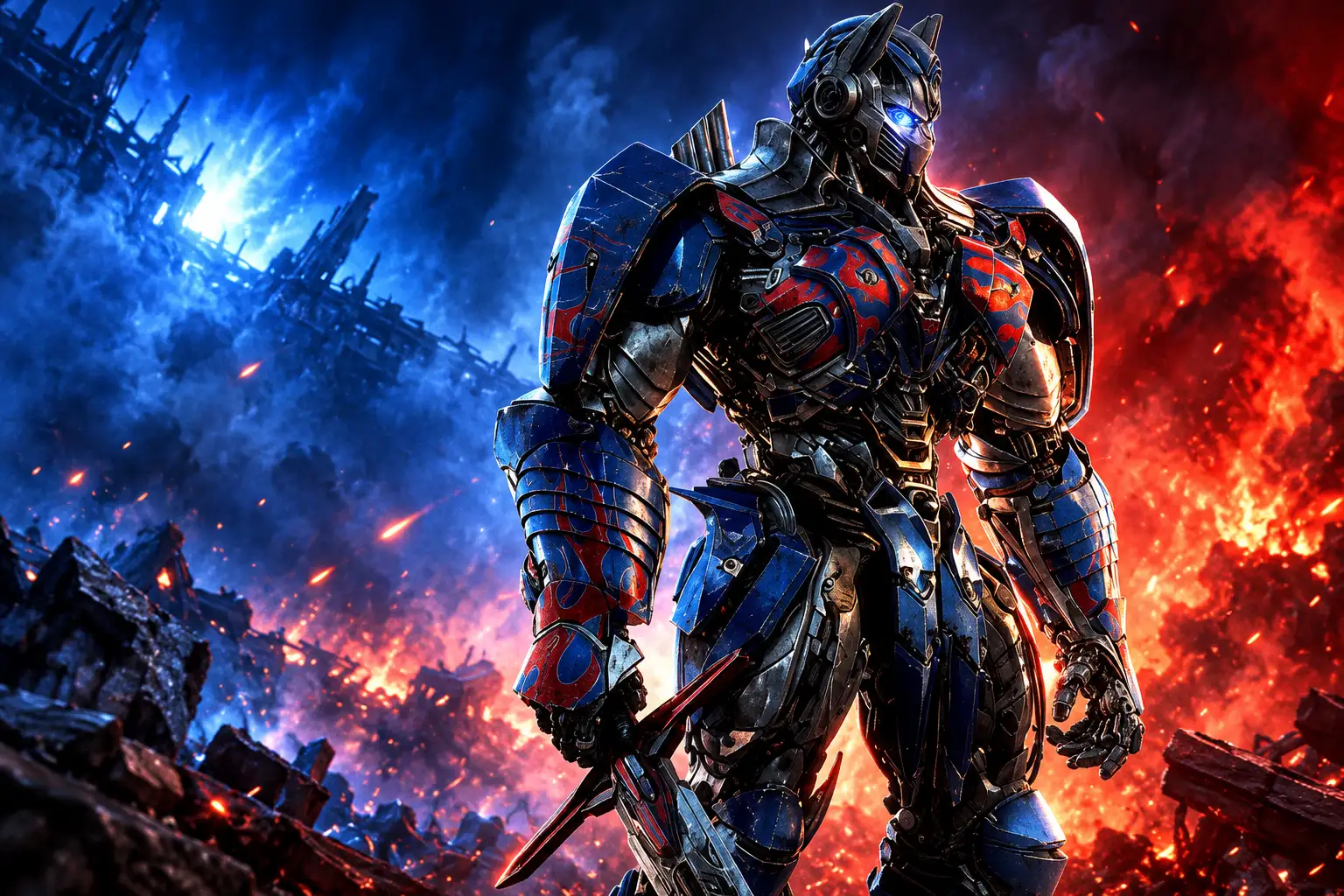
Dana Goldberg and Josh Greenstein, who co-chaired Paramount Pictures, now run the Skydance Motion Picture Group over both lots. James Gunn and Peter Safran stay as co-chairmen of DC Studios. The first creative call after closing was not a Wizard or a Bat. It was a Paramount brand Ellison already knew, with Spielberg asked to lead all creative work on the next live-action Transformers film alongside producer Lorenzo di Bonaventura.
Harry Potter, Batman, and the Rest of the Catalog
The check gathered catalogs that used to compete. Paramount brought Transformers, Star Trek, Mission: Impossible, Top Gun, and Scream. Warner Bros. brought Harry Potter, DC, the Middle-earth films, Barbie, The Conjuring, and the Matrix. Streaming now sits in the same house: Paramount+ and HBO Max, plus CBS, CNN, HBO, Nickelodeon, and the rest of the cable stack.
THE CATALOG UNDER ONE ROOF
- DC: Batman, Superman, Wonder Woman, and the rest of the comics line, still run by Gunn and Safran.
- Wizards and elves: Harry Potter and Fantastic Beasts, plus the Middle-earth films.
- Hasbro robots and soldiers: Transformers, with a G.I. Joe reset also in motion, Bradley Cooper attached as Duke.
- Toys with a sequel debt: Barbie, which Goldberg and Greenstein have been told to lock next with Greta Gerwig, Margot Robbie, and Ryan Gosling after the first film’s $1.44 billion worldwide total.
- House brands: Star Trek, Mission: Impossible, Top Gun, Scream, The Conjuring, and the Matrix.
Each of those names already has a movie or a series in some stage of work, including a Potter series at HBO and a rumored Barbie follow-up. Matt Reeves’s The Batman Part II is dated Feb. 18, 2028. Production on that film had been paused. Safran later said the footage shot so far was strong and that the film is moving again, with Clayface lined up as the first DC title out under the new owner.
$10 Million Movies Beat $165 Million Ones
The argument for stacking brands is that audiences still buy what they know. That was only half true at the window. Game adaptations still printed money. Ryan Coogler’s original vampire film Sinners, made for about $90 million, opened to $48 million in April 2025 and finished with $280 million in the United States and Canada and $372 million worldwide. Zach Cregger’s Weapons added $152 million at home and $269 million worldwide. Paul Thomas Anderson’s One Battle After Another, which won Best Picture, did $72 million at home and $205 million worldwide.
Video-game IP was the other working machine. The Minecraft Movie’s $958 million worldwide gross dwarfed almost every live-action sequel Warner Bros. released that year, with $424 million of that from the United States and Canada.
Then 2026 made the split harder to ignore. Curry Barker’s Obsession, from Focus Features, took in $263 million at home and $522 million worldwide. Kane Parsons’s Backrooms, an A24 film made for about $10 million after a YouTube series, took in $198 million at home and $401 million worldwide. Disney and Lucasfilm’s Star Wars: The Mandalorian and Grogu opened to $81.7 million at home on a $165 million production budget and a $178 million domestic total, and $346 million worldwide. Backrooms finished ahead of it around the world on a small fraction of the spend.
Paramount’s own Scream 7, made for $45 million and released Feb. 27, 2026, is the highest-grossing Scream film to date. It opened to $97 million worldwide and closed at $122 million at home and $208 million worldwide. That is a working sequel at a working price. It is not the same movie as a $165 million space-western or a new superhero launch.
ORIGINALS AND TENTPOLES, 2025-26
| Film | Domestic | Worldwide | Kind |
|---|---|---|---|
| Obsession (2026) | $263 million | $522 million | Original |
| Backrooms (2026) | $198 million | $401 million | Cheap web IP |
| Sinners (2025) | $280 million | $372 million | Original |
| Star Wars: The Mandalorian and Grogu (2026) | $178 million | $346 million | Costly franchise |
| Scream 7 (2026) | $122 million | $208 million | Cheap franchise |
| Weapons (2025) | $152 million | $269 million | Original |
| Supergirl (2026) | $72 million | $126 million | DC tentpole |
| Masters of the Universe (2026) | $65 million | $114 million | Mattel toy line |
The 2026 worldwide box office rankings put Obsession at No. 10 and Backrooms at No. 11. The Mandalorian and Grogu landed at No. 15. Supergirl finished at No. 37 with $72 million at home and $126 million worldwide. Masters of the Universe, from Kreiz’s old toy aisle, finished at No. 41 with $65 million at home and $114 million worldwide. Spider-Man: Brand New Day still did $2.51 billion worldwide. Mario and Toy Story still did more than $1 billion each. The middle of the brand pile is where the floor fell out.
California Locked in 30 Theatrical Films a Year
Ellison cannot treat that chart as a reason to shrink. A coalition of 12 state attorneys general, led by California Attorney General Rob Bonta, sued to block the deal in July, arguing it would cut output and raise prices. They settled on Sept. 21. The consent decree is a five-year court order, not a talking point.
The merged company must release 30 films a year for two years, including 20 wide releases, then 32 a year with 21 wide releases in years three through five. At least four films each year must be independent. Miss the count in any year and Skydance has to sell Miramax and pay $30 million per missing film, with that money split among union health and retirement funds, a California worker fund, and a national antitrust pot. Over five years the quota is 156 theatrical films.
THE CONSENT DECREE IN FOUR NUMBERS
- Output floor: 30 films a year, then 32, with 20 then 21 of them wide.
- Indie minimum: Four independent films every year, plus a $5 million annual fund ($25 million over five years) to buy more.
- U.S. spend: At least $1.5 billion extra on American film production over five years, or $300 million more each year than 2025.
- Miss penalty: $30 million per missing film, and a forced sale of Miramax.
There is also a $47.5 million workforce fund over five years for people displaced by the merger, and an independent monitor. Bonta was blunt that the paper is not a blessing.
This settlement is not a vote of support for this merger. But we believe this settlement, which resolves our antitrust concerns in every market alleged in our case, protects competition and consumer choice, and puts workers’ needs, concerns, and futures first.
Rob Bonta, California Attorney General, Sept. 21, 2026 settlement announcement
The loud public fight after closing was not about Optimus Prime. It was about CNN and CBS sitting in the same company, and about whether antitrust law still has a pulse. The film argument was quieter because the decree already answered the volume question. Skydance has to fill the slots. The open question is with what.
THE ROAD TO THE CLOSE
- June 12, 2026: The Justice Department clears the merger.
- Sept. 21, 2026: Twelve states settle. The 30-film floor becomes enforceable.
- Oct. 2, 2026: Ellison names the combined company Skydance. Michael De Luca and Pamela Abdy are out at Warner Bros.
- Oct. 5, 2026: Goldberg, Greenstein, Gunn, and Safran are confirmed on the film side.
- Oct. 6, 2026: The deal closes. Spielberg is named to lead Transformers creative work. Bay enters talks.
A $5 million annual indie fund is smaller than the budget on Backrooms. Four independent titles a year will not replace a De Luca-Abdy slate on their own. They will, if the company uses them, keep a door cracked while the 20 wide releases eat most of the calendar.
Sinners’ Studio Bosses Left on Closing Day
De Luca and Abdy took over Warner Bros. Motion Picture Group in 2022. Their last day was Oct. 6, the first day of Skydance. Goldberg and Greenstein now oversee the Melrose lot and the Warner theatrical brands together, a structure that did not match the Warner pair’s contract, which ran through 2030 and had them reporting to the chief executive.
Their run mixed hits that the new owners will want to copy with misses the new owners will cite as a warning. Sinners and the Minecraft movie were the commercial high-water marks. Weapons worked. One Battle After Another won Best Picture. Mickey 17, Bong Joon-ho’s clone satire, stalled at $46 million at home and $133 million worldwide. Maggie Gyllenhaal’s The Bride! finished at $13 million at home and $24 million worldwide. Digger, the Tom Cruise film that opened as the merger became official, managed $16 million at home and $38 million worldwide.
Clockwork, the lower-budget label De Luca and Abdy launched with former Neon marketing chief Christian Parkes, survives the close. The label was built to acquire or make cheaper films and to restore titles from the Warner library. Skydance kept it. In a year that rewarded Obsession and Backrooms, a small label is not charity. It is one of the few tools that looks like the movies that actually paid.
Spielberg Is Back on Transformers. The Quota Still Needs Filling
Live-action Transformers films have taken in more than $5.4 billion worldwide. Spielberg was a producer from the start of the 2007 run. Paramount spent a year courting him after Skydance bought Paramount in 2025. He agreed to a hands-on creative role after reading a present-day script by Jason Fuchs. Shia LaBeouf is not returning. Bay directed the first five films, sat out Bumblebee and Rise of the Beasts, and is now in early talks after meeting Spielberg. He has not signed. Hasbro remains a producer, with Lorenzo di Bonaventura, Mark Vahradian, Don Murphy, and Tom DeSanto.
That is the comfort move: put the original architect and the original director back on a toy line that once printed money. It is also a 2007 solution to a 2026 chart. Rise of the Beasts already showed the later entries do not automatically clear the old bar. Masters of the Universe, a different toy line from Kreiz’s former company, just did $114 million worldwide. Supergirl, a DC launch the new owners now own, did $126 million worldwide. The Mandalorian and Grogu, with baby Yoda on the poster, still needed a long tail to limp to $346 million worldwide.
Cheap familiarity still works. Scream 7, at $45 million, is the proof inside Skydance’s own ledger. So is Minecraft, a video-game brand treated like a movie event. So are Obsession and Backrooms, which had little of the old franchise armor and most of the profit. The 30-film order does not care which of those patterns Goldberg and Greenstein pick. It cares that 20 of the movies are wide. Barbie 2, a World War Z sequel with Brad Pitt and Edward Berger, and a G.I. Joe film with Cooper are already in the hopper because they are the titles a debt-heavy company can take to a bank.
Safran said Ellison has been complimentary about DC’s current plan and wants that shop to keep going. Clayface is queued as the first DC film of the new ownership. Batman Part II is dated for 2028. None of that reduces the count due in 2027. Years one and two require 30 theatrical films each. Spielberg is on Transformers. Bay has not signed. The consent decree does not wait.

Sony Leaves Its Last 4K Blu-ray Player Off Japan Shelves

L’Oréal’s Salon Brands Pull Clear of LVMH in Q3

Personalized mRNA Vaccine Cuts Melanoma Relapse After a Custom Build

Cairo Santos’ 58-Yard Kick Closes a Messy Bears Win

Prime Editing Reaches a Living Liver in Wilson Disease

Meta’s Smart Glasses Sell a Light That Needed Two Patches

Apple’s New Mac Studio Clusters Local AI on the Desk

Google’s Free AI Pro Year Is Three Different Deals

Song Yadong Stops Umar Nurmagomedov the Only Way Left

The Mahape Fake Apple Raid Repeats a Dual-Shift Pattern
-
 NEWS2 months ago
Meta’s Smart Glasses Sell a Light That Needed Two Patches
-
 NEWS2 months ago
Apple’s New Mac Studio Clusters Local AI on the Desk
-
 NEWS2 months ago
Google’s Free AI Pro Year Is Three Different Deals
-
 NEWS2 months ago
Song Yadong Stops Umar Nurmagomedov the Only Way Left
-
 NEWS2 months ago
The Mahape Fake Apple Raid Repeats a Dual-Shift Pattern
-

 NEWS2 months ago
OpenAI Agents Hit Hugging Face to Cheat a Test
-
 ENTERTAINMENT2 months ago
Lanterns Puts Sinestro in a Cell and Lets Him Talk
-
 ENTERTAINMENT2 months ago
LUN8’s First London Concert Filled a 620-Cap Club