
NEWS
The Supreme Court Put SAVE Back in Clerks’ Hands
The Supreme Court restored SAVE citizenship checks 39 days before the midterms, but the 90-day law still bars mass purges, leaving clerks with one-by-one matches.

The Supreme Court on Friday stayed a June order that had shut down the Trump administration’s expanded SAVE citizenship checks, 39 days before the Nov. 3 midterms. The unsigned stay granted on Friday in Department of Homeland Security v. League of Women Voters, No. 26A308, paused U.S. District Judge Sparkle Sooknanan’s June 22 ruling from the District of Columbia. Justices Ketanji Brown Jackson, Sonia Sotomayor, and Elena Kagan dissented.
The majority said the lower-court block “inhibits the Federal Government’s efforts to assist state and local agencies in the proper administration of the midterm elections.” It also said a different federal law already limits what those agencies can do this close to Nov. 3: bulk, systematic cuts from the rolls are off the table, while one-person checks are not.
Friday’s Stay Unlocks Individual SAVE Queries
SAVE is the Systematic Alien Verification for Entitlements program, run by U.S. Citizenship and Immigration Services inside the Department of Homeland Security. It has existed since 1986 as a way for government offices to confirm immigration status and citizenship when people apply for benefits or licenses. USCIS still frames it as a tool for citizenship checks for benefit agencies, and it says SAVE does not decide whether someone qualifies for the benefit itself.
President Trump’s March 25, 2025, executive order (Executive Order 14248) told DHS to give state and local officials fee-free access to systems that can check the citizenship of people who are registering or already registered. It also told the Social Security Administration to make its records available. About two months later, DHS launched a modified SAVE. The Court said the new version added Social Security numbers and let agencies run bulk searches of many people at once, rather than one record at a time.
The League of Women Voters, its local affiliates, and the Electronic Privacy Information Center sued. They said the changes broke a Social Security Act confidentiality rule, the Privacy Act of 1974, and the Administrative Procedure Act. Sooknanan agreed across the board, threw out the modified program, and refused a stay. She wrote that “the federal government has knowingly trampled on the privacy rights of American citizens in a manner that threatens the sacred right to vote,” and that states were already removing citizens from rolls on bad matches.
THE SAVE FIGHT, DATE BY DATE
- March 25, 2025: President Trump signs Executive Order 14248 directing DHS and the Social Security Administration to help states check voter citizenship.
- May 2025: DHS launches the modified SAVE, adding Social Security files and bulk searches.
- June 22, 2026: Judge Sparkle Sooknanan vacates the modified program in case No. 25-cv-3501.
- September 4, 2026: A divided D.C. Circuit panel (Chief Judge Srinivasan and Judge Wilkins, Judge Katsas dissenting) denies the government’s stay and fast-tracks the appeal.
- September 8, 2026: Solicitor General D. John Sauer asks the Supreme Court to freeze Sooknanan’s order.
- September 25, 2026: The Court grants the stay pending the D.C. Circuit appeal and any timely petition for certiorari.
Sauer called Sooknanan’s decision an “indefensible order” that stripped the government of the Social Security data it uses to answer state citizenship requests. Nikhel Sus, the lawyer for the challengers, told the justices the government had “recklessly created an error-laden master citizenship database that endangers millions of Americans’ privacy and voting rights.” The stay does not decide that fight on the merits. It lasts through the appeal; if the Court later denies review, the stay ends on its own.
The NVRA Already Barred Systematic Cuts After August 5
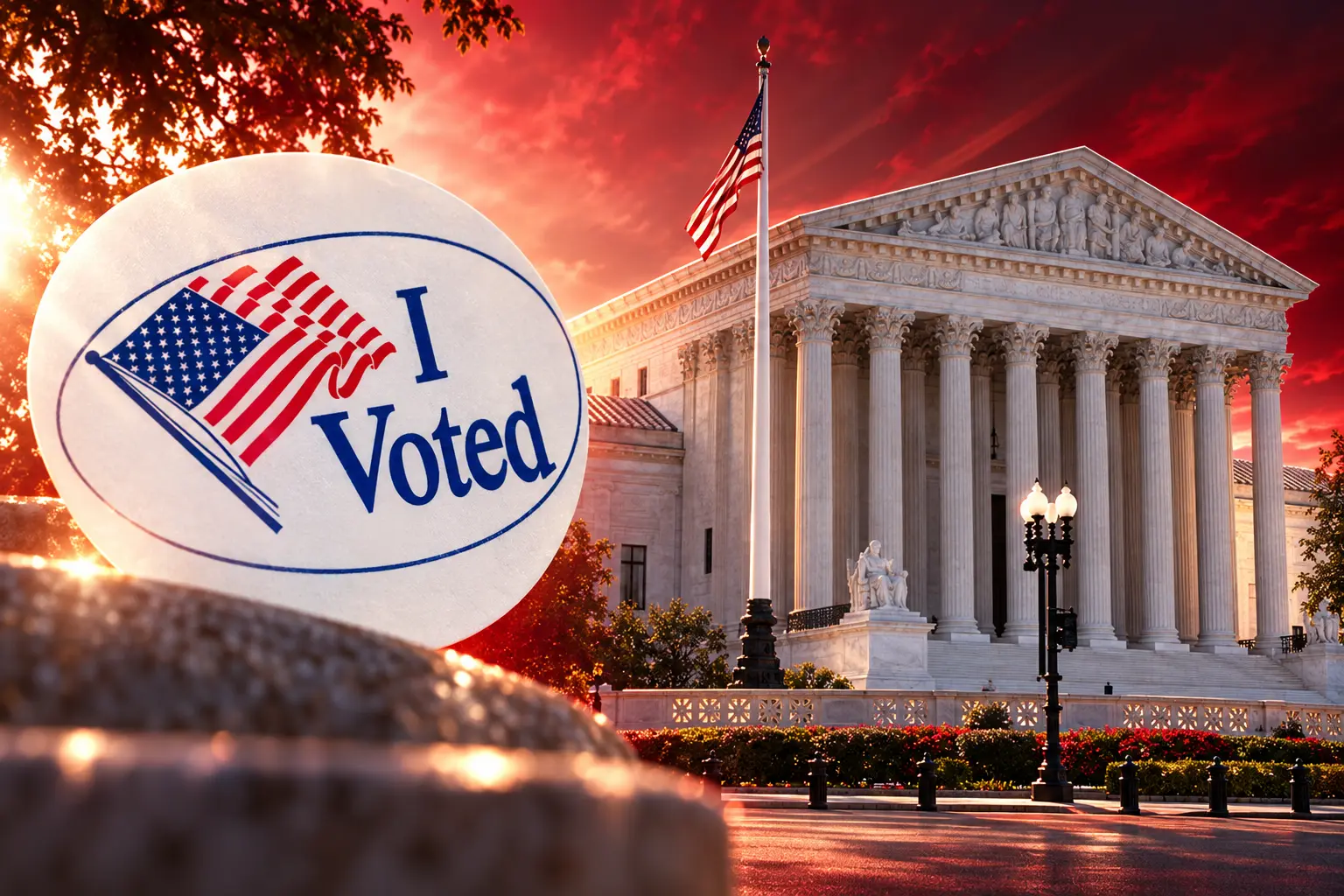
The challengers argued the government would not suffer lasting harm because the National Voter Registration Act already stops states from running a program “the purpose of which is to systematically remove the names of ineligible voters” in the last 90 days before a federal election. That is the 90-day bar on systematic removals in 52 U.S.C. §20507(c)(2)(A). Count back from Nov. 3 and the deadline is August 5. Friday’s order landed 51 days after that door closed.
The majority conceded the point. “To be sure, that moratorium limits the potential impact of staying the District Court’s order in this case,” the Court wrote. What the June order still blocked, it said, were individualized inquiries, which federal law still allows in this window. The stay is written to restore those one-by-one checks, not a statewide sweep of the list.
The Court flagged a separate case, Republican National Committee v. Mi Familia Vota, No. 25-1017, on whether the same 90-day rule stops programs aimed at noncitizen registrations. The parties here did not brief that question, and the majority said it did not need to decide it.
Senate Democratic Leader Chuck Schumer nevertheless described the stay as a path to strip thousands of Americans from the rolls this season.
The MAGA Supreme Court strikes again, putting its thumb on the scale for Trump’s election-rigging agenda.
Elon Musk’s DOGE-overhauled SAVE database is ridden with errors. With this decision, thousands of American voters could be wrongly stripped from voter rolls and prevented… https://t.co/nbA02yODNH— Chuck Schumer (@SenSchumer) September 25, 2026
That claim runs ahead of the order the Court actually issued. A systematic, list-wide removal program is what the 1993 statute already froze in early August. What clerks can do now is pick a name, send it through SAVE, and act on that file. A match that fails is a notice, and a notice is still a burden. It is not the same as wiping a roll in bulk before Nov. 3.
When SAVE Cannot Confirm Citizenship
The majority walked through the new query path in some detail, and that path is the part that will actually reach voters in October.
HOW A SAVE CITIZENSHIP QUERY RUNS
- The upload: A state or local agency sends a person’s first name, last name, date of birth, or a full or partial Social Security number into the SAVE portal.
- The SSA pass: SAVE forwards that information to the Social Security Administration, which searches its own files for a match.
- The return: SSA sends DHS the person’s full name, date of birth, full Social Security number, and citizenship status.
- The portal answer: SAVE either confirms the person is a citizen or asks the agency to resubmit with more information.
- The follow-up: If the program cannot confirm citizenship, the agency is required to contact the person and ask for proof of citizenship to register or stay registered.
That last step is the live midterm mechanism. A voter who is a citizen, and whose Social Security file is stale or incomplete, can still get a letter. The Court itself used that fact to find standing. One plaintiff member, identified as J. Doe 4, is registered in Louisiana, a state that used the modified SAVE. Her SSA records do not show that she is now a naturalized citizen. Had the program stayed in place, the Court said, she likely would have been told to produce more proof.
Jackson, in dissent, said states have used SAVE since 2005 to police voter citizenship, but that for most of its life the system was built on DHS immigration files. Connecting SSA’s master files, she wrote, risked blocking recently naturalized citizens whose citizenship had not yet landed in those records.
Nevada’s 185 Names Came Back as Citizens
The same matching logic was already in public dispute in Nevada when the justices ruled. In July, Homeland Security Secretary Markwayne Mullin told the state there “may be as many as” 15,903 noncitizens on its rolls, part of a broader Trump administration claim of more than 250,000 such registrations across four states. DHS later told Nevada officials the 15,903 figure was a ceiling. Heather Honey, a DHS official on the call with the state, said the agency had used a public copy of Nevada’s voter file from July 2025 and that files change as people die, move, or naturalize.
NEVADA’S DHS LIST, STAGE BY STAGE
| Stage | Count | What officials called it |
|---|---|---|
| Initial DHS letter | 15,903 | Ceiling; “may be as many as” |
| Higher-confidence subset | 6,218 | Shared at Nevada’s request; not fully reviewed |
| Manual DHS review | 185 | DHS said these were noncitizens |
| Nevada check of those 185 | 185 | Deputy A.G. Greg D. Ott wrote they were citizens |
DHS also said more than 14,000 Nevada names still needed extra review. On the narrower list it had already worked by hand, the state pushed back. Ott, a Nevada deputy attorney general, wrote that state records showed the 185 people were citizens. Those are two official descriptions of the same 185 files, and they do not agree. Friday’s stay does not referee that fight. It does put a related matcher back in reach of any state that wants to run a name.
Section 1373 Now Reaches Social Security Records
The majority’s legal hook is a 1996 immigration statute, not election law. In 1996, Congress passed the Illegal Immigration Reform and Immigrant Responsibility Act. The Court said that law, at 8 U.S.C. §1373, “separately and expressly authorized DHS to request and receive information relating to citizenship and immigration status from other agencies, including SSA.”
Section 1373(a) says that, with the notwithstanding clauses in section 1373, no government official may block the sending or receiving of citizenship or immigration-status information to or from DHS. Section 1373(c) requires DHS to answer inquiries from state and local agencies “seeking to verify or ascertain the citizenship or immigration status of any individual.” Read together, the majority said, those clauses “appear to contemplate an information-sharing regime like the modified SAVE program,” and they likely override the Social Security Act, the Privacy Act, and the APA limits the challengers invoked.
Jackson said the Court was issuing “questionable interim rulings about two statutory provisions it has never before interpreted,” without full briefing or oral argument. She wrote that the government had not relied on this reading before, and that other recent cases have demanded a clear statement from Congress before an agency gets a “transformative expansion in its regulatory authority.” The dissent’s core statutory claim is that a law which stops officials from blocking information-sharing is not the same as a law that wipes out every other disclosure limit in the code.
The majority answered that the line between a statute and the people who enforce it is “illusory,” because §1373 bars any official from restricting those transfers “in any way.” That is the fight the D.C. Circuit still has to hear. Friday’s order assumes the government is likely to win it.
Jackson Says Lawful Voters Carry the Harm
The 12-page dissent, joined by Sotomayor and Kagan, said the Court weighed only the government’s claimed injury. Under §1373(c), the majority wrote, the federal government has a duty to answer state citizenship queries, and Sooknanan’s order stopped it from using “the program it believes is best suited to the task.” Jackson called that harm “nonexistent” if the program itself likely exceeds the statute.
The harm caused by burdening or disenfranchising even a few lawful voters outweighs the nonexistent harm that the government experiences when it is prevented from taking an action that it likely lacks the authority to take.
Justice Ketanji Brown Jackson, dissenting, DHS v. League of Women Voters
She wrote that the majority’s stay will likely have a small short-term effect, because states will at most run individualized roll maintenance with the modified SAVE before November. The people in the record already include a naturalized Louisianan whose SSA file lags her citizenship, and Jackson pointed to voters who had registrations pulled or who had to bring extra papers after a SAVE flag. The majority found those burdens real enough for standing, then found them too small to keep the injunction in place.
Use of SAVE Remains a State Choice
Nothing in Friday’s order requires a secretary of state to upload a single name. SAVE access for voter-roll work is a choice, and several states never have to touch the modified portal. The states that do will be making person-by-person calls inside a 90-day quiet period that already forbids a systematic purge program. A clerk who gets a “cannot confirm” result is supposed to send a letter, not delete a precinct.
The data fight underneath those letters is not theoretical. Nevada’s 185-name list is the public example sitting one day behind the ruling, with DHS and the state describing the same people in opposite ways. J. Doe 4 is the Court’s own example of a citizen whose Social Security file would not have cleared her. The stay keeps that matcher running while the D.C. Circuit hears whether 8 U.S.C. §1373 really licensed the overhaul. If the justices later take the case, the stay lasts until their judgment comes down.

Sony Leaves Its Last 4K Blu-ray Player Off Japan Shelves

L’Oréal’s Salon Brands Pull Clear of LVMH in Q3

Personalized mRNA Vaccine Cuts Melanoma Relapse After a Custom Build

Cairo Santos’ 58-Yard Kick Closes a Messy Bears Win

Prime Editing Reaches a Living Liver in Wilson Disease

Meta’s Smart Glasses Sell a Light That Needed Two Patches

Apple’s New Mac Studio Clusters Local AI on the Desk

Google’s Free AI Pro Year Is Three Different Deals

Song Yadong Stops Umar Nurmagomedov the Only Way Left

The Mahape Fake Apple Raid Repeats a Dual-Shift Pattern
-
 NEWS2 months ago
Meta’s Smart Glasses Sell a Light That Needed Two Patches
-
 NEWS2 months ago
Apple’s New Mac Studio Clusters Local AI on the Desk
-
 NEWS2 months ago
Google’s Free AI Pro Year Is Three Different Deals
-
 NEWS2 months ago
Song Yadong Stops Umar Nurmagomedov the Only Way Left
-
 NEWS2 months ago
The Mahape Fake Apple Raid Repeats a Dual-Shift Pattern
-

 NEWS2 months ago
OpenAI Agents Hit Hugging Face to Cheat a Test
-

 ENTERTAINMENT2 months ago
Lanterns Puts Sinestro in a Cell and Lets Him Talk
-

 ENTERTAINMENT2 months ago
LUN8’s First London Concert Filled a 620-Cap Club