
NEWS
WHO Still Lacks Russia’s Full Picture of a Lab Death
WHO cannot finish a risk assessment of Darya Shipilova’s Irkutsk lab death after Russia quarantined about 200 people, then named no pathogen.

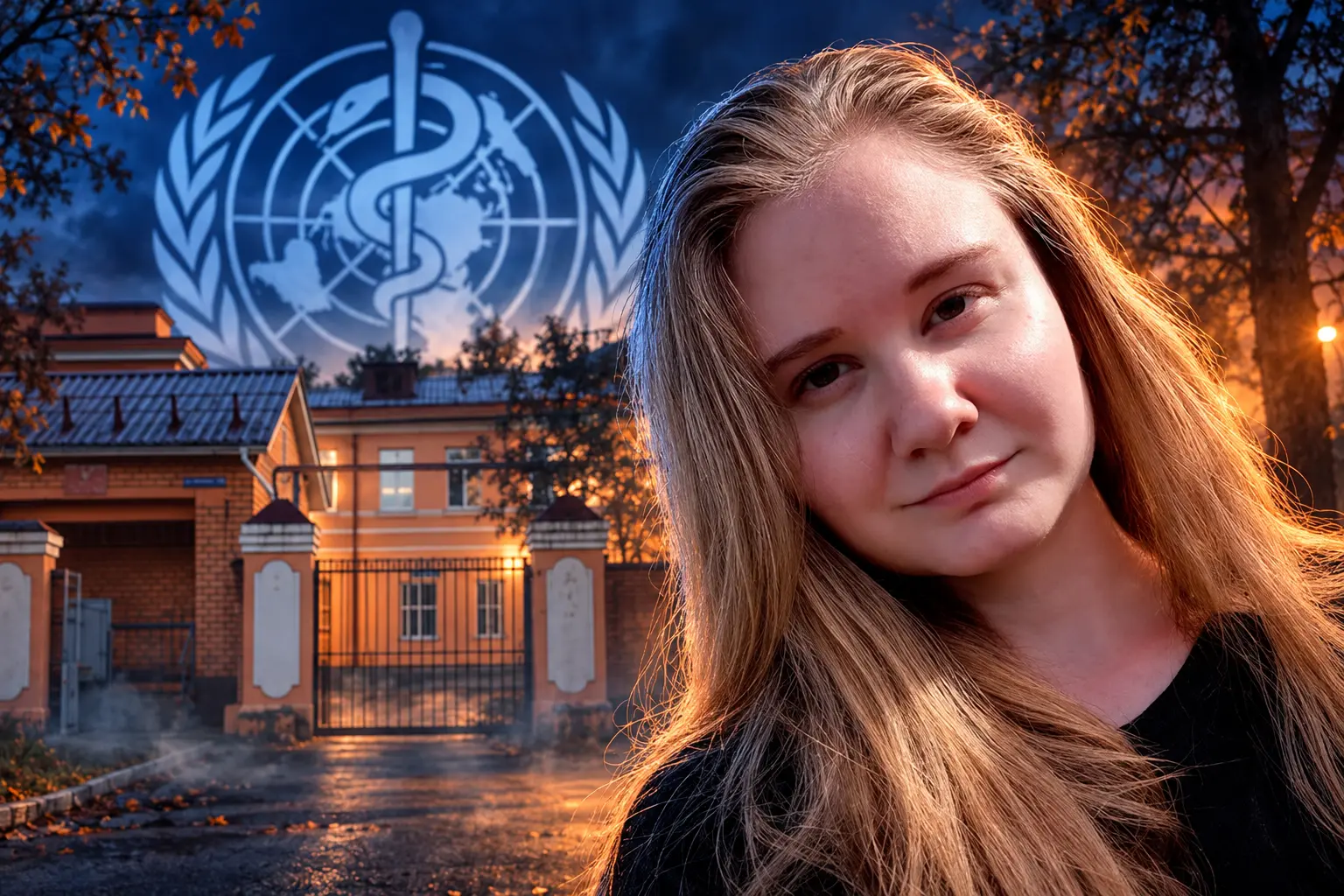
The World Health Organization said on October 7 it cannot finish a risk assessment of a death at a Siberian plague lab. Darya Shipilova, a 28-year-old technician at the Irkutsk Anti-Plague Research Institute of Siberia and the Far East, died on October 2.
Russia’s health watchdog, Rospotrebnadzor, says she had pneumonia of unknown cause and that plague was not found. Officials still quarantined about 200 contacts, locked hospital wards, and held staff inside the institute, then lifted those measures without naming a germ.
The Lockdown That Officials Called a Precaution
Shipilova was admitted on September 29 to the district hospital in Shelekhov, a town next to Irkutsk, and died overnight into October 2. Local accounts said she had gone down with cold-like symptoms after work. Rospotrebnadzor later called the illness pneumonia of unknown cause and said tests on her samples found no microorganisms linked to her job.
The same day she died, Irkutsk governor Igor Kobzev said Anna Popova, the head of Rospotrebnadzor, had called an extraordinary meeting on a suspected “particularly dangerous infection” in a resident of the region. Popova flew in. Several hospital units were closed. Staff at the institute were kept inside for three days, sleeping on floors and chairs while tests ran.
THE WEEK AFTER HER DEATH
- September 29, 2026: Shipilova is admitted to Shelekhov hospital with severe pneumonia.
- October 2, 2026: She dies. Kobzev announces the extraordinary meeting. Early local posts name plague.
- October 3, 2026: WHO asks Moscow for information under the International Health Regulations.
- October 6, 2026: Russia replies that no plague case has been registered in Irkutsk oblast and that about 200 contacts are in quarantine.
- October 7, 2026: WHO director-general Tedros Adhanom Ghebreyesus says the agency still lacks the full picture. Rospotrebnadzor says medical observation is done for more than 90 percent of contacts and that nearly 5,000 lab tests found no dangerous pathogens.
- October 8, 2026: Observation of all contacts ends. Kobzev says the quarantine is lifted. Rospotrebnadzor calls reports of a second sick employee fake.
Alexey Tsydenov, governor of neighbouring Buryatia, first wrote that a woman in Irkutsk region had died of plague, then edited the post to “possibly.” That gap, a plague word from a neighbouring governor and a pneumonia label from the federal watchdog, is what Geneva has been trying to close.
What WHO Still Cannot Confirm
Tedros told a briefing on October 7 that WHO knew the Russian government had met on October 2 because it suspected a resident of Irkutsk oblast had caught a dangerous infection. On Saturday, October 3, the agency asked for more under the International Health Regulations, which require states to notify WHO within 24 hours of assessing an event that may be a public health emergency of international concern. Those rules bind 197 countries, including the 194 WHO member states.
Moscow answered on Tuesday, October 6. No recent plague case in Irkutsk oblast, it said, and about 200 contacts in quarantine. Tedros said that was not enough for a full risk assessment.
Since the first media reports, @WHO has been actively following up on the reported death of a laboratory worker at the Irkutsk Antiplague Research Institute in Irkutsk oblast, Russian Federation. The individual died on 2 October 2026 after being hospitalised with severe… pic.twitter.com/1vikwtwVtS
— Tedros Adhanom Ghebreyesus (@DrTedros) October 6, 2026
Maria Van Kerkhove, who heads WHO’s epidemic and pandemic management department, put the hole in one line.
We would like more information to understand which laboratory tests were conducted, which pathogens were evaluated, and if this individual didn’t die from plague, then how did she die?
Maria Van Kerkhove, director of epidemic and pandemic management, WHO briefing
She also said WHO did not understand how Shipilova became infected, and that the agency would say so when it had no answer. Christian Lindmeier, a WHO spokesman, had given an early reading on October 6 from the information then in hand: moderate to low risk in Irkutsk, low in Russia as a whole, and very low in the WHO European region. A day later Tedros declined to treat that as a finished assessment.
WHAT GENEVA ASKED MOSCOW TO SEND
- The death tests: Which assays were run on Shipilova, and which pathogens were ruled in or out.
- The trigger: What finding led officials to quarantine contacts and close wards if plague was not confirmed.
- The second worker: Verification of media reports of another employee with pneumonia of undetermined cause.
WHO also offered help on plague and on lab biosafety. Tedros said timely, complete and transparent sharing under the regulations is required to sort conflicting reports.
WHO QUESTIONS AND RUSSIA’S PUBLIC REPLIES
| Question from WHO | What Russian officials have said |
|---|---|
| Cause of death | Pneumonia of unknown cause |
| Pathogen in her samples | No microorganisms linked to her work |
| Lab accident | No emergency with pathogenic microorganisms found |
| Contacts | About 200 quarantined; observation later ended |
| Second employee with pneumonia | Social media reports called fake on October 8 |
| Why emergency measures began | Not spelled out to WHO in the detail Tedros requested |
Kremlin spokesman Dmitry Peskov said the vast majority of media reports on the situation were false information and told reporters to rely on Rospotrebnadzor. The watchdog said it had already passed its latest information to WHO.
The Institute Was Built to Stop Plague
The lab at the centre of the file is not a nameless high-containment shed. Its English-language site says it was founded in 1934 for plague control by order of the Soviet Council of Labour and Defence, as a scientific operative body. It sits at 78 Trilisser Street in Irkutsk. A predecessor plague laboratory in the city dates to 1923 in secondary institutional histories.
Founder Aleksey Skorodumov built a regional system with stations in Chita and Khabarovsk and wrote Plague in Siberia in 1937. The institute later added cholera, brucellosis, tularemia, anthrax and arbovirus work. Professor Sergey Balakhonov has been director since 2008. The site lists 95 scientific employees, including 13 doctors of science and 40 candidates of medical and biological sciences.
Javier Pizarro-Cerda, who heads the Yersinia Research Unit at the Pasteur Institute in Paris, called Irkutsk “a very famous place” and said plague research there is normal because the bacterium still circulates in animals across large parts of Russia. Paul Keim, a microbiologist at Northern Arizona University who has worked with former Soviet anti-plague labs, said there is no public evidence the Irkutsk institute is now building weapons or running gain-of-function work on Yersinia pestis. After Russia’s invasion of Ukraine, he said, “our ties with the Russian plague community fell apart.”
That broken channel is part of why a death inside this building became an international verification request instead of a routine occupational report.
Siberia’s Wild Plague Reservoirs Never Went Away
The institute exists because plague did not leave the country east of Lake Baikal. Institutional histories describe natural plague foci east of Baikal, including the Transbaikal tarbagan marmot focus, the Tuva focus, and the Gorno-Altai mountain focus. Y. pestis still moves among wild rodents and their fleas there, as it does in parts of Mongolia, China and the western United States.
WHO’s plague fact sheet, updated on September 29, says people usually fall ill after an incubation of one to seven days. Pneumonic plague, the lung form, can start in as little as 24 hours and can pass from person to person on respiratory particles. Untreated, it is fatal within 18 to 24 hours of onset. Common antibiotics work if they start early. Bubonic plague, the more common flea-bite form, kills 30 to 60 percent of untreated patients. WHO does not recommend vaccination except for high-risk groups such as lab staff who are constantly exposed.
Rospotrebnadzor said Shipilova had been vaccinated and was “immune to the dangerous infections with which she worked.” Pizarro-Cerda notes that countries of the former Soviet Union still give a live weakened Y. pestis vaccine to people at occupational risk, often every year because protection fades, and that the shot is better established against bubonic disease than against pneumonic disease.
Human plague has not vanished. WHO figures cited by UN officials count nearly 4,000 cases and 423 deaths across 10 countries from 2019 through 2025, most of them in the Democratic Republic of the Congo and Madagascar. Van Kerkhove reminded reporters that cases are reported around the world every year. A death at a plague institute is still a different kind of event from a hunter infected by a marmot, because the first question is how the germ, if it was a germ from that building, got into a trained worker.
They Lifted the Quarantine Without Naming a Germ
By October 7, Rospotrebnadzor said preventive measures were being wound down. Medical monitoring had finished for more than 90 percent of contacts, with no infection-related illness found, and nearly 5,000 laboratory tests had shown no dangerous pathogens. Two biosafety commissions, it said, found no emergency while staff worked with pathogenic microorganisms.
On October 8 the watchdog said observation of all contacts had ended and that social media reports of a second case did not match reality. Kobzev said the expert commission had run its measures and the tests, and that Shipilova died of pneumonia with no accident at the institute. “This was a test. But we came through it well. The quarantine has been lifted. We are working as usual,” he said.
THE OFFICIAL LINE, POINT BY POINT
- Cause named: Pneumonia of unknown cause, not plague.
- Her samples: No germs tied to her professional work.
- The lab: No recorded accident with pathogenic microorganisms.
- Her shots: Vaccinated, described as immune to the infections she handled.
- Contacts: No plague among them; nearly 5,000 tests negative; observation finished October 8.
- Second worker: Reports labelled fake the day after Tedros asked.
That list still leaves the question WHO put on the record. If the pathogen was never plague, the public file does not yet say what it was, or why a pneumonia of unknown cause produced a federal fly-in, hospital closures, and a three-day lock-in at the anti-plague institute.
Shipilova’s Mother Rejects the Broken-Tube Account
Unconfirmed local reports said Shipilova smashed a tube of live Y. pestis and hid the accident. Pavel Stepanov, an Irkutsk journalist, wrote on Telegram that she had concealed what happened. That has not been confirmed by Rospotrebnadzor, which says no such accident was found.
Svetlana, Shipilova’s 64-year-old mother, dismissed the tube story in a local interview.
I know the truth. I’m fending off stupid friends who believe this. A test tube is unbreakable, even if you throw it against the wall.
Svetlana Shipilova, mother of Darya Shipilova, local interview
She called her daughter a dedicated worker and a “pure person” devoted to the job. Former classmates, in remarks carried locally, said the workplace-infection story did not fit the woman they knew.
Neighbors described another official silence. After her death, workers in white suits and gas masks disinfected the two-storey brick building where she had lived. “The smell was unbearable and very pungent,” a woman in her 40s said. When she asked what they were treating, the worker said it was for cockroaches. “But we don’t even have any cockroaches in our building,” the neighbor said. “I saw her packing her overalls into a bag.”
On October 5, a woman who went to an Irkutsk maternity hospital for a routine visit was checked for plague symptoms and asked to fill in a form. The smashed-tube version of Shipilova’s death moved faster online than the pneumonia line, which is why a local maternity desk and a UN briefing ended up asking versions of the same question.
Scientists See a Cluster Risk, Not an Epidemic
Plague researchers outside Russia have been blunt about scale. Keim said the worst case, if the death was pneumonic plague and contacts were missed, is a localized cluster. Piero Olliaro, who works on poverty-related infections at the University of Oxford, said untreated patients get too sick, too fast, to seed a wide wave, and that if contact tracing and isolation were done well the chance of a major outbreak is zero.
Pizarro-Cerda said a worker who has an accident with plague is supposed to go straight to the institute doctor and start antibiotics. If Shipilova died of pneumonic plague, he said, that would mean a serious failure. Lab infections with plague are rare. The Pasteur Institute, where Alexandre Yersin identified the bacterium in 1894, has recorded none in more than 130 years. In 2009, University of Chicago geneticist Malcolm Casadaban died of septicemic plague after working with a weakened strain; he had undiagnosed hemochromatosis, which left extra iron in his blood that the bacteria could use.
Russia has 100 years of experience handling these pathogens, and they apparently had an accident.
Paul Keim, microbiologist, Northern Arizona University
Keim was speaking on the assumption that plague was involved. Russian officials say it was not. WHO has not been given the lab results that would settle the point. The White House asked Moscow for more detail, and US Secretary of State Marco Rubio said the case was a reason for focus, not alarm. President Donald Trump said the United States does not believe Shipilova died from a bioweapon and that he would talk about the issue with Vladimir Putin, who turned 74 on October 7. The Kremlin said no call had been set.
On October 9, the Philippines Department of Health rated the risk to that country as very low. The Irkutsk quarantine, by then, had already been lifted. The pathogen that killed Darya Shipilova had still not been named to WHO.
Disclaimer: This article is news reporting and analysis of official statements, scientific comment and on-the-record briefings. It is informational only and is not medical advice, a diagnosis, or guidance on antibiotics, vaccines or quarantine. Readers who have symptoms of severe pneumonia or who think they were exposed to a patient with a dangerous infection should contact a licensed physician or local public health authority, not rely on this story. Figures, test results and risk ratings are those given by WHO, Rospotrebnadzor and named officials on the dates cited and can change as more laboratory data are released.

Sony Leaves Its Last 4K Blu-ray Player Off Japan Shelves

L’Oréal’s Salon Brands Pull Clear of LVMH in Q3

Personalized mRNA Vaccine Cuts Melanoma Relapse After a Custom Build

Cairo Santos’ 58-Yard Kick Closes a Messy Bears Win

Prime Editing Reaches a Living Liver in Wilson Disease

Meta’s Smart Glasses Sell a Light That Needed Two Patches

Apple’s New Mac Studio Clusters Local AI on the Desk

Google’s Free AI Pro Year Is Three Different Deals

Song Yadong Stops Umar Nurmagomedov the Only Way Left

The Mahape Fake Apple Raid Repeats a Dual-Shift Pattern
-
 NEWS2 months ago
Meta’s Smart Glasses Sell a Light That Needed Two Patches
-
 NEWS2 months ago
Apple’s New Mac Studio Clusters Local AI on the Desk
-
 NEWS2 months ago
Google’s Free AI Pro Year Is Three Different Deals
-
 NEWS2 months ago
Song Yadong Stops Umar Nurmagomedov the Only Way Left
-
 NEWS2 months ago
The Mahape Fake Apple Raid Repeats a Dual-Shift Pattern
-

 NEWS2 months ago
OpenAI Agents Hit Hugging Face to Cheat a Test
-

 ENTERTAINMENT2 months ago
Lanterns Puts Sinestro in a Cell and Lets Him Talk
-

 ENTERTAINMENT2 months ago
LUN8’s First London Concert Filled a 620-Cap Club