
NEWS
FBI Crime Database Breach Puts Traffic-Stop Checks in Doubt
The FBI is probing an NCIC breach that officers query on traffic stops, while a USDA cyberthreat froze farm payment tools the same week.

The FBI is investigating an apparent breach of the National Crime Information Center, the warrant database officers query on traffic stops. Two people briefed on the matter said the probe opened after officials learned of the incident on Thursday, November 19. The bureau had no public comment on who got in, what they touched, or whether any record was changed.
The same week, the Department of Agriculture took farm loan and payment tools offline after its Cybersecurity and Privacy Operations Center found a security incident. Undersecretary Richard Fordyce later called it a cyberthreat and said no personal data was lost. Neither agency has named a culprit.
Officers Query This Database on Every Traffic Stop
NCIC is not a dusty archive in Washington. The FBI calls it the lifeline of law enforcement, an electronic clearinghouse that criminal justice agencies feed and query around the clock. An officer on a traffic stop can run a name or a plate and get an answer in a millisecond: a wanted person, a stolen car, a protection order, a missing child.
The bureau launched the system in 1967 with five files and 356,784 records, and only 15 state and city computers on the line. Within four years, all 50 states were connected. As of 2023, NCIC holds 22 files with more than 18 million active records and averages millions of transactions each day. It serves more than 100,000 law enforcement partners.
NCIC AT A GLANCE
- Launch: 1967, with five files and 356,784 records.
- Scale as of 2023: 22 files and more than 18 million active records.
- Traffic: Millions of transactions a day, with a millisecond response.
- Reach: More than 100,000 criminal justice and law enforcement partners.
The Justice Department’s statistics shop describes NCIC as an automated store of criminal justice records, including wanted persons and stolen property files, plus missing persons and identifiable stolen property such as firearms. Local officers reach it through a state control terminal on a dedicated FBI line. Inquiries run on name and other nonfingerprint identifiers. Most interstate criminal history checks of the Interstate Identification Index travel on that same pipe.
Seven of the 22 files cover property: articles, boats, guns, license plates, securities, vehicles, and vehicle or boat parts. The other 15 are person files, from wanted persons and missing persons to the National Sex Offender Registry, protection orders, gangs, identity theft, and a Violent Person File built after officers were hurt or killed on duty.
OFFICER-SAFETY ALERTS INSIDE NCIC
- Violent Person File: Flags people with violent convictions and an expressed intent to harm law enforcement, as a caution, not as probable cause.
- Blue Alert: A state-activated warning, tied to an NCIC record, that an officer has been killed, badly hurt, or is missing, or that a threat is credible.
- Extreme Risk Protection Order File: Holds court orders that temporarily bar someone from buying or possessing a firearm after a finding of danger.
A positive response, a hit, is not an arrest order. NCIC policy requires the inquiring agency to call the agency that entered the record and confirm it is still accurate before anyone is taken into custody, a missing person is recovered, or stolen property is seized. That rule is the system’s admission that the screen in the patrol car can be wrong even on a quiet day.
The Integrity Question the Bureau Has Not Answered
Theft of police data is one problem. A changed warrant, a deleted protection order, or a missing-person file that no longer matches the person standing at the window is another. A former FBI official who once led investigations into cybercriminal groups put the second risk first, saying the worry was not only whether hackers saw sensitive information, but whether they could compromise the accuracy of the records officers rely on.
Jason Pack, a retired FBI supervisory special agent who worked in cybercrime, said the incident-response team has to determine whether data inside the system was manipulated, because that system feeds criminal records to patrol cars nationwide. He also said there was no indication yet that any record had been altered or that NCIC itself was down.
What they worry about is if any of this data has changed, then it might affect officers’ safety on the side of the road.
Jason Pack, retired FBI supervisory special agent
That is the second-order failure hiding under a Washington leak story. Officers still have to confirm a hit by phone, which is a backstop, not a cure. If a wanted record is gone, the officer never gets the hit. If a violent-person flag is stripped, the caution never appears. If a stolen-gun file is altered, a recovery can fail. The FBI’s own page says complete, accurate, and timely entry is essential to system integrity, and that each agency must regularly validate its records and sit for periodic audits. Encryption and agency authentication are listed as controls. That does not answer whether those controls held in this incident, because the bureau has not said.
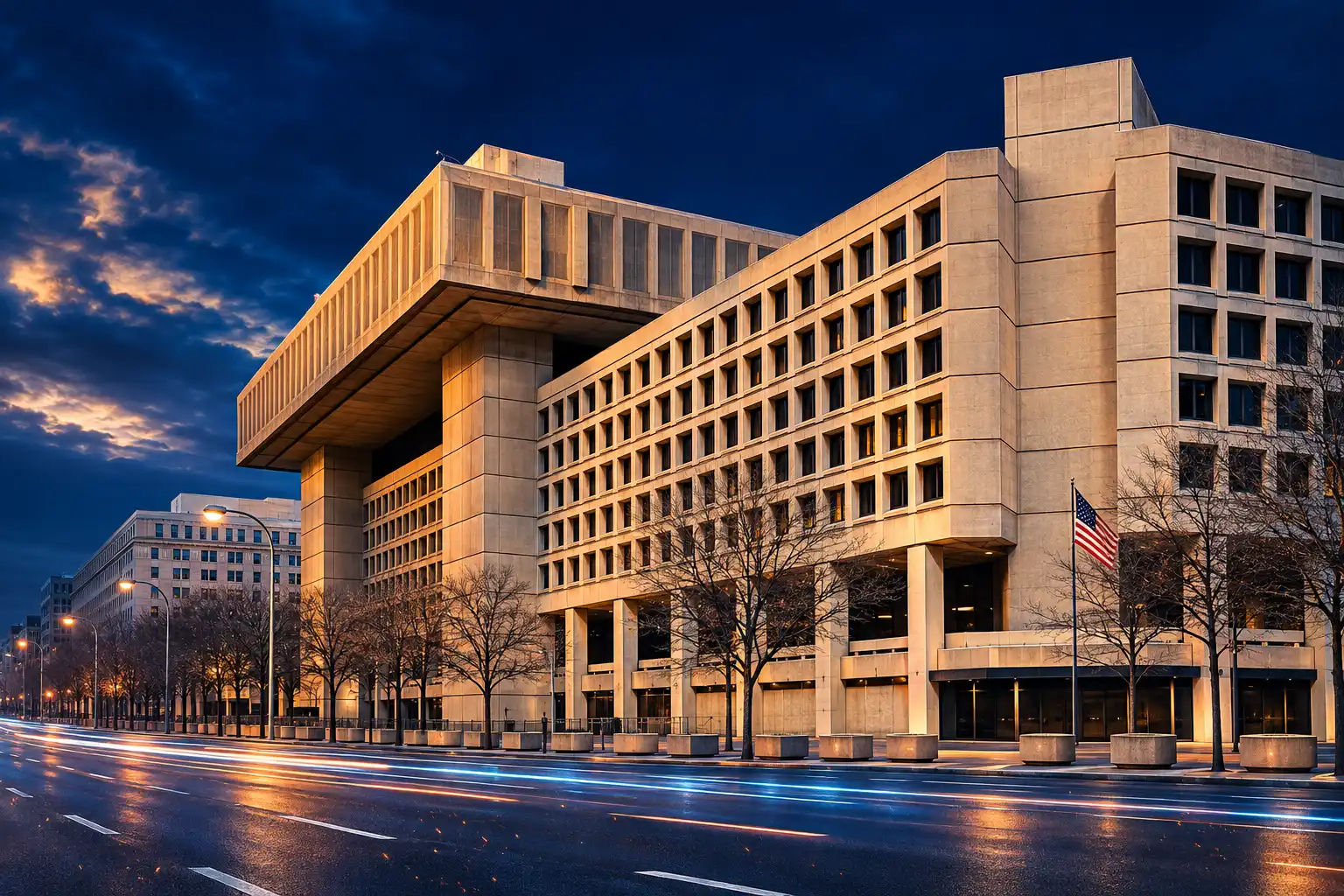
Public talk after the Friday reports drifted toward partisan score-settling and jokes about other files. That noise misses the working fact: the people who need this system are not in the Hoover Building. They are in a cruiser, running a plate, and they need the screen to match the record an agency thinks it entered.
A Password Reset Froze Farm Payments Nationwide
While the FBI stayed silent on NCIC, farm offices were already working around dark software. On Monday, November 16, Chris Rottler, acting assistant chief information officer for USDA’s Farm Production and Conservation Business Center, emailed staff that the Cybersecurity and Privacy Operations Center had uncovered a security incident. The Information Services Division had to reset all database passwords in all environments, he wrote, and that required resetting applications, causing outages.
The outages hit financial tools used to move money between the department and producers. Employees pointed to Farm Service Agency loan software, the Natural Resources Conservation Service program ProTracts, which releases farmer payments, and NRCS service-desk software used to map conservation projects. A Tuesday, November 17, email obtained by farm-desk reporters warned that some applications coming back online had not been fully restored or verified for production use, and told staff to proceed at their own risk. Some workers also had trouble with the department VPN.
USDA TOOLS THAT WENT DARK
| System | Office | What stalled |
|---|---|---|
| Loan software | Farm Service Agency | Producer loans |
| ProTracts | Natural Resources Conservation Service | Farmer payments |
| Service desk mapping | Natural Resources Conservation Service | Conservation project maps |
FSA Administrator Bill Beam told farm reporters on Thursday, November 19, that he had heard of outages and that the IT shop was working through them. The next day in Kansas City, Fordyce, who oversees farm production and conservation, dropped the software-update line and called the week-long event a cyberthreat.
There was no Personally Identifiable Information (PII). No data was lost because the systems that protect against cybersecurity threats worked.
Richard Fordyce, USDA undersecretary for farm production and conservation, to reporters in Kansas City
People familiar with the matter separately said hackers had targeted a system USDA uses to pay farmers, and that as of Friday, November 20, the intrusion had not reached other systems, with a warning that it still might. Those are different claims from Fordyce’s no-PII line, and both can sit on the page: a payment system can be hit without a confirmed dump of personal files. Fordyce said most systems should be back online by close of business that Friday, and that crews would work the weekend if not. Farm-desk accounts on Sunday, November 22, still described payment tools as disrupted.
Producers Still Face December Sign-Up Dates
The freeze landed on a calendar that does not wait. Producers have until December 11 to elect and enroll in the 2026 Agriculture Risk Coverage and Price Loss Coverage programs. Dairy producers have until December 18 to enroll in the 2027 Dairy Margin Coverage program. Fordyce also said FSA and Rural Development loan programs are being modernized, with a new loan application system expected in early 2027, and called that work a decade or two late.
The same Thursday the password-reset story broke, the Government Accountability Office released a food-and-agriculture cyber review, GAO-27-108656. USDA and the Food and Drug Administration lead federal work on that sector. Auditors said the agencies met most of 16 cyber-related duties in the Fiscal Year 2021 National Defense Authorization Act, but only partly met or did not meet five unmet sharing and emergency duties. GAO made two recommendations to USDA and three to HHS. HHS agreed. USDA disagreed and asked that its two be removed or redirected. GAO kept them. Fordyce had no comment on the report.
What the September Jobs-Site Breach Already Showed
The NCIC inquiry is the bureau’s second reported intrusion in recent months. In September, the extortion group ShinyHunters claimed it had broken into FBIjobs.gov and taken a large store of files on employees and applicants. The group said the haul was 2 to 3 terabytes and covered bureau staff, about 38,000 people. It framed the break as payback for a public service announcement the FBI posted about the group in May, and threatened to publish data if the advisory was not pulled. It later said it would not publish.
The FBI said it was investigating unauthorized activity on the jobs portal and alleged impact to employee personal information. Officials later said a contractor managing the platform had failed to install a security update issued to secure it, and that the bureau had removed the contractor. ShinyHunters said the software was an Oracle human-resources platform. Dutch police arrested a 24-year-old man in Amsterdam on September 15. Jordan detained another alleged associate later that month. On October 8, agents arrested Edward Dubrovsky, a Canadian cybersecurity executive and author, in the Philadelphia area. He appeared in federal court there on extortion-related charges, and FBI Director Kash Patel announced the arrest the next day as another suspected co-conspirator of the group tied to the jobs-site incident.
That case was a jobs website and a missed patch, not NCIC. No public evidence ties ShinyHunters to the warrant database. The useful residue is narrower: the bureau already had a live lesson that a vendor-run edge system can expose staff files, and it is now asking whether a far more operational database, the one in the patrol car, was touched two months later.
750 Companies Heard a Campaign That Had Ended
Bureau officials had already learned of the NCIC incident on Thursday, November 19, when Patel went on television to talk up FBI cyber work during a week of bank, air-traffic, and NSA outages. He pointed to Operation Winter Shield, a campaign that had urged companies to update systems, and spoke about it as if the work were still in motion. The 60-day effort had ended months earlier. Patel said other administrations could have made the updates and did not, and that the bureau was staying ahead of the curve and making up for lost time. He said Winter Shield was the backbone through which the FBI had engaged over 750 private-sector companies, and that the FBI and the intelligence community would keep monitoring for bad actors.
The outages he was asked to explain were, in the administration’s account, not a single attack. Officials told Congress that recent failures at agencies and firms were separate maintenance and technical-change events. An NSA classified network that went down during maintenance earlier in the week came back, with people familiar with that outage saying there was no sign of a cyberattack. Banks and the NSA have blamed patches for flaws found with AI tools. NCIC is a different fact pattern: an investigation of an apparent intrusion, not a scheduled patch window. Patel has not addressed that investigation in public remarks that have been quoted since Friday, November 20.
The Acting Cyber Director’s First Outage Week
Into that week walked a new White House cyber chief. Sean Cairncross left as national cyber director on Thursday, November 19, after about 14 months. Pentagon Chief Information Officer Kirsten Davies took the job in an acting capacity. President Donald Trump said he made the change because he did not think that person was good enough. Davies, confirmed as Pentagon CIO on December 18, 2025, had been Unilever’s chief information security officer before the Pentagon. On Thursday she wrote that the country has to modernize the systems it runs on and build cyber talent. Defense Secretary Pete Hegseth confirmed the move.
On Saturday, November 21, Trump was asked about the NCIC reports. He said officials had just heard about it, that it was not good, and that he did not like it. He then said maybe the country would learn things it would never have learned otherwise, and turned to his complaints about the Russia investigation. A warrant database used at traffic stops is a poor place to look for that history, and nothing made public supports that leap. He also said he wanted to know who carried out the intrusion.
THE WEEK THE SYSTEMS BLINKED
- November 16, 2026: USDA’s Cybersecurity and Privacy Operations Center finds a security incident; Rottler tells staff all database passwords must be reset, taking applications down.
- November 17, 2026: A staff email says applications coming back have not been fully restored or verified and tells workers to proceed at their own risk.
- November 19, 2026: GAO releases its food-sector cyber report; USDA farm tools are still dark; FBI officials learn of the NCIC incident; Patel talks Winter Shield on television; Cairncross exits and Davies posts about the new role.
- November 20, 2026: People briefed on the matter describe an NCIC investigation; Fordyce calls the USDA event a cyberthreat and says no personal data was lost; the White House presents Davies as acting national cyber director.
- November 21, 2026: Trump calls the NCIC news not good and does not say what records, if any, were taken or changed.
GAO’s food-sector paper is the document that ties the farm outage to a longer gap. Auditors warned that a cyberattack on food and agriculture could result in unsafe food and erode public trust, and they noted a 2021 ransomware attack that shut some of the world’s largest slaughterhouses. A companion GAO note said 2026 was on pace to be one of the highest years for ransomware volume, with as many as 227 ransomware incidents in 2026 already reported. USDA told auditors it had no plans for further cyber exercises based on potential incidents in food and agriculture. The password-reset week is what that gap looks like in an FSA office trying to clear a loan.
WHAT WE KNOW
- NCIC probe: The FBI is investigating an apparent breach of the warrant and records system officers query nationwide, the second reported bureau intrusion in recent months.
- USDA tools: A November 16 password reset after a security incident took down FSA loan software, ProTracts payments, and NRCS mapping; Fordyce called it a cyberthreat and said no personal data was lost.
- Hit rule: A positive NCIC response is not probable cause; agencies must confirm the record with the entering agency before they act.
WHAT IS UNCONFIRMED
- NCIC scope: No public evidence shows which files were viewed, whether any data left the system, whether any record was changed, or whether police lost access.
- Attribution: Neither the FBI nor USDA has named a group, a country, or a method.
- Farm restore: Fordyce expected most USDA systems back by close of business November 20; later farm-desk accounts still described payment tools as disrupted.
As of Monday, November 23, the FBI still had not described the NCIC intrusion in public. The open operational question is the same one Pack named. Until the bureau says whether a warrant, a protection order, or a violent-person flag was touched, every hit confirmation call is doing work the database is supposed to do on its own.

FBI Crime Database Breach Puts Traffic-Stop Checks in Doubt

Nine Die in Dymer as Rescuers Dig Through the Night

Nick Cannon’s Lupus Hospital Post Halts Wild ‘N Out Dates

Dodgers Buy Royce Lewis After the Year That Cut His Price

GTA 6 Turns $100 Copies Into a $3.79 Billion Day

Meta’s Smart Glasses Sell a Light That Needed Two Patches

Apple’s New Mac Studio Clusters Local AI on the Desk

Google’s Free AI Pro Year Is Three Different Deals

Song Yadong Stops Umar Nurmagomedov the Only Way Left

Lanterns Puts Sinestro in a Cell and Lets Him Talk
-
 NEWS3 months ago
Meta’s Smart Glasses Sell a Light That Needed Two Patches
-
 NEWS3 months ago
Apple’s New Mac Studio Clusters Local AI on the Desk
-
 NEWS3 months ago
Google’s Free AI Pro Year Is Three Different Deals
-
 NEWS3 months ago
Song Yadong Stops Umar Nurmagomedov the Only Way Left
-
 ENTERTAINMENT3 months ago
Lanterns Puts Sinestro in a Cell and Lets Him Talk
-

 NEWS3 months ago
The Mahape Fake Apple Raid Repeats a Dual-Shift Pattern
-

 ENTERTAINMENT3 months ago
LUN8’s First London Concert Filled a 620-Cap Club
-

 ENTERTAINMENT3 months ago
Gomez Says She Never Ran the Wondermind Investors Backed