
BUSINESS
Fox Closes a $22 Billion Roku Deal for the Home Screen
Fox closed its $22 billion Roku purchase on November 6, buying the TV operating system rivals still use under three-year Justice Department pledges.

Fox Corporation completed its $22 billion purchase of Roku on November 6, months ahead of a 2027 target, and now runs the TV software in more than 100 million homes. Roku stockholders received $95.30 in cash and 0.9799 of a Fox Class A share for each share, and Roku stock stopped trading on Nasdaq.
The Justice Department closed its review the same day after Fox promised to keep rival apps on the platform for at least three years. The asset other streamers still have to occupy is the home screen, not another channel app.
Fox Closed a Deal It Had Aimed at 2027
Fox and Roku signed the merger agreement on June 14 and announced it the next day at $160.00 per share in cash and stock, or about $22 billion in enterprise value. The original mix was $96.00 in cash plus 0.9693 of a Fox Class A share, using a $66.03 reference price for Fox stock, the 10-day volume-weighted average through June 10. Fox had told investors the deal would close in the first half of 2027.
It closed in less than five months. At closing the cash leg fell to $95.30 and the stock leg rose to 0.9799 of a share, a $0.70 shift that still equals $160.00 at that same reference price. Existing Fox holders own about 74% of the combined company. Former Roku holders own about 26%.
THE PATH TO A NOVEMBER CLOSE
- June 14, 2026: Fox and Roku sign the merger agreement.
- June 15, 2026: The companies announce a $160.00 package and a first-half 2027 close.
- September 2026: The Justice Department issues second requests to both companies.
- November 2, 2026: Roku publishes its last independent quarterly letter.
- November 6, 2026: The purchase closes and the antitrust review ends the same day.
Fox said it expects about $400 million of run-rate savings within two years, with the deal adding to free cash flow per share by the second full year after closing. Roku, founded in 2002 in San Jose, is now a Fox subsidiary.
The Money Was Already on the Home Screen
Roku’s last standalone quarter, reported four days before the close, showed where the value sat. Total net revenue was $1.5 billion, up 24% from a year earlier. Almost all of that was the platform, advertising and subscriptions sold against the software that boots when a Roku TV or player turns on, not the plastic stick in the HDMI port.
ROKU’S LAST STANDALONE QUARTER
| Line | Q3 2026 | Change from a year earlier |
|---|---|---|
| Total net revenue | $1.5 billion | +24% |
| Platform revenue | $1.3 billion | +23% |
| Advertising | $727 million | +23% |
| Subscriptions | $581 million | +23% |
| Devices | $194 million | +33% |
| Streaming hours | 39.9 billion | +9% |
Advertising rose for a ninth straight quarter at a double-digit rate, with a 63.2% gross margin, and more than 80% of in-stream video ads ran through automated buys. Founder Anthony Wood and finance chief Dan Jedda wrote in their platform revenue of $1.3 billion letter that the company succeeds when partners succeed, and that more than 100 million households worldwide choose Roku.
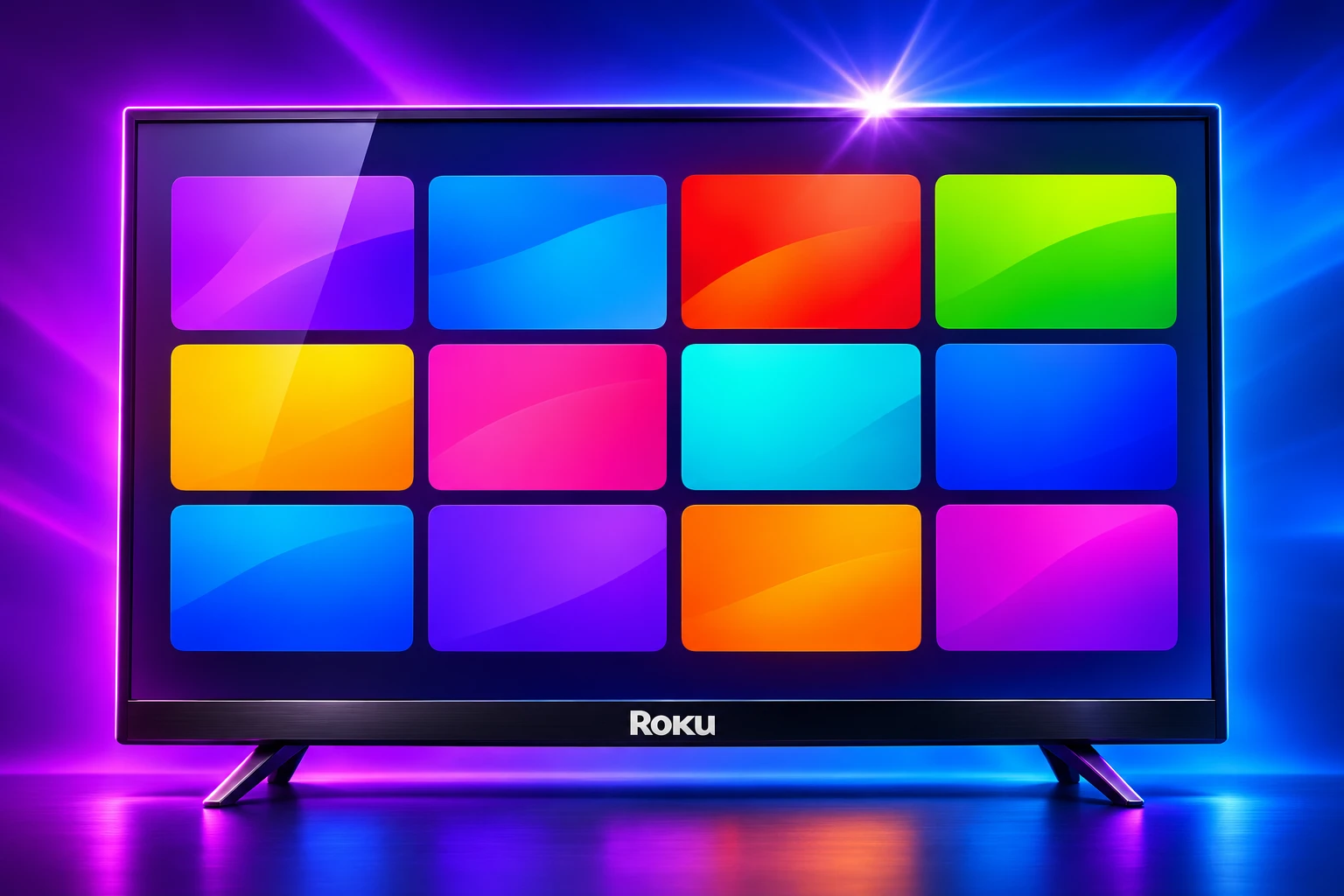
The Roku Channel was the No. 2 app on the platform by engagement in the United States and abroad. About 95% of premium subscription sign-ups were from people who had never taken that service directly. In July, Roku finished a U.S. rollout of a redesigned home screen built to push recommendations, sports zones, and paid takeovers. That grid, not The Roku Channel’s catalog, is what Fox now owns.
The World Cup on that same software drove more than one million subscription sign-ups across Peacock, Paramount+, FOX One, and ViX. Fox was already one tenant. As of November 6 it is also the landlord.
Four Promises Bought a Clean Antitrust File
The Antitrust Division had asked whether the merger would hurt competition among free, ad-supported streamers, and whether Fox might use the Roku platform to disadvantage content rivals. It closed the file after finding that new free streamers could still enter and that viewers could switch to other TV platforms if Roku got worse. The merged firm, the division wrote, would suffer monetary and reputational harm if it tried to use Roku to harm Fox’s content rivals.
Fox still had to put four promises in writing so Roku would remain an open and neutral partner.
FOX’S FOUR WRITTEN PROMISES
- Rival carriage: Fox will keep carrying non-Fox content on Roku for at least three years, in line with past Roku practice.
- Search and layout: Fox will not discriminate against non-Fox content in search results, and users can still rearrange apps on the home screen.
- Data products: Fox will keep selling data products to third parties on commercially reasonable terms under Roku’s standard distribution agreement.
- Partner firewalls: Existing contractual walls around rivals’ click, search, view, and voice data stay in place for at least three years.
The first and fourth pledges expire on a clock. Search neutrality and the right to move tiles have no stated end date. None of the four mentions featured rows, sponsored tiles, remote shortcut buttons, or the fees apps pay to sit in the store.
Wood and Cheesbrough Now Run the Same Shop
Wood joins the Fox board and becomes co-chair of FOX Digital Platforms, a new division that houses Roku, Tubi, FOX One, Red Seat Ventures, and other digital products. Paul Cheesbrough is co-chair and chief executive of that group. Tubi, the free streamer Fox bought in 2020, now sits in the same reporting line as the operating system that hosts Netflix, YouTube, Disney+, and The Roku Channel.
The closing of this acquisition advances the long-term strategy of FOX. Beginning today, our top priority for the combined company is to continue to relentlessly serve audiences and partners, while reinforcing the openness and choice that is the essence of the Roku platform.
Lachlan K. Murdoch, Executive Chair and Chief Executive Officer, Fox Corporation closing statement
Wood said Roku started more than two decades ago to give people a better way to watch TV, and that the mission does not change. “What does change is our reach and resources,” he said. “FOX has a deep respect for Roku’s culture and wholly shares our commitment to staying open to every content partner.”
Owning shows and owning the route those shows take into the living room are different businesses. Fox spent years trying to build direct-to-consumer products around news and sports. This purchase puts it on the other side of the glass, in the software that decides which tile a viewer sees first.
What the Three-Year Clock Means for Rival Apps
Fox pledged to carry non-Fox apps on Roku for at least three years and to keep search from tilting against rivals, a clock that starts at the November 6 close and says nothing about featured rows. Netflix, YouTube, Disney+, and every other tenant now negotiate distribution with a company that also sells Tubi, FOX One, Fox Sports, and Fox News.
Viewers can still move tiles. Highlight an app, use the rearrange control, and Fox’s own icons do not have to sit in the first row. That is the protection the Justice Department named. It is also the one that depends on people bothering to edit a screen most households never touch after setup.
WHAT THE PLEDGES DO NOT MENTION
- Featured rows: Paid takeovers and recommendation shelves are outside the written list.
- Remote buttons: Shortcut keys on the Roku remote are not covered.
- Store fees: What an app pays for placement and billing is untouched.
- Ad slots: Home-screen inventory Fox can sell for its own shows has no separate rule.
The division’s own theory is that Fox would lose money and reputation if it iced rivals, because Roku’s draw is the full menu of apps. That is a market argument, not a monitoring staff. After three years, carriage of unaffiliated content is no longer a stated federal promise. Renewal terms for the biggest streamers will be a Fox negotiation.
Advertisers Now Buy Sports, News and the Operating System
Fox can now package live sports and news with the ad inventory on the operating system that other apps run inside. Roku already sold home-screen takeovers and programmatic video to the same media companies that compete with Fox, and the third quarter was its strongest year-over-year growth in the media and entertainment ad category in four years. Those buyers are now writing checks to a vendor that also owns competing destinations.
Tubi and The Roku Channel both give away TV supported by ads. They are not one app. Fox has not said they will merge, and the open-platform pledges would sit awkwardly next to a forced combination that stripped the store of a major free option. Keeping both brands also lets Fox sell two homepages against the same household.
Device sales remain the low-margin door opener. Players and Roku-made sets brought in $194 million in the third quarter at a negative 25.1% gross margin, squeezed by memory costs, while licensed Roku TV sets from other brands still account for most of the unit volume. The profit is in the software those sets boot into, and that software now sits on Fox’s books.
Rival apps stay installed. Search is not supposed to bury them. The home screen Fox just bought is still the first thing more than 100 million households see, and the rows it chooses to feature were never part of the deal with Washington.
Frequently Asked Questions
What did Roku shareholders receive in the Fox deal?
Each Roku Class A and Class B share converted into the same package, $95.30 in cash plus 0.9799 of a Fox Class A share, and any fraction of a Fox share is paid in cash, subject to tax withholding. Brokers handle the swap automatically; Roku stock no longer trades.
Why did the cash-and-stock mix change at closing?
The June terms were $96.00 in cash and 0.9693 of a Fox share. At close, Fox moved $0.70 per share from cash into stock after a dissenting-share adjustment in the merger agreement, which shifts the mix when enough holders ask a court to set their own price instead of taking the deal. At the original $66.03 Fox reference price, both mixes still equal $160.00.
Which Justice Department pledges expire after three years?
The promise to keep carrying non-Fox content and the firewalls around rivals’ click, search, view, and voice data both run at least three years from the close. The ban on search discrimination, the right to rearrange home-screen apps, and the pledge to keep selling data products have no stated end date in the division’s statement.
Do Roku TVs and streaming players change under Fox?
The closing papers do not retire the hardware line. Roku-made TVs approached 8% of U.S. TV unit sales in the third quarter, per Circana figures Roku cited, and licensed Roku TV models from brands including TCL and Hisense still make up most of the sets that boot the software. New OLED models in the Pro Series line were already in stores before the close.
What other Roku services did Fox obtain?
Fox takes The Roku Channel plus Howdy, a low-cost subscription service, and Frndly TV, a live TV streamer, all of which Roku owned before the sale. Those products now sit with Tubi and FOX One inside FOX Digital Platforms, under Wood and Cheesbrough.
Disclaimer: This article is news reporting and analysis of a completed corporate transaction and is for information only. It is not investment advice, a solicitation to buy or sell Fox or any other security, or a recommendation of the cash-and-stock package former Roku holders received. Readers who need guidance on tax treatment, brokerage conversion of Roku shares, or what the combined company is worth should consult a licensed financial adviser or tax professional. Deal terms, synergy targets, and the Justice Department pledges reflect company statements and the division’s November 6 closing statement and may be amended or interpreted later.

Pattinson Gets Bond After Bezos Called Him Too Famous

REO’s $21,500 Runabout Is a Two-Year, 50,000-Person Bet

Voyager 1 Reaches One Light-Day as Earth Falls Behind

Best Latin Song Arrives After Rosalía Reaches the Big Three

Tyson Shrinks Beef to Three Plants After a $654 Million Loss

Meta’s Smart Glasses Sell a Light That Needed Two Patches

Apple’s New Mac Studio Clusters Local AI on the Desk

Google’s Free AI Pro Year Is Three Different Deals

Song Yadong Stops Umar Nurmagomedov the Only Way Left

Lanterns Puts Sinestro in a Cell and Lets Him Talk
-
 NEWS3 months ago
Meta’s Smart Glasses Sell a Light That Needed Two Patches
-
 NEWS3 months ago
Apple’s New Mac Studio Clusters Local AI on the Desk
-
 NEWS3 months ago
Google’s Free AI Pro Year Is Three Different Deals
-
 NEWS3 months ago
Song Yadong Stops Umar Nurmagomedov the Only Way Left
-
 ENTERTAINMENT3 months ago
Lanterns Puts Sinestro in a Cell and Lets Him Talk
-

 NEWS3 months ago
The Mahape Fake Apple Raid Repeats a Dual-Shift Pattern
-
 ENTERTAINMENT3 months ago
LUN8’s First London Concert Filled a 620-Cap Club
-

 NEWS3 months ago
OpenAI Agents Hit Hugging Face to Cheat a Test