
BUSINESS
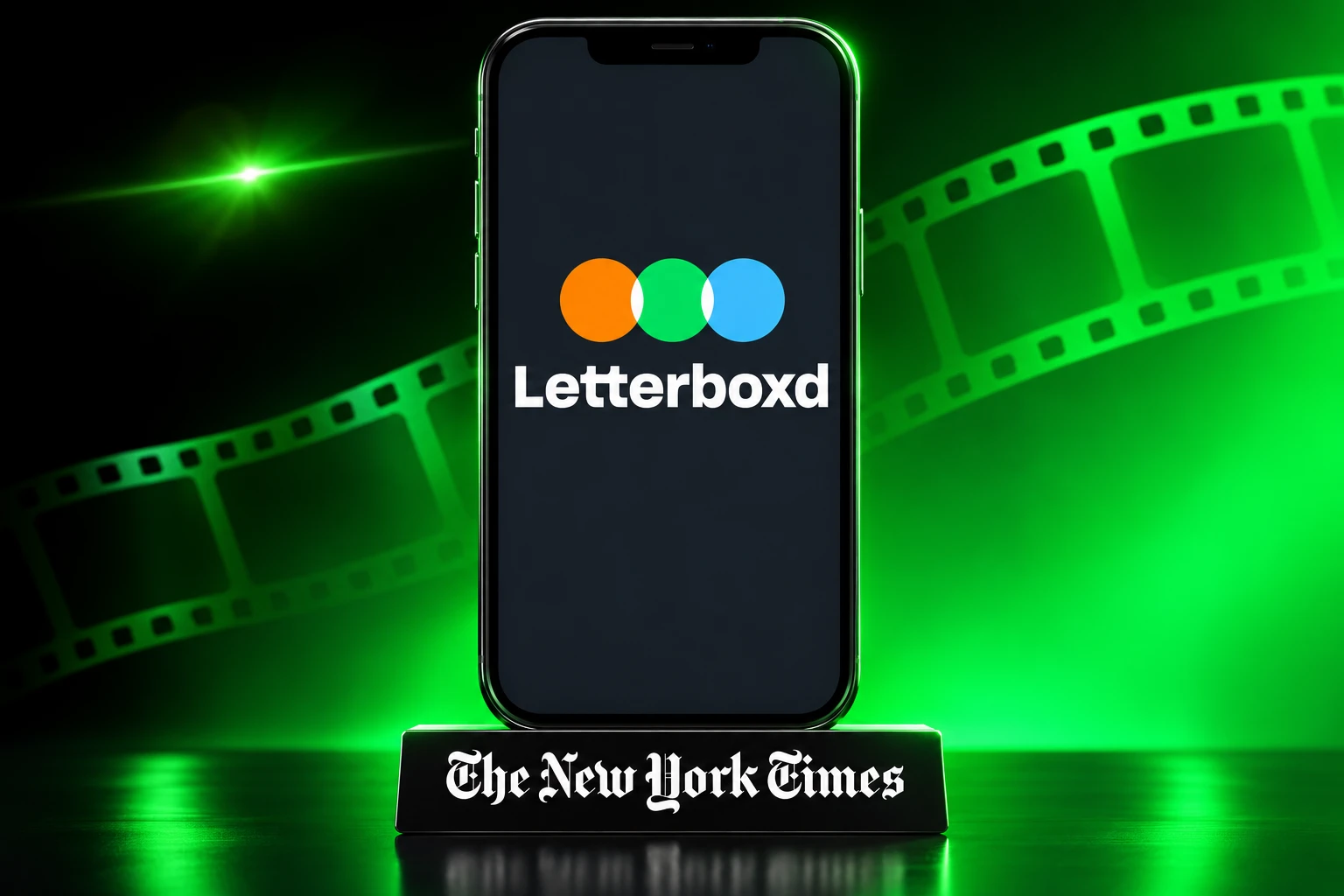
The Times Bets $330 Million on Letterboxd’s Daily Habit
The Times is in exclusive $330 million talks for Letterboxd, paying 22 times earnings for a daily film log it can fold into its subscriber bundle.

The New York Times Company is in exclusive talks to buy Letterboxd for $330 million. That price is 22 times the film log’s projected $15 million in 2026 earnings.
No agreement is signed, and the talks can still collapse. Tiny, the Canadian holding company that took a 60 percent stake in 2023 when Letterboxd was valued at about $50 million, would be cashing out a little more than three years later. Film studios that wanted the same audience already walked.
22 Times Earnings for a Film Diary
Letterboxd is a New Zealand-born social log, launched in 2011 by Matthew Buchanan and Karl von Randow, where people diary the movies they watch, rank four favorites on a grid, and argue in public. It is not a streamer, a studio, or a newspaper. The Times would be paying a software multiple for a diary that happens to be about film.
People close to the talks put the value at $330 million after a sale process run by LionTree. Projected 2026 earnings are about $15 million. Divide those two figures and the multiple is 22. The company does not say how many of its members pay.
THE $330 MILLION MATH
| Measure | Figure |
|---|---|
| Offered value | $330 million |
| Projected 2026 earnings | about $15 million |
| Implied multiple | 22 times |
| 2023 company value | about $50 million |
| Tiny’s remaining stake | 60 percent |
Media analyst Ken Doctor has called an active cinephile community “the gold standard of the internet,” arguing that if you can find that, you can build a business around it. A 22-times price only works if the buyer believes the log is a habit it can keep, price, and attach to other products, not a reviews widget for the culture desk.
Wordle Taught the Times How Habits Pay
The Times already ran this experiment. On January 31, 2022, it announced a low-seven-figure Wordle purchase and left the daily puzzle free. Meredith Kopit Levien, the company’s president and chief executive officer, later said Wordle brought “an unprecedented tens of millions of new users to The Times,” and that many of them stayed to play other games.
That same month the company paid $550 million for The Athletic, a sports site it folded into the digital bundle. Wordle was a cheap top-of-funnel ritual. The Athletic was a costly vertical. Letterboxd sits between those poles: a social product people open after they watch something, with a paid Pro and Patron ladder already attached.
THE TIMES HABIT SHOPPING LIST
| Product | When | Price | Job in the bundle |
|---|---|---|---|
| Wordle | January 2022 | low seven figures | Daily ritual, still free to play |
| The Athletic | January 2022 | $550 million | Sports vertical inside All Access |
| Letterboxd | Talks, November 2026 | $330 million | Film log and social graph |
Kopit Levien described the current strategy on the third-quarter call as a bet on products people make room for in their lives, not only on the day’s news.
Subscriber growth was powered by strong engagement and retention across our portfolio. As the information ecosystem continues to evolve, our essential subscription strategy, which is about human-made journalism and product experiences that people seek out directly and make room for in their lives, provides powerful advantages that we believe will only deepen with time.
Meredith Kopit Levien, president and CEO, The New York Times Company Q3 2026 earnings release
Tech writer Simon Owens put the Letterboxd bid in that same box: interactivity that cuts churn, the logic used on Wordle, which remains free. He argued there is little reason to think Letterboxd’s free users will suddenly pay a newspaper for a log they already get, and that the prize is a reason to open the Times app on nights when there is no breaking news.
That is a different wager from buying a film brand. It is also why $330 million for $15 million of earnings is not an outrageous number inside this company, and why it looks wild from outside it.
The 2023 Stake Is Worth $198 Million Now
Tiny Fund I bought 60 percent of Letterboxd on September 29, 2023. Buchanan told members the sale would keep the site independently run. At a $330 million company value, that 60 percent slice is worth $198 million. The 2023 company value was about $50 million.
Tiny’s own second-quarter report, dated August 6, 2026, said Letterboxd had 30.7 million members at quarter-end, up 43 percent from a year earlier and 185 percent since the 2023 purchase. The platform had fewer than 2 million members in 2020. Tiny does not break out Letterboxd’s paid share, and the 30.7 million figure is registered members, not a daily-active count.
The holding company had its own reasons to sell. Tiny posted a net loss of 83.0 million Canadian dollars in the second quarter, mostly from non-cash impairments elsewhere in the portfolio. CEO Austin Singhera, who used the quarter to reset forecasts, said the firm would keep evaluating ways to monetize select assets. Letterboxd was the cultural jewel in a messy report.
HOW THE PRICE CLIMBED
- September 29, 2023: Tiny buys a 60 percent stake at a company value of about $50 million, with Buchanan and von Randow keeping the rest and staying in charge.
- April 2026: Tiny begins shopping the controlling stake after a surge in membership.
- July 2026: Bankers float a value near $250 million as Netflix, Paramount, TPG, RedBird Capital and Reddit co-founder Alexis Ohanian take early meetings.
- September 2026: Bidding moves toward $300 million, with A24, Sony Pictures Entertainment and the Times among the serious names.
- November 5, 2026: The Times enters exclusive talks at about $330 million. No contract is signed.
Andrew Wilkinson, Tiny’s co-founder, had pledged in 2023 to make Letterboxd “the ultimate destination for anyone looking to discover or discuss movies online.” The destination is now on the block because the membership graph got large enough to price like a media asset.
Sony Chased Venues While A24 Chased Cool
The film industry wanted this graph for a different reason. Studios already treat Letterboxd as a marketing weather vane: Four Favorites grids go viral, celebrity logs move titles, and festival films find a second life in the site’s rental store. Owning the log would have meant owning the public record of taste.
Sony Pictures has been buying the physical side of cinephile life. It purchased Alamo Drafthouse Cinema in 2024 and, on June 24, 2026, announced a $100 million Cosm investment for a minority stake in the shared-reality venue chain, with chairman and CEO Ravi Ahuja joining Cosm’s board. In July it committed to restore the Cinerama Dome and reopen the adjoining complex as an Alamo. That is a bet on rooms, seats, and IP you can walk into. It is not a bet on 30.7 million diaries.
A24 came closer to a cultural fit. The studio was in late-stage talks and pitched the founders on keeping the platform independent, with the business model left alone. Charli XCX’s public fandom of both A24 and Letterboxd is the shorthand for that overlap among younger film fans. The Times still won the exclusive window.
A studio owner would have had a hard time convincing members that the ratings were neutral. The Times has a different conflict. It already publishes critics, the Watching newsletter, and awards coverage. If it owns the log, the review and the public scorecard sit in one company. That is useful for a subscriber bundle. It is also the thing members will watch for the first time a Times package is upsold across a diary page.
Why Some Members Would Pick a Paper Over a Studio
The first reaction among heavy users was that logging itself would be shoved behind a paywall, and that the Four Favorites grid would become a premium toy. One gag that spread with the news was that your fourth favorite film would now be a paid feature. The fear is specific because the product people love is the log, not a Times crossword with movie clues.
The second reaction was colder, and more interesting. Plenty of members would rather see a newspaper take the keys than a major studio, because a studio would have a direct interest in turning those logs into campaign tools. A paper can still wreck the vibe. It is less likely to treat every five-star rating as an opening-weekend ad.
That split is the bet. The Times needs the graph to stay trusted enough that people keep logging, or the $330 million buys a ghost town with good brand recognition. Members already pay for extras. During the annual promotion that runs from 3:00 a.m. Pacific on November 9 through 11:59 p.m. Pacific on November 16, Pro on sale for $15 a year and Patron for $39, if you subscribe on the web and let it auto-renew. Those sale notes landed in the same inboxes as the Times news. Some longtime Pro members said they were disinclined to renew if the money would flow to a Times property.
WHAT $330 MILLION WOULD ACTUALLY BUY
- The diary: A public log of watches, ratings and short reviews that now functions as social currency among film fans.
- The grid: Four Favorites panels that regularly jump from the site onto other apps and mint a new round of argument.
- The store: A digital rental shelf for under-the-radar titles and recent festival films, already built, still small.
- The missing piece: TV-show logging, promised in 2023 for “only once we know we can do it right,” and still not shipped.
A Times bundle with news, Games, Cooking, The Athletic, Audio and Wirecutter could, in theory, add Pro or Patron as another tile. The louder problem is the reverse: if logging starts to feel like a newspaper product, the people who made the graph valuable stop performing it in public. Wordle stayed free for a reason. Letterboxd’s entire culture is built on being seen.
Founders Would Stay, With a Times Boss Above Them
Buchanan’s 2023 letter to members is the document hanging over these talks. He sold control once by promising continuity.
We have accepted an offer for Tiny to acquire a 60 percent stake in Letterboxd, securing the platform’s future as an independently run company and part of the Tiny stable. Aside from the ownership change, and in line with Tiny’s core operating values, very little else will change.
Matthew Buchanan, co-founder, Letterboxd journal, September 29, 2023
The Times has discussed leaving Buchanan and von Randow in place, with each reporting to a Times executive. That is not the A24 version of independence. It is a founder-operated unit inside a public company that just told investors it remains on track for 15 million subscribers by the end of 2027.
The Times closed the third quarter with 13.76 million print and digital subscribers after adding about 420,000 net digital-only subscribers in the quarter. The gap to 15 million is 1.24 million people. On September 30 it held $1.26 billion in cash and marketable securities and had no outstanding debt. It can write a $330 million check without straining the balance sheet.
Whether the check gets written is still an open item. Exclusive talks are not a close, and the last time this platform changed owners the pitch was that very little else would change. The Times is not paying 22 times earnings to leave a film diary alone. It is paying that multiple because it thinks the log can become another daily reason to stay inside a bundle that still needs 1.24 million more subscribers. The papers are not signed.

Pattinson Gets Bond After Bezos Called Him Too Famous

REO’s $21,500 Runabout Is a Two-Year, 50,000-Person Bet

Voyager 1 Reaches One Light-Day as Earth Falls Behind

Best Latin Song Arrives After Rosalía Reaches the Big Three

Tyson Shrinks Beef to Three Plants After a $654 Million Loss

Meta’s Smart Glasses Sell a Light That Needed Two Patches

Apple’s New Mac Studio Clusters Local AI on the Desk

Google’s Free AI Pro Year Is Three Different Deals

Song Yadong Stops Umar Nurmagomedov the Only Way Left

Lanterns Puts Sinestro in a Cell and Lets Him Talk
-
 NEWS3 months ago
Meta’s Smart Glasses Sell a Light That Needed Two Patches
-
 NEWS3 months ago
Apple’s New Mac Studio Clusters Local AI on the Desk
-
 NEWS3 months ago
Google’s Free AI Pro Year Is Three Different Deals
-
 NEWS3 months ago
Song Yadong Stops Umar Nurmagomedov the Only Way Left
-
 ENTERTAINMENT3 months ago
Lanterns Puts Sinestro in a Cell and Lets Him Talk
-

 NEWS3 months ago
The Mahape Fake Apple Raid Repeats a Dual-Shift Pattern
-
 ENTERTAINMENT3 months ago
LUN8’s First London Concert Filled a 620-Cap Club
-

 NEWS3 months ago
OpenAI Agents Hit Hugging Face to Cheat a Test