
BUSINESS
The Bank of England Raises Rates as Oil Prices Slide
The Bank of England lifted Bank Rate to 4% after an 8-1 vote, just as oil fell and a week-old Budget promised energy help that arrives after January bills jump.

The Bank of England raised Bank Rate to 4% on 5 November, the first increase in more than three years, after an 8-1 vote.
Governor Andrew Bailey tied the move to the Middle East conflict, now in its ninth month. Oil still fell about 15% in the 48 hours around the announcement, eight days after Chancellor John Healey’s Budget promised families breathing space on energy bills.
Eight Members Backed a Quarter-Point, One Wanted More
The Monetary Policy Committee met through 4 November and published its decision the next morning. Eight members backed a 0.25 point rise from 3.75% to 4%. Catherine L Mann, an external member, voted for 0.5 points, which would have taken Bank Rate to 4.25%.
The majority was Andrew Bailey, Sarah Breeden, Swati Dhingra, Megan Greene, Clare Lombardelli, Huw Pill, Dave Ramsden and Alan Taylor. The minutes record an 8-1 vote to raise Bank Rate to 4%, with Mann the only dissenter, and they set the next announcement for 17 December 2026.
CPI inflation was 3.5% in September, up from 2.6% in June and 0.4 points above the Bank’s July forecast. Direct energy effects accounted for about 1 point of the September rate, most of that from motor fuel. Household energy bills and pump prices together made up about 60% of the overshoot versus the 2% target.
The Committee said there was still little sign that higher energy costs had spread into other goods and wages. It raised rates anyway, arguing that enough pressure was already built into future bills, and that activity had been stronger than expected.
THE WEEK THAT SET BANK RATE
- 28 October 2026: Healey delivers his first Budget, promising energy help and a longer fuel-duty cut.
- 4 November 2026: The MPC meeting ends with eight votes for 0.25 points and one for 0.5.
- 5 November 2026: Bank Rate rises to 4%, the first increase since 3 August 2023.
- 17 December 2026: The Committee’s next rate decision is due.
A quarter-point on Bank Rate cannot reopen the Strait of Hormuz. It can only make borrowing dearer while a large part of January’s energy bill is already set by wholesale prices the Bank does not control.
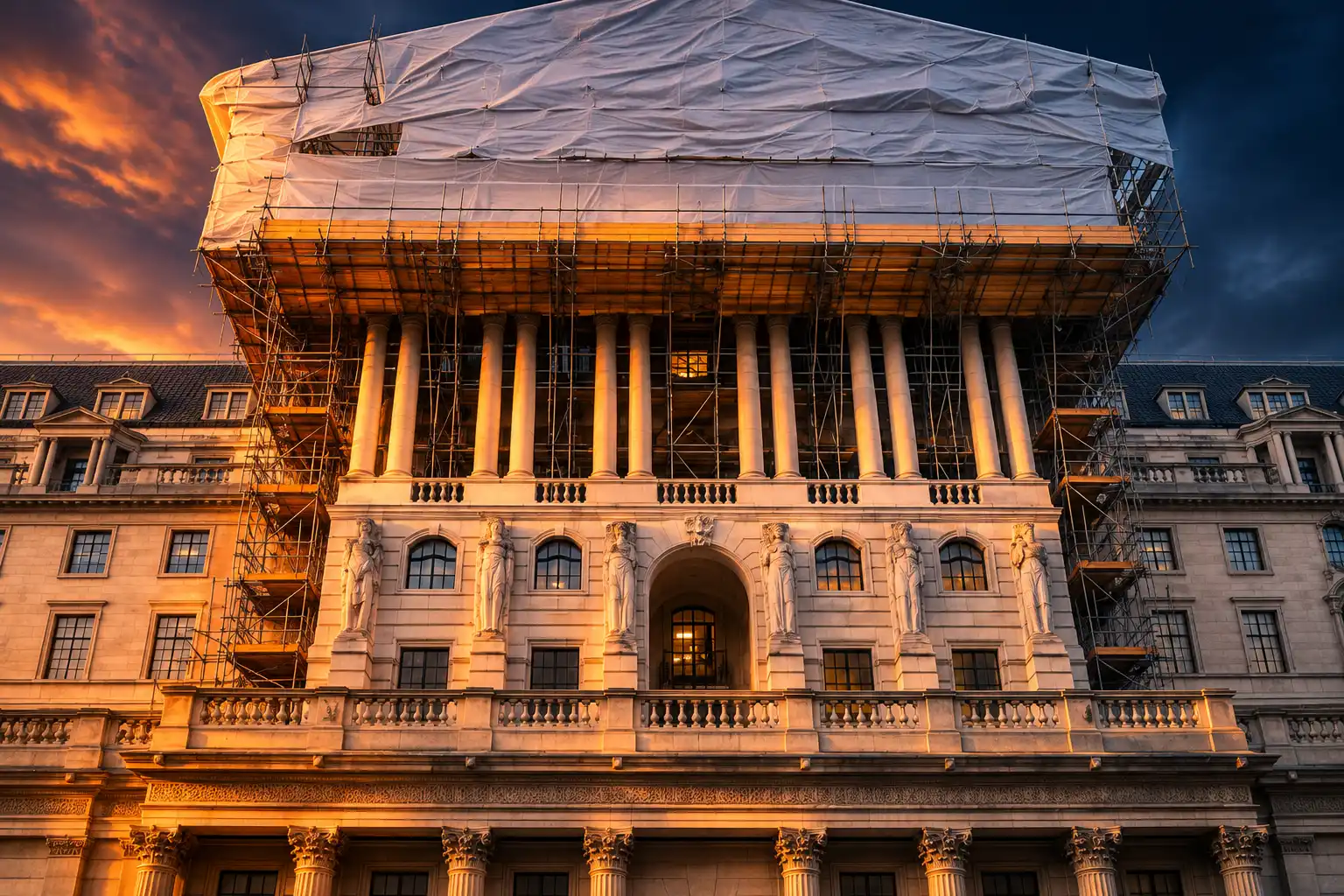
Oil Had Already Dropped 15% When Bailey Spoke
The forecast that justified the hike was built on energy prices averaged over the 15 UK working days to 27 October. In that window, Brent crude averaged $108 a barrel and UK natural gas averaged 216 pence per therm, some 38% and 81% above the levels in the July report.
Petrol was about 30% higher than before the conflict began, and diesel about 40% higher. Refined products were still elevated on Bailey’s figures, with petrol, diesel and jet fuel 59%, 105% and 118% above their levels at the start of the war.
By the morning of the press conference, that picture had already moved. Bailey said wholesale Brent and UK gas were down about 15% since the start of the week, at $95 a barrel and 218 pence per therm. The Bank’s central path had not had oil at $95 until May 2027.
Today’s increase shouldn’t be seen as the first in an inevitable long sequence of hikes. That is not inevitable. But, unless the conflict is resolved, neither does it seem likely to be the last increase.
Andrew Bailey, Governor, Bank of England press conference, 5 November 2026
Asked whether the Committee would have held rates if it had known about the two-day drop, Bailey said no. Price pressure was already in the system, he said, and the observation window for the January energy cap was largely closed. The fall was “positive news”, but it would need to last before it changed his view on a further rise.
He put the test in plain terms: the best thing that can happen is a resolution of the conflict in the Middle East, because monetary policy cannot tackle the source of the shock.
US midterm results on 3 November, with Democrats taking both houses of Congress, had driven the oil sell-off. Vice President JD Vance said, “The reason we lost is the war.” Bailey treated that as hope in the market, not as a ceasefire, and he refused to drop the case for another 0.25 points if the fighting does not end.
An Energy Cap Rise the Bank Cannot Reverse
The hit households will feel first is not Bank Rate. It is the energy cap. The Bank’s November report has the typical dual-fuel bill, already £1,723 in the fourth quarter of 2026, with the Ofgem cap rising to around £2,150 in the first quarter of 2027. That is a £427 jump on the current cap.
THE OFGEM PATH IN THE BANK’S FORECAST
| Cap period | Typical annual bill | Change from previous quarter |
|---|---|---|
| 2026 Q2 | £1,477 | – |
| 2026 Q3 | £1,663 | +£186 |
| 2026 Q4 | £1,723 | +£60 |
| 2027 Q1 (Bank forecast) | around £2,150 | +£427 |
Both the current cap and the January forecast include the temporary zero rate of VAT on household electricity. Bailey said the three-month observation window for the January cap ended in less than a fortnight from 5 November, and the Bank was already more than three-quarters of the way through it when it set the forecast. The January rise in utility bills alone adds about 0.4 points to CPI. Of the 4.4% inflation the Bank expects in the first quarter of 2027, about three-quarters of a point comes from utility bills.
Food has not followed energy yet. Food and non-alcoholic drinks rose 1.3% in the year to September, well below the 2.7% the Bank had pencilled in during July. Staff now expect food inflation to pick up to a little under 3% in the first quarter of 2027 and to about 4.75% by mid-2027 as hedges roll off and energy costs move through farms, factories and lorries.
The central projection has CPI at 4.9% in the second quarter of 2027. Direct energy effects fade after that, if futures prices are a guide. The same projection still needs some form of settlement in the Gulf so that oil can fall from a fourth-quarter peak of $116 toward $74 by late 2029.
Mortgage Payments Are Headed £1,500 Higher by 2029
Borrowers did not wait for 5 November. Quoted rates on 75% and 90% loan-to-value two-year fixes have risen by about 60 basis points since the July report, as market rates moved after the conflict intensified.
The Bank expects those higher deals to feed only slowly into the stock of outstanding loans. By the end of 2029, average annual mortgage payments are projected to be about £700 higher than in the July report, and about £1,500 higher than before the Middle East conflict began.
THE HOUSING SQUEEZE ALREADY IN THE DATA
- Approvals: Mortgage approvals for house purchase fell 8% in the three months to September against the previous three months, and hit their lowest monthly level since 2023.
- Prices: The ONS UK House Price Index fell 0.8% in the three months to August against the previous three months.
- Incomes: Real post-tax household income is projected to decline in the second half of 2026 as energy prices keep lifting CPI.
- Confidence: The GfK consumer index fell sharply in October, reversing recent gains and returning to around its April level, shortly after the conflict began.
New mortgage approvals were already falling before this hike. Lending to businesses had stayed strong. The Committee noted that the stance of policy would be felt differently depending on whether a household is exposed to energy, to a fixed-rate mortgage coming due, or to neither.
Savers on instant-access deposits have seen little extra so far, because those rates track Bank Rate more closely than fixed mortgage deals track wholesale markets. The 0.25 point rise will move deposit rates more than it moves a two-year fix that has already priced in a higher path.
Why Catherine Mann Wanted a Half-Point Rise
The 8-1 score hid a split about what comes next, not about whether to move. Mann wanted 0.5 points immediately. She called her earlier 0.25 point votes a “down payment” and said projected CPI of 4.9% by mid-2027, which would be 0.25 points higher without the Budget, was conditioned on a fall in energy prices that earlier futures curves had failed to deliver.
With CPI at 3.5% in September, she argued the economy had crossed a threshold where households and firms respond more sharply to energy and food, and where five years of above-target inflation, averaging 4.7%, had already put a risk premium into the yield curve. From that view, 0.5 points was “good policy”.
Taylor took the other pole. He wanted markets to hear that this was not the start of a preset cycle.
From an already restrictive position, this is a risk-management ‘one-for-now’ insurance hike. The next move could be up, down, or sideways.
Alan Taylor, MPC member, November 2026 minutes
WHERE THE MPC SPLITS
- Alan Taylor: Treat 0.25 points as insurance now; further tightening depends on energy prices and on the 2027 pay round, which the Bank is poorly placed to forecast from geopolitics.
- Catherine L Mann: Move 0.5 points at once to protect credibility before wage-setting turns non-linear.
- Andrew Bailey: 0.25 points now; without news that softens inflation risks, the case for a further 0.25 points is strong, with no date attached, then a more conditional stance.
- Huw Pill: A single 0.25 point step is unlikely to be enough, and more tightening is likely in the near term before decisions become more data-dependent next year.
Deputy Governor Clare Lombardelli said that, without evidence of weaker price pressure, there is likely to be a case for a further increase in the near term. Dave Ramsden noted that when the Committee walked into the press conference, the market curve was peaking at 4.75%, while the Bank’s market participants survey had a median of 4.25%. A large part of the gap, Bailey said, is a risk premium, not a forecast of the most likely path.
Breathing Space From a Week-Old Budget
Healey’s Budget on 28 October was built around the same shock the Bank is now tightening into. The Treasury’s own write-up of the package leads with a £100 Household Energy Payment for 20 million homes in council-tax bands A to D in England, with funding for similar support in the rest of the UK, paid from January 2027.
The £100 is less than a quarter of the £427 cap rise in the Bank’s forecast. It also arrives in the same month the higher cap takes effect, not before it.
WHAT THE 28 OCTOBER BUDGET CHANGED ON BILLS
- The £100 payment: One-off help for up to 20 million households in bands A to D in England from January 2027, funded by lifting the Bank Corporation Tax Surcharge from 3% to 6% for 15 months to 31 March 2028.
- Electricity VAT: The 0% rate on domestic electricity, already in place this winter, is extended to 1 July 2027 and is put at about £50 off the April 2027 cap.
- Fuel duty: The 5p cut is extended, and the planned RPI increase deferred, to 1 July 2027.
The MPC was briefed on the Budget and built it into the November projections. The new measures take 0.25 points off CPI by the second quarter of 2027, which is when inflation is otherwise forecast at 4.9%. Fiscal policy is still judged likely to subtract from growth over the medium term.
Healey said the Iran conflict is reaching deep into the pockets of families and businesses, and that the Budget had given some breathing space through the £100 payment, the electricity tax cut and the fuel-duty freeze. Shadow chancellor Andrew Griffith called the rate rise another headwind for hardworking families.
Those two statements can both be true at once. The Budget cushions part of an energy bill that is still going up. The Bank is raising the price of credit because it fears that bill will leak into wages and other prices. Households on a variable mortgage, or coming off a cheap fix, pay both.
The Next Call Comes on 17 December
Activity has not collapsed under the energy shock. GDP grew 0.5% in the second quarter of 2026, and the Bank expects 0.7% in the third. Bailey said annual growth should be over 2% by the end of the year. Business investment rose 1.8% in the second quarter. Bank staff’s AI activity proxy suggests AI-related work has accounted for just under a fifth of GDP growth since the start of 2026.
That resilience is why the majority voted to tighten. It is also why Mann wanted a larger step. Services inflation was 3.7% in September, flat since mid-year. Private-sector regular pay growth was 3% in August. The labour market has stopped softening as fast as it was. If firms that have been eating energy costs in their margins start to push them out, the 4.9% peak gets stickier.
The other path is weaker demand. The Bank sketched a scenario in which households cannot keep spending by cutting saving, firms run out of room to absorb costs, and spare capacity stops second-round effects. In that world, today’s 0.25 points would look like enough, or too much. Taylor’s line that the next move could be up, down or sideways is the closest the minutes come to admitting that fork.
First-estimate GDP for the third quarter is due on 12 November. The January cap is due to be confirmed later in November, once Ofgem closes the observation window Bailey flagged. The Committee meets again on 17 December, six weeks after the hike. By then the January bill will be a number, not a forecast, and the oil market will have had time to show whether the post-midterm drop was a pause or a turn.
Frequently Asked Questions
When Did the Bank of England Last Raise Bank Rate Before November 2026?
The previous increase was on 3 August 2023, when Bank Rate went to 5.25%. The Committee then cut six times, in 0.25 point steps, through 1 August 2024, 7 November 2024, 6 February 2025, 8 May 2025, 7 August 2025 and 18 December 2025, taking the rate down to 3.75% before this month’s rise back to 4%.
How Is the January 2027 Energy Price Cap Being Set?
Ofgem sets the cap from wholesale prices observed over a three-month window before each quarter. Bailey said on 5 November that the window for the first quarter of 2027 ended in less than a fortnight and that the Bank was already more than three-quarters of the way through it when it conditioned its forecast, which is why he treated the January cap as largely determined even after the two-day oil drop.
What Inflation Rate Is the Bank of England Required to Hit?
The MPC’s remit is to return CPI inflation to the government’s 2% target in the medium term. The November minutes repeat that Bank Rate will be adjusted as needed to meet that target, and that policy cannot itself set global oil or gas prices.
How Many People Vote on Bank Rate?
Nine MPC members vote. In November those were the governor, the deputy governors and the external members listed in the minutes. Daniel Gallagher attended as the Treasury representative and does not vote. David Roberts sat in on 28 October and 2 November as an observer from the Bank’s Court of Directors.
Does a Bank Rate Rise Change the Ofgem Energy Cap?
No. The cap is set from wholesale gas and electricity costs, network charges and policy levies, not from Bank Rate. A rate rise can slow other spending and, over time, other prices, but it does not rewrite the January cap once Ofgem’s observation window has run.
Disclaimer: This article is news reporting and analysis of the Bank of England’s 5 November 2026 decision and the November Monetary Policy Report. It is informational only and is not mortgage advice, investment advice, or a recommendation to fix, remortgage, save, or change any financial product. Readers who are deciding on a mortgage, savings account, or other borrowing should speak to a qualified mortgage adviser or independent financial adviser who can look at their own figures. Bank Rate, inflation outturns, energy caps and the path of the Middle East conflict can all change after the sources cited here, and later MPC meetings can raise, cut or hold rates.

Pattinson Gets Bond After Bezos Called Him Too Famous

REO’s $21,500 Runabout Is a Two-Year, 50,000-Person Bet

Voyager 1 Reaches One Light-Day as Earth Falls Behind

Best Latin Song Arrives After Rosalía Reaches the Big Three

Tyson Shrinks Beef to Three Plants After a $654 Million Loss

Meta’s Smart Glasses Sell a Light That Needed Two Patches

Apple’s New Mac Studio Clusters Local AI on the Desk

Google’s Free AI Pro Year Is Three Different Deals

Song Yadong Stops Umar Nurmagomedov the Only Way Left

Lanterns Puts Sinestro in a Cell and Lets Him Talk
-
 NEWS3 months ago
Meta’s Smart Glasses Sell a Light That Needed Two Patches
-
 NEWS3 months ago
Apple’s New Mac Studio Clusters Local AI on the Desk
-
 NEWS3 months ago
Google’s Free AI Pro Year Is Three Different Deals
-
 NEWS3 months ago
Song Yadong Stops Umar Nurmagomedov the Only Way Left
-
 ENTERTAINMENT3 months ago
Lanterns Puts Sinestro in a Cell and Lets Him Talk
-

 NEWS3 months ago
The Mahape Fake Apple Raid Repeats a Dual-Shift Pattern
-

 ENTERTAINMENT3 months ago
LUN8’s First London Concert Filled a 620-Cap Club
-

 NEWS3 months ago
OpenAI Agents Hit Hugging Face to Cheat a Test